Key Insights:
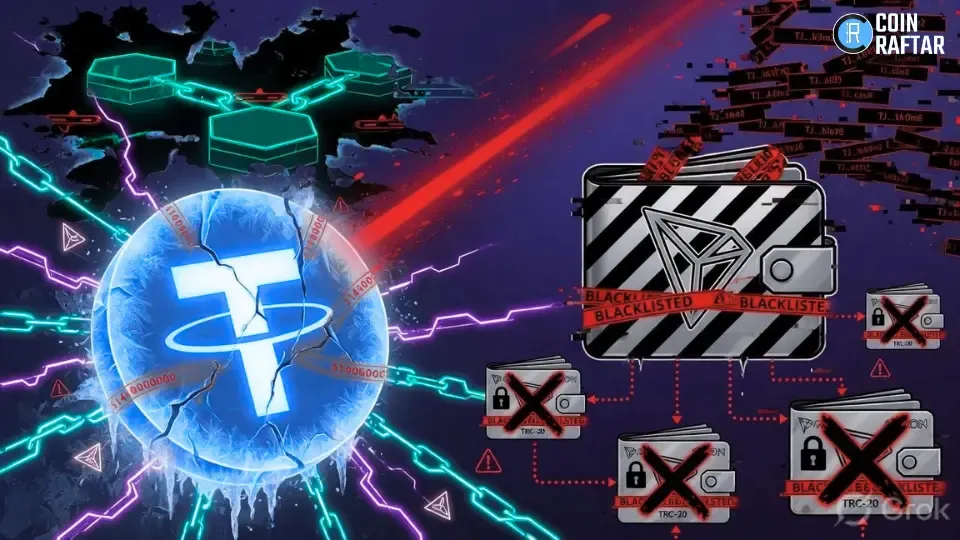
- Recently, Tether has frozen over $514 million worth of USDT on 370 Tron and Ethereum addresses.
- The largest asset that was frozen was Tron with nearly $506 million of USDT in the frozen assets.
- In total, more than USDT $698 million was lost for good due to blacklist mechanisms in 2025.
Recently, Tether raised its stablecoin enforcement as it seized more than $514 million worth of USDT. Newly released onchain data by BlockSec revealed that major blacklists took place both on Tron and Ethereum addresses across the globe.
The latest figures revealed there were 370 addresses in the past three months with restrictions. Most of the wallets affected were on Tron and recently, Ethereum was a much smaller part of the enforcement pie.
The transfer is also a testament to the evolving collaboration between stablecoin issuers and regulators seeking to combat financial crimes related to cryptocurrencies worldwide. Increased enforcement also indicates a rising pressure on scams, sanctions violations and suspicious blockchain transactions.
Recent enforcement action is focused on frozen Tron funds.
The USDT that were recently frozen on BlockSec platform was about $505.9 million, of which Tron held the stake of about $505.9 million. Of course, there were also 328 restricted addresses, reflecting Tron’s prowess in recent enforcement activities.
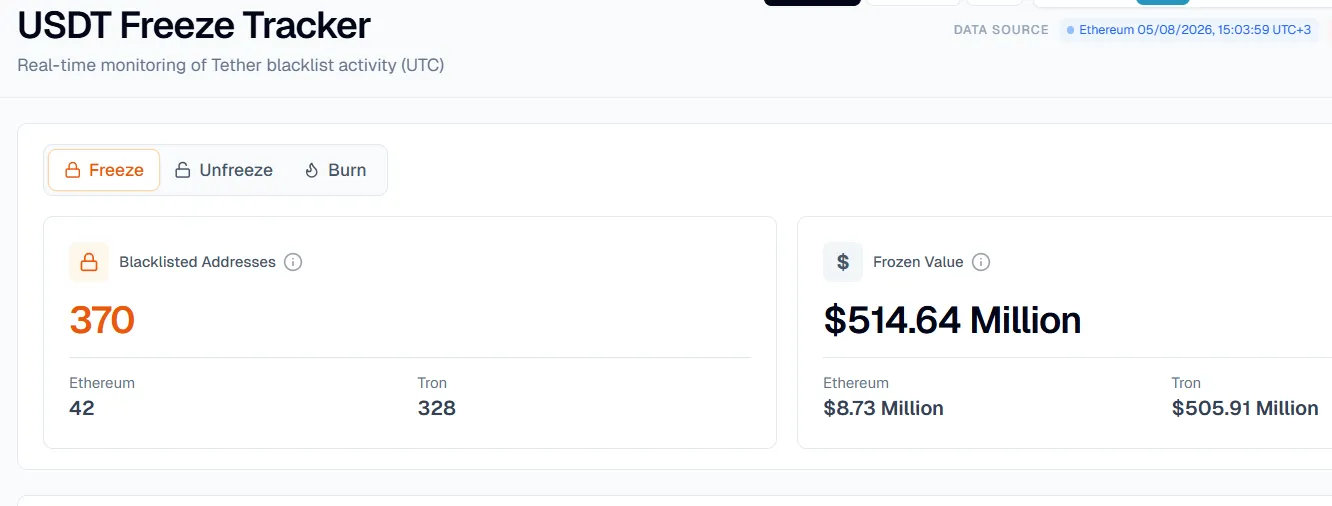
In the same period of time tracked by blockchain researchers, Ethereum had significantly fewer blacklisted wallets. According to the data, recently around $8.73 million worth of stablecoins were deposited into 42 addresses.
The analysts think there has been a surge in transactions on Tron which has helped significantly to the recent freeze activity. The network remains a popular choice for transfers around the world because of its speedy settlement time and comparatively low fees.
The researchers said that the blacklist controls would prevent affected wallets from moving affected assets to other blockchain networks later. Those restrictions last in perpetuity until issuers decide to overturn all enforcement actions later on.
Tether blacklisting activity continues rising throughout 2026
Following the latest investigations of cryptocurrencies, Tether has stepped up enforcement efforts, blacklisting thousands of addresses around the world. Previously, BlockSec estimated that 4,163 addresses were restricted on Tron and Ethereum in 2025 alone.
About $1.26 billion USDT linked to suspicious financial transactions worldwide were paralyzed by those blacklist actions. The pace of the freeze is now ahead of previous years’ totals, and may exceed previous years’ totals before the year ends.
Researchers also found that over half of the frozen assets were irretrievably lost after that via smart contracts. Recently, approximately $698 million passed through the “destroyBlackFunds” function that was part of Tether’s operational infrastructure.
Relevant authorities conducted enforcement reviews on the blacklisted addresses and only 3.6% of these addresses were later restored to unrestricted status. The numbers suggest that reversals are still rare when stablecoin issuers ban specific blockchain accounts for good.
Previous industry research estimated that approximately $3.3 billion was immobilized in 2023-2025. That research correlated enforcement activity with 7,268 addresses across the Ethereum and Tron blockchain ecosystems worldwide.
Stablecoin enforcement powers invite broader industry discussion
Tether has consistently stated that blacklist tools are essential to protect against fraud, sanctions breaches, and financial crimes.
The company has previously announced its partnership with authorities in several jurisdictions in the investigation of suspicious cryptocurrency transactions.
In February, over $61 million was reportedly recovered from pig butchering scam operations around the world. In April, another enforcement action seized about $344 million allegedly linked to Iranian sanctions violations.
Critics see centralized controls as a danger to the original vision of cryptocurrencies, which were to be censorship-resistant and provide financial independence for people around the globe. Regulators, meanwhile, say that rules surrounding stablecoins help to increase investor confidence and reduce crime in digital asset markets.
After a number of large hacks of decentralized finance platforms recently, the question of governance is becoming a common issue for these platforms. There are also protocols that have emergency controls to immediately halt suspicious transfers following a large-scale security attack. The tougher regulation now, however, remains to be seen if it will alter the way in which stablecoins are used in the global cryptocurrency landscape.
Despite this, many investors are still choosing to invest in stablecoins due to their convenience in trading cryptocurrencies. How the new stablecoin regulations affect the crypto market.
The effect of the growth of stablecoin restrictions on the market.
The latest freeze action brought back the issue of centralization in the leading dollar-based cryptocurrency communities around the world.
As enforcement actions become more frequent, investors are paying close attention to the decisions made on blacklists, as they directly impact the liquidity of stablecoins on blockchain networks worldwide.
Increased compliance cooperation could be welcomed by large institutional participants as it would provide greater clarity for wider participation in the cryptocurrency market following the compliance process. But privacy-oriented traders are wary of issuers having the unilateral power to control blockchain-based financial assets forever.
The analysts think that enforcement expansion may spur more migration to decentralized stablecoin alternatives without any centralized administrative controls. However, centralized stablecoins remain the leader in trading volume as they are well entrenched in the major crypto exchanges.
Conclusion
Today’s enforcement action against Tether is a prime example of how stablecoin issuers are now operating alongside global financial crime investigations around the world. The company’s blacklist controls are now among the most powerful compliance tools in the cryptocurrency space that impact digital asset transactions.
The increase in the number of freezes on Tron and Ethereum also highlights growing concern over shady financial transactions on the blockchain around the world. With regulators seeking more regulation, stablecoin issuers will likely continue to be key actors influencing the enforcement landscape of the cryptocurrency market.
FAQs
What was the reason for Tether’s recent freezing of more than $514 million?
The funds were frozen when addresses were associated with worldwide suspected fraud, sanctions violations and illegal investigations.
What was the highest amount of USDT that was frozen on which blockchain?
The largest frozen balances were found on the addresses of recently blacklisted wallets on Tron, which amounted to about $505.9 million.
What was the number of addresses blacklisted in 30 days?
During the reporting period, 370 addresses were blacklisted on both Tron and Ethereum, according to BlockSec data.
Will USDT balances ever be recoverable later?
Yes, but reversals are still rare as only 3.6% of blacklisted addresses were restored to unrestricted status in the past.