Key Insights
- Goldman lowered its gold forecast to $4,900 following the new forecasts for Fed rate cuts later than before.
- The bank’s cut has not helped gold, which is still seen moving higher from current levels.
- Higher-for-longer rates are pressuring markets, weighing on both gold and Bitcoin by reducing liquidity and boosting demand for cash and bonds.
Gold remains on track for gains this year, but Goldman Sachs has reduced its year-end target after revising its outlook for US monetary policy. The investment bank now expects the Federal Reserve to keep interest rates unchanged through 2026, a shift that has tempered expectations for stronger inflows into bullion-backed investment products.
The revised forecast lowers Goldman Sachs’ December price target for Gold to $4,900 per ounce, down from $5,400 previously. While the new estimate still points to upside from current market levels, analysts said the path higher may be more challenging as investors adjust to a prolonged period of elevated borrowing costs.
A Shift in Monetary Policy Expectations
The forecast change follows a reassessment of the Federal Reserve’s policy trajectory. Goldman Sachs economists now expect rate reductions to begin in 2027 rather than next year. Earlier projections had anticipated cuts much sooner, supporting expectations for stronger demand across precious metals markets.
Commodity analysts Lina Thomas and Daan Struyven said their longer-term outlook remains positive despite growing caution in the near term.
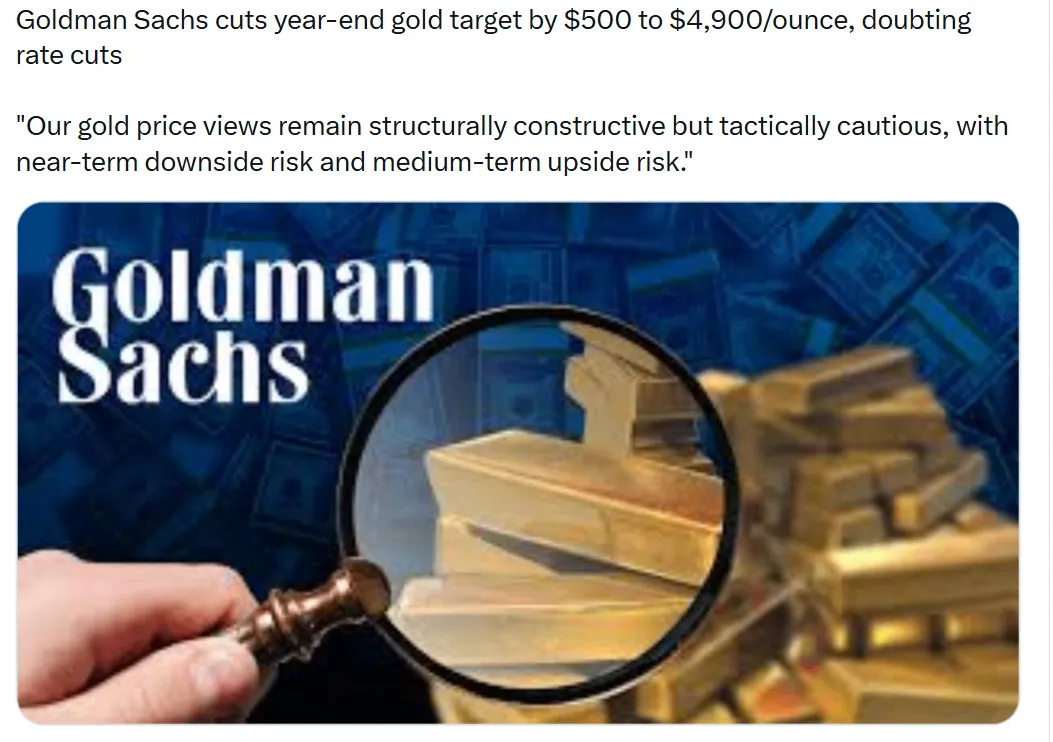
“Our gold price views remain structurally constructive but tactically cautious, with near-term downside risk and medium-term upside risk,” the analysts wrote in a research note.
The Federal Reserve reinforced those concerns during its June meeting. Policymakers left benchmark rates unchanged at 3.50% to 3.75% while signaling that inflation remains above target. Officials also highlighted persistent price pressures linked in part to energy markets.
That policy stance has increased pressure on non-yielding assets. When interest rates remain elevated, investors often shift toward cash and fixed-income instruments that offer returns unavailable in bullion holdings.
Key Market Metrics
Indicator Latest Estimate
Previous Goldman target: $5,400 per ounce
New Goldman target: $4,900 per ounce
Recent Gold price: Around $4,165 per ounce
Fed policy rate: 3.50% – 3.75%
Central bank purchases 2026: 50 tons per month
Central bank purchases 2027: 40 tons per month
Market Reaction Reflects New Reality
The adjustment marks a notable change in tone from one of Wall Street’s strongest supporters of bullion. Goldman Sachs had accurately anticipated the major rally that pushed prices to a record near $5,600 per ounce in January.
Since reaching that peak, the market has struggled to maintain momentum. Rising energy prices linked to conflict in the Middle East fueled concerns that inflation could remain stubbornly high. Those fears strengthened expectations that monetary policy would stay restrictive for longer.
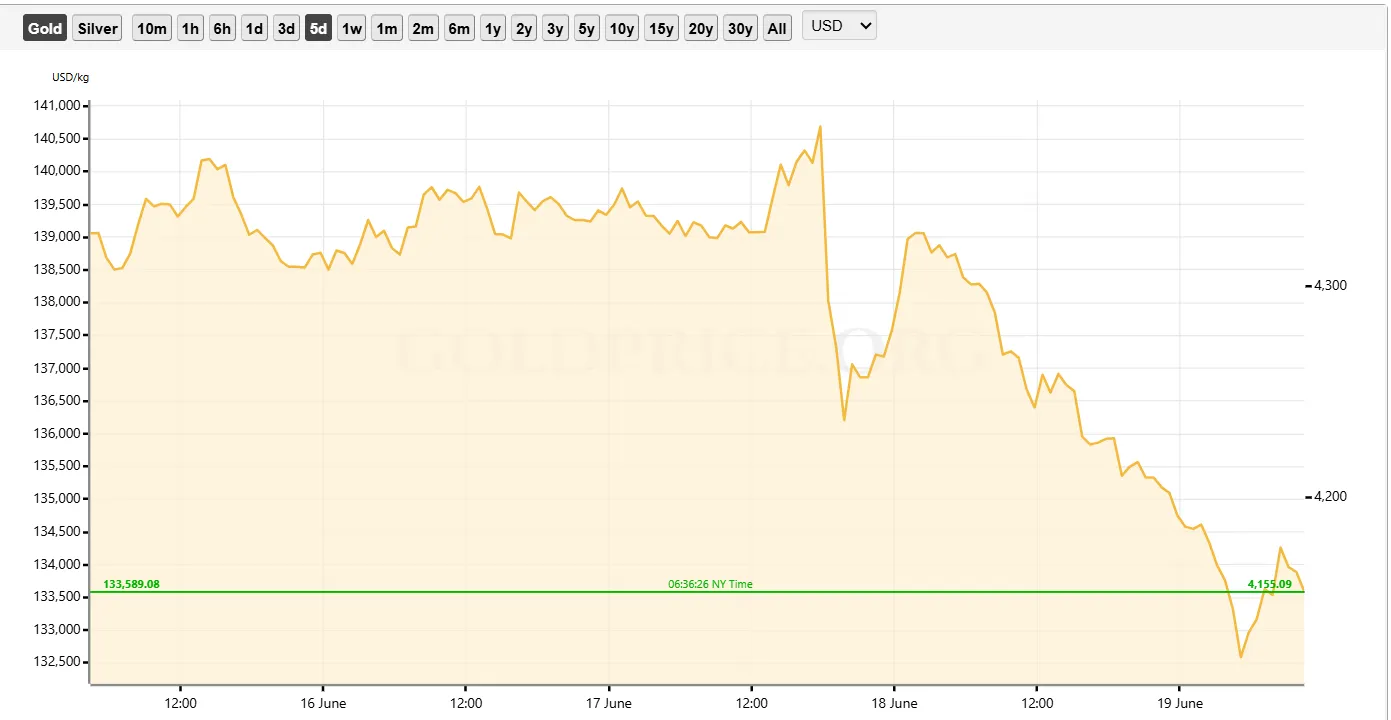
Gold prices have consequently retreated. The metal recently traded near $4,165 per ounce and is heading toward a third consecutive weekly decline.
There are three developments in recent months that have influenced sentiment.
- The Fed had been expected to lower rates several times over the past few months.
- A stronger U.S. dollar dampening foreign demand
- A higher yield on the bonds means that investors face more competition for the bond money.
Goldman analysts also commented that worries over the independence of the central bank have subsided since the first meeting as Federal Reserve Chairman Kevin Warsh. The meeting was read as being more hawkish than anticipated, thus tempering the immediate appetite for policy hedges in the markets.
The general consequences of a crisis across asset markets
The consequences are far-reaching, as well as precious metals. The easing cycle has also been delayed for cryptocurrencies and other high-liquidity assets, which are risk-sensitive.
Bitcoin has taken a hit, with traders expressing less optimism about lower borrowing rates. Stronger economic data and persistent inflation have reinforced the view that tighter financial conditions may remain in place longer than previously expected.
Goldman Sachs warned that a more aggressive Federal Reserve stance could create additional downside risk. Analysts estimated that prices could fall toward $4,400 by year-end if policymakers ultimately move toward rate increases rather than cuts.
Still, important support factors remain in place. Central bank buying continues to provide a foundation for demand, with official sector purchases expected to average 50 tons monthly this year and 40 tons monthly next year.
Conclusion
Gold is still looking up with Goldman Sachs downgrading its year-end forecast. The bank’s updated forecast reflects shifts in the expectations about the Federal Reserve policy, not a decline in underlying demand. Today’s market conditions are characterized by a continued inflationary environment, an elevated interest rate and ever-changing liquidity conditions.
The short-term risks have risen, but Goldman remains bullish on Gold’s prospects for the rest of the year, arguing that continued central bank buying and strong interest in defensive assets should keep prices higher.