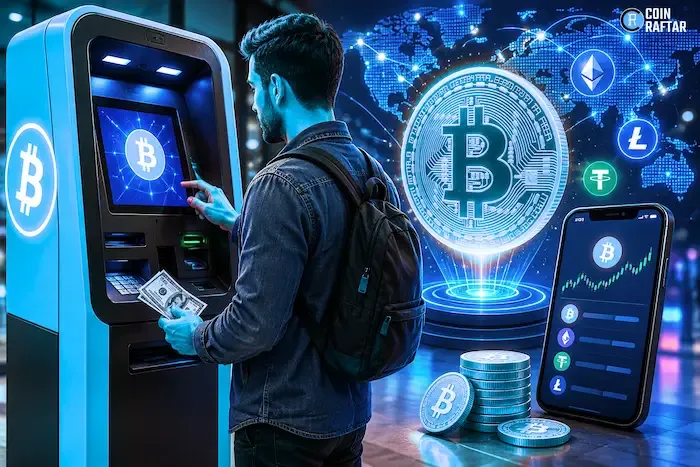
Cryptocurrencies are not restricted to online exchanges and technology-oriented users anymore. Bitcoin can be exchanged and purchased from the comfort of your home using Bitcoin ATMs. These devices are now widespread and can be seen in malls, airports, supermarkets, and many other places.
The introduction of Bitcoin ATMs has been made possible by the general interest in cryptocurrencies as well as the need for convenience while handling them. Whereas ordinary bank ATMs connect individuals to their bank accounts, bitcoin ATMs connect them to crypto exchange platforms and blockchains. According to Coin ATM Radar, there are 28,799 operational Bitcoin ATMs worldwide.
How Bitcoin ATMs Operate
The Bitcoin ATM enables people to buy Bitcoin with cash or, if the ATM supports it, even a debit card. This involves the user locating an ATM and performing transactions via the Bitcoin ATM.
Transactions via most Bitcoin ATMs take place as per the following sequence:
- Find a Bitcoin ATM
- Perform any identification verification, if necessary
- Provide your cryptocurrency wallet address
- Feed in the cash or pay using your card
- Finalize the transaction
- Retrieve Bitcoin on confirmation from the blockchain
The machine transfers the acquired Bitcoin to the destination address specified by the user. Most wallet systems can provide QR codes for scanning the destination address. Some Bitcoin ATMs may enable the sale of Bitcoin. With these machines, users will be able to send their Bitcoin to the address supplied by the machine after the transaction is confirmed on the blockchain.
Types of Bitcoin ATMs
There are two kinds of Bitcoin ATMs available at present.
One-Way Bitcoin ATMs
This kind of ATM allows users to buy cryptocurrency only. It is the most popular type of Bitcoin ATM being used today.
Two-Way Bitcoin ATMs
The two-way Bitcoin ATMs enable both purchasing and selling of Bitcoin. The presence of cash withdrawal implies that more identification is usually required before executing transactions.
Bitcoin ATM Transaction Costs Versus Exchange Rates
High transaction costs remain one of the main areas where Bitcoin ATMs differ from cryptocurrency exchanges.
According to the sources provided, transaction costs at Bitcoin ATMs can range from 7% to 20% per transaction. In contrast, transaction costs on online cryptocurrency platforms can be as low as 1% to 4%.
| Feature | Bitcoin ATM | Online Exchange |
| Buy Fees | 7%–20% | 1%–4% |
| Cash Purchases | Available | Limited |
| Transaction Speed | Minutes | Varies |
| Physical Location | Required | Online Access |
Many machines also impose minimum and maximum transaction limits. Users may be required to purchase a minimum amount of Bitcoin or remain below a maximum transaction threshold.
Bitcoin ATM Security and Verification Requirements
Identity verification has become a common requirement for Bitcoin ATM operators. Depending on the laws in effect as well as the size of the transaction, the user could be required to give a phone number, a governmental ID card, or biometric details.
Security concerns are also relevant in relation to using Bitcoin ATMs. According to the source material, users are supposed to verify the machine operators, look at their fee schedule, and confirm their wallet addresses.
It is advisable to:
- Check recent machine ratings
- Verify the contact information of the machine owners
- Ensure the correct exchange rate displays
- Verify the wallet addresses before depositing money
- Obtain transaction receipts
Bitcoin ATMs Expansion and Market Development
A growing number of Bitcoin ATMs have emerged along with the overall adoption of cryptocurrencies. The industry tracking agencies note that there are tens of thousands of Bitcoin ATMs working around the world, mostly located in the USA.
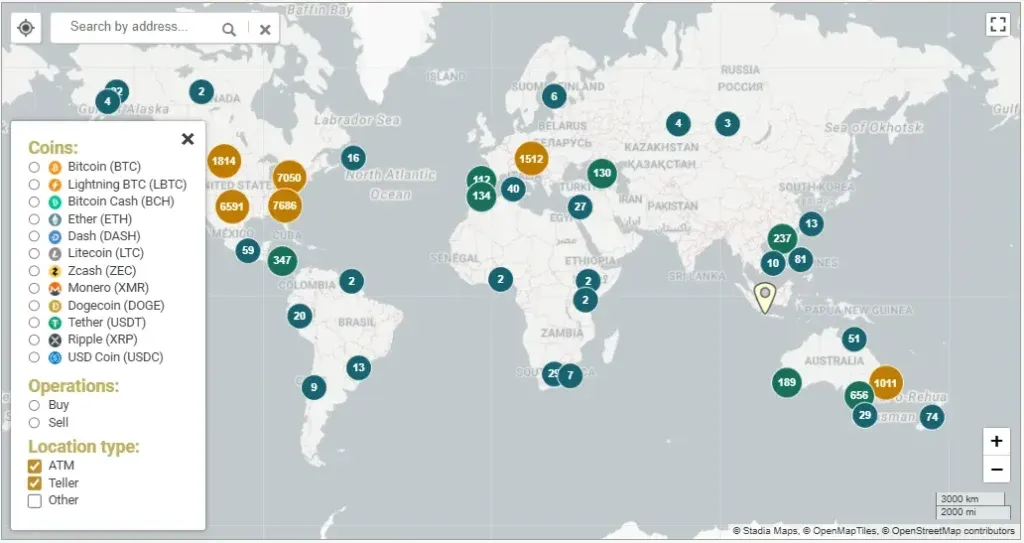
Bitcoin ATMs Global Presence Source: Coin ATM Radar
Bitcoin ATMs can be found in public places where people usually conduct financial transactions. Moreover, the presence of Bitcoin ATMs in such places offers an alternative for people who prefer to avoid dealing with online exchanges.
The development of Bitcoin ATM networks is driven by the need to purchase cryptocurrencies in cash.
Pros and Cons of Bitcoin ATMs
Bitcoin ATMs present various operational benefits.
Benefits
- Directly buying Bitcoins possible
- Supports cash transactions
- Permits speedy transactions
- User-friendly interface suitable for newcomers
Drawbacks
- Expensive transaction fees
- Susceptible to scams
- Not found in particular regions
- Restrictions on transaction amounts by particular machines
Since transactions in blockchains are not reversible most of the time, it is essential that all details be validated before making any purchase or sale transaction.
Importance of Bitcoin ATMs
Bitcoin ATMs are physical machines that facilitate access to cryptocurrencies.
However, accessing cryptocurrency through these machines reduces the technical complexity of trading platforms.
A Bitcoin ATM is also one way to buy cryptocurrencies with fiat money. As cryptocurrency technology continues to grow, the Bitcoin ATM remains an important part of the system.
Conclusion
Bitcoin ATMs have gained popularity as a way to buy and sell Bitcoin using physical machines. The transaction usually starts by verifying one’s identity, entering one’s wallet address, completing a payment, and settling the transaction on the blockchain. Even though Bitcoin ATMs make transactions easier and use cash, they come with high charges and security risks.
FAGs
What Is a Bitcoin ATM?
A Bitcoin ATM is a machine that enables its users to buy or sell Bitcoin through cash or card payment systems.
Does the use of a Bitcoin ATM require identification?
Identification can be required by some Bitcoin ATMs, depending on the regulations in place.
Can I sell Bitcoin using the Bitcoin ATM?
There are Bitcoin ATMs that allow you to sell Bitcoin, turning them into cash.
How Much Does a Bitcoin ATM Cost?
The source indicates that transaction fees range from 7% to 20%.