Key Insights:
- If clarified, the new SEC and CFTC oversight duties in U.S. digital asset markets may be a total paradigm shift.
- Banking groups continue opposing stablecoin reward provisions despite lawmakers signaling negotiations already reached conclusions.
- A successful Senate committee vote may strengthen institutional confidence toward United States cryptocurrency markets.
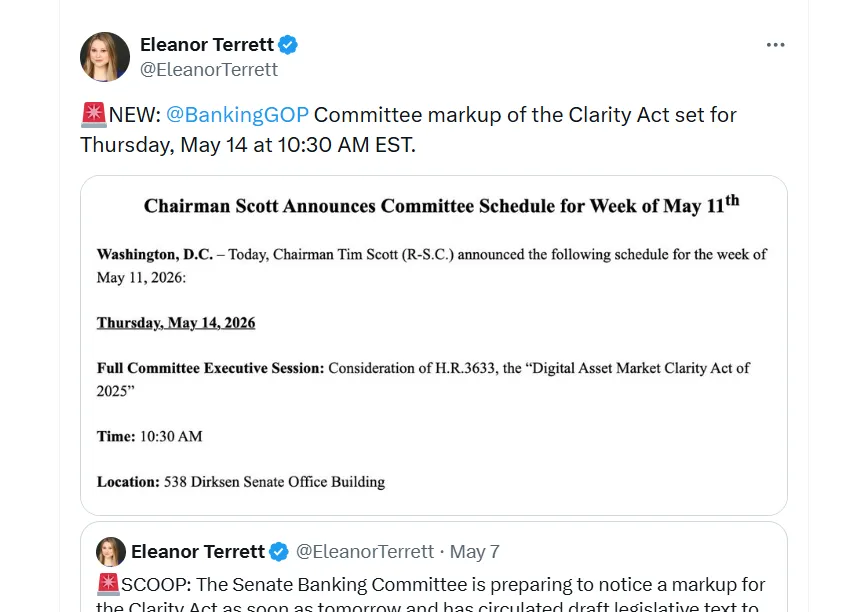
The Clarity Act moved closer toward a decisive Senate Banking Committee vote scheduled for May 14. Lawmakers plan discussing the legislation during an executive session beginning at 10:30 a.m. EST.
The upcoming markup session represents one of Washington’s most significant cryptocurrency regulatory developments this year. Crypto companies, investors, and financial institutions continue monitoring negotiations surrounding stablecoin rules and federal oversight authority.
Senator Cynthia Lummis quickly supported the committee schedule announcement through social media remarks encouraging immediate passage efforts. Meanwhile, Stuart Alderoty described the vote as an important milestone following prolonged negotiations across congressional committees.
Prediction market data currently estimates a 69% probability for crypto market structure legislation becoming law this year. Supporters believe the proposal could finally replace uncertain enforcement practices with clearer federal digital asset regulations.
Senate lawmakers debate crypto oversight responsibilities
The legislation already cleared the House after sponsorship from Representative French Hill and several bipartisan lawmakers. Under the proposal, the Commodity Futures Trading Commission would oversee most digital commodities activities.
The Securities and Exchange Commission would still maintain authority over securities-related crypto transactions and investment products. Supporters argue this structure could reduce jurisdiction disputes that previously complicated digital asset compliance efforts nationwide.
Committee Chairman Tim Scott publicly endorsed the bill alongside SEC Chair Paul Atkins. Executives from Robinhood and Coinbase also backed congressional efforts supporting clearer cryptocurrency operating standards.
Lawmakers additionally included anti-money laundering protections alongside customer safeguard requirements within the proposed framework. Industry advocates insist stronger legal clarity remains essential for maintaining cryptocurrency innovation inside United States financial markets.
Clarity act Stablecoin compromise faces banking pressure
Stablecoin reward programs remain the proposal’s most controversial section despite recent bipartisan compromise discussions among lawmakers. Senators Thom Tillis and Angela Alsobrooks previously negotiated revised language surrounding customer reward structures.
Their agreement would prohibit interest-like rewards connected with inactive stablecoin holdings resembling traditional banking deposits. However, the framework still permits activity-related rewards connected with payments and blockchain network participation programs.
Several major financial lobbying organizations continue opposing those provisions before Thursday’s scheduled committee vote proceedings. Groups including the American Bankers Association and the Bank Policy Institute submitted proposed amendments targeting stablecoin reward language.
Banking representatives warned remaining loopholes could encourage deposit migration away from insured commercial banking institutions nationwide. However, Senate aides reportedly dismissed those concerns while emphasizing lawmakers already shifted attention toward unresolved ethics language provisions.
Market confidence rises before committee decision thursday
The legislation still faces several procedural hurdles before reaching President Donald Trump for final approval. After committee passage, the full Senate must approve legislation before reconciling differences with the House version.
Industry observers believe the Senate vote could influence broader investor confidence surrounding American cryptocurrency regulation efforts. Another delay might intensify concerns regarding digital asset companies relocating operations toward friendlier overseas jurisdictions and markets.
Several Democratic lawmakers continue criticizing the proposal’s anti-money laundering protections and ethics-related enforcement standards. Critics also argue stronger safeguards remain necessary for preventing political officials from benefiting directly through cryptocurrency investment ventures.
Supporters nevertheless view Thursday’s markup session as the strongest legislative momentum cryptocurrency policy achieved during recent months. The White House reportedly hopes completing reconciliation efforts before July 4 could accelerate broader regulatory certainty across digital asset markets.
Industry leaders await final regulatory breakthrough outcome
Crypto executives increasingly describe the legislation as essential for preserving blockchain innovation and institutional investment growth domestically. Market participants argue unclear federal oversight previously discouraged companies from expanding operations throughout United States cryptocurrency markets.
A successful committee vote could encourage additional institutional participation while strengthening long-term digital asset market confidence nationally. Investors also expect regulatory clarity could improve exchange compliance standards and reduce uncertainty surrounding token classifications moving forward.
Although congressional negotiations remain unfinished, lawmakers now appear closer toward establishing comprehensive cryptocurrency market structure legislation. Thursday’s Senate Banking Committee session may ultimately determine whether Washington finally delivers lasting digital asset regulatory certainty.
FAQs
1. What is the Clarity act?
The proposed U.S. legislation called the Clarity Act is for creating more transparent oversight and regulatory duties for cryptocurrency markets.
2. When is the vote of the Senate committee?
The Senate Banking Committee has set May 14, at 10:30 a.m. EST, for a markup vote.
3. Who would regulate cryptocurrencies according to the bill?
The proposal entrusts primary powers to the CFTC for regulating the digital commodities and retains those of SEC.
4. Why are banks against the stablecoin reward provision?
Banking organizations are wary of the possibility that stablecoin incentives might draw in their customers to transfer their deposits out from the banking system.
5. Once the bill is approved by a committee, does it automatically become law?
No, it is not yet possible for the president to sign identical versions from both houses of Congress.