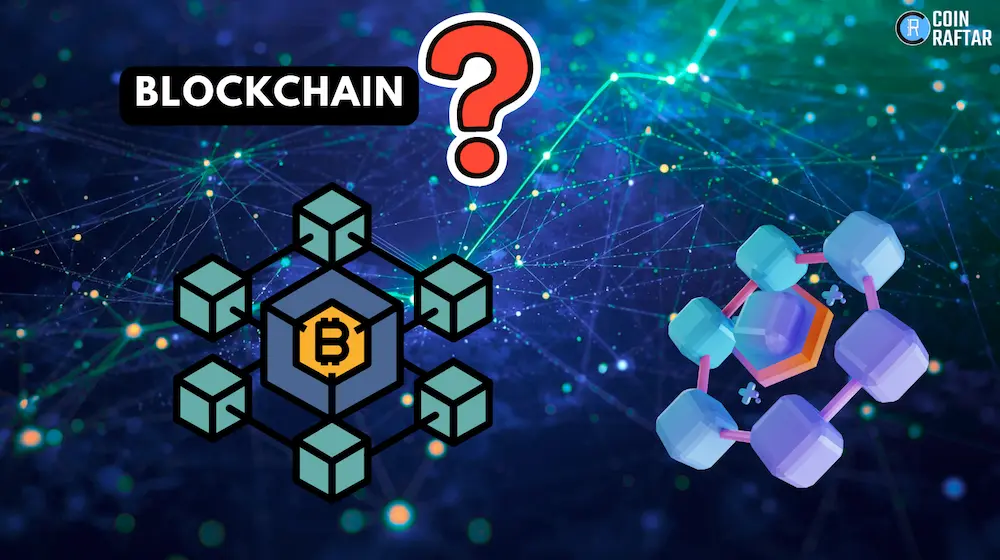
Blockchain explorers remain important for studying blockchain activity, especially for Ethereum, where all transactions are recorded openly and easily understood. Blockchain explorers are software tools that provide an easy-to-use interface for analyzing blockchain data without having to deal with datasets.
Moreover, Etherscan enables you to organize Ethereum blockchain data into a searchable database, track transaction history, examine wallet balances, and review smart contracts without creating an account.
How Etherscan Functions as a Blockchain Search Engine
Block explorers are like Google for blockchains. Rather than searching for raw records on the blockchain, one can use a tool such as Etherscan to get the data. All actions on Ethereum are permanently stored but require technical knowledge to interpret.
Source: Etherscan
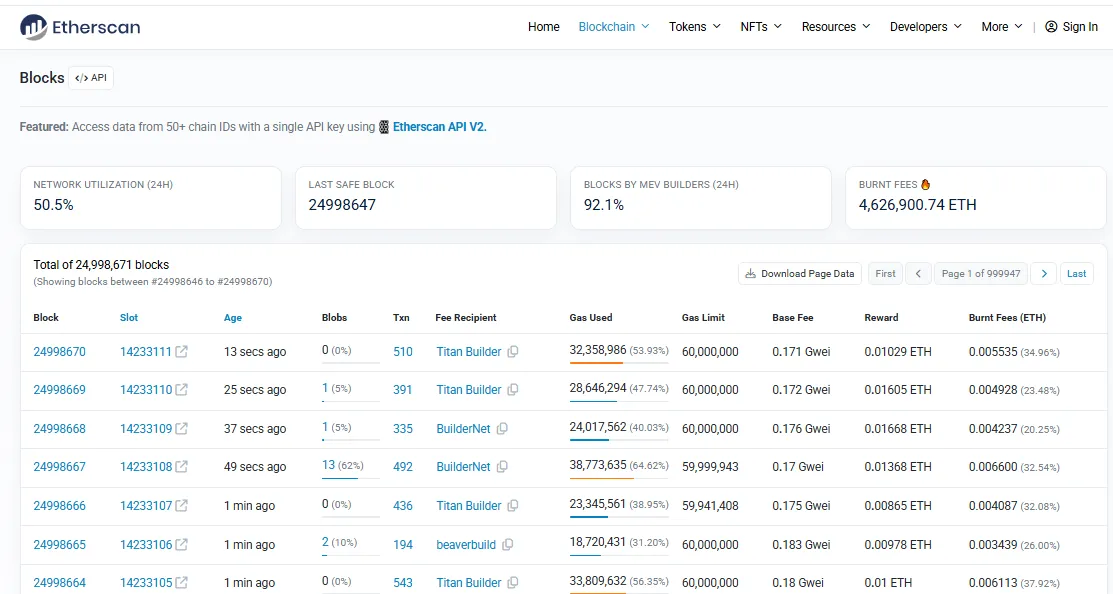
Etherscan fetches this data and displays it in a user-friendly manner. A search can be done via transaction hash, address, or contract address. This allows the user to easily find transactions.
This website has adapted to the changes in Ethereum. Etherscan updated its site in 2024 to include a new look and a host of new features, including support for Layer 2 networks.
Everything You Need To Know About Etherscan
Etherscan has several key features for interacting with the blockchain. Probably the most popular option is transactions. Each transaction has a unique transaction hash (TXID). When entered into the search engine, it will take you to a page containing all the details of the transaction, such as the status, date, and addresses.
The transaction page contains important information. The status can tell you if the transaction is pending, confirmed, or not. The block number is the block where the transaction was stored, and the time is the exact time of the transaction.
The source and destination addresses of the transaction are also shown on the transaction page, along with the amount sent and the gas fees paid. Etherscan can be used to search for transactions and wallet addresses. This includes the balance, transactions, and tokens stored in the wallet.
The application also includes a search for contracts. One can look up the details of the contract, including the code used and the balance, among others. Through this function, one can analyze the contract’s functionality before interacting with the dApp.
Tools of Block Explorer and Transparency of Ethereum
Block explorer applications help provide transparency into blockchain transactions by providing open access to the information stored about transaction details. It allows one to check if a transaction has occurred, is pending, or has not gone through. This feature can be used for regular transactions and transactions with decentralized apps.
Etherscan can be used to check whether the user’s wallet has approval to spend tokens. This can be used to track and remove access.
Users can also research tokens, verify addresses, and check the addresses of token holders.
On-Chain Data Analysis and Analytics
Etherscan can provide on-chain analytics for the blockchain network. Etherscan displays the volume of transactions, gas consumed, and the total value of transactions on the network. This information can be used to detect usage trends. For example, a spike in transactions or gas fees may suggest increased network activity.
The platform also has the capability to monitor transactions made by large wallets. From the transaction history, it is straightforward to determine transactions made by wallets holding large amounts of Ether. The information is public and visible through the explorer’s interface.
In addition, the website contains information on gas prices, including the average over recent times and information from recent blocks.
Additional Features and Access Options
The majority of Etherscan’s features do not require an account registration. Nevertheless, by creating a free account, users gain access to additional features, such as an address watchlist that notifies them of any actions associated with the chosen wallets.
It is also possible to add private comments for transactions. The EtherScan service provides an application programming interface (API). Developers can use the API to access blockchain data and build software solutions, such as analytics systems or custom explorers.
Despite these features, Etherscan is not a crypto wallet. The system does not provide any functions related to transferring cryptocurrency. Users carry out transactions through third-party wallets, while Etherscan provides access only to information from the blockchain.
Navigating the Blockchain Through Block Explorer Tools
Block explorers allow one to systematically navigate the blockchain through tools that present the complicated blockchain data in such a way that is easier to search through. This is what enables Etherscan to categorize data from the Ethereum blockchain.
The system enables individuals to access information accurately by displaying the details recorded on the blockchain through an intuitive interface. The system is purely dependent on publicly recorded data, ensuring that the information provided is factual.