Cryptocurrency vesting has been one of the most talked-about topics in tokenomics, especially among investors who research token unlocking schedules before investing in cryptocurrencies.
Token vesting refers to the unlocking schedule for tokens locked by private investors, venture capitalists, project development teams, advisory boards, and even ecosystem funds. With many blockchain projects releasing tokens with very little circulating supply but high fully diluted valuations, there has been growing interest in token unlocks in the crypto world.
Vest calendars for cryptocurrencies have become a routine consideration, along with metrics such as circulating supply and transaction volume, when assessing potential future supply pressure.
Crypto Vesting Structure Basics
Typically, most crypto assets are locked in large amounts at launch. This includes allocation to early adopters, venture capitalists, the founder, ecosystem reward, treasury, and the development team. Moreover, tokens are unlocked according to preset vesting terms.
 Source: analytickit
Some popular crypto vesting models are listed below:
Vesting Cliff
Coins remain locked until they are released in a single batch after the vesting cliff period elapses.
Linear Vesting
Coins are gradually unlocked over time, with daily, weekly, or monthly unlock periods.
Hybrid Vesting
In this vesting model, coins remain locked for a certain period, after which they are released to the market.
A growing number of investors are tracking unlock periods from various websites such as Token Unlocks, CoinMarketCap, CoinGecko, and Messari.
How Token Unlocks Affect Cryptocurrency Prices
Cryptocurrency vesting affects coin circulation by increasing the circulating supply. If the demand for the coin remains stagnant, then prices may decline.
Token unlocks are considered particularly significant because they could be associated with the following actions:
- Profit-taking by early-stage investors
- Venture capital funds are cutting their position sizes
- Institutions making their allocations tradable
In illiquid altcoins, such actions may have an outsized impact on pricing. Supply-based valuation methods are essential when assessing the value of cryptocurrencies.
Market Cap = Token Price * Circulating Supply
As a result of increased circulating supply from crypto vesting, a higher token price would be possible only with stronger market demand and more liquidity inflows.
Source: changenow
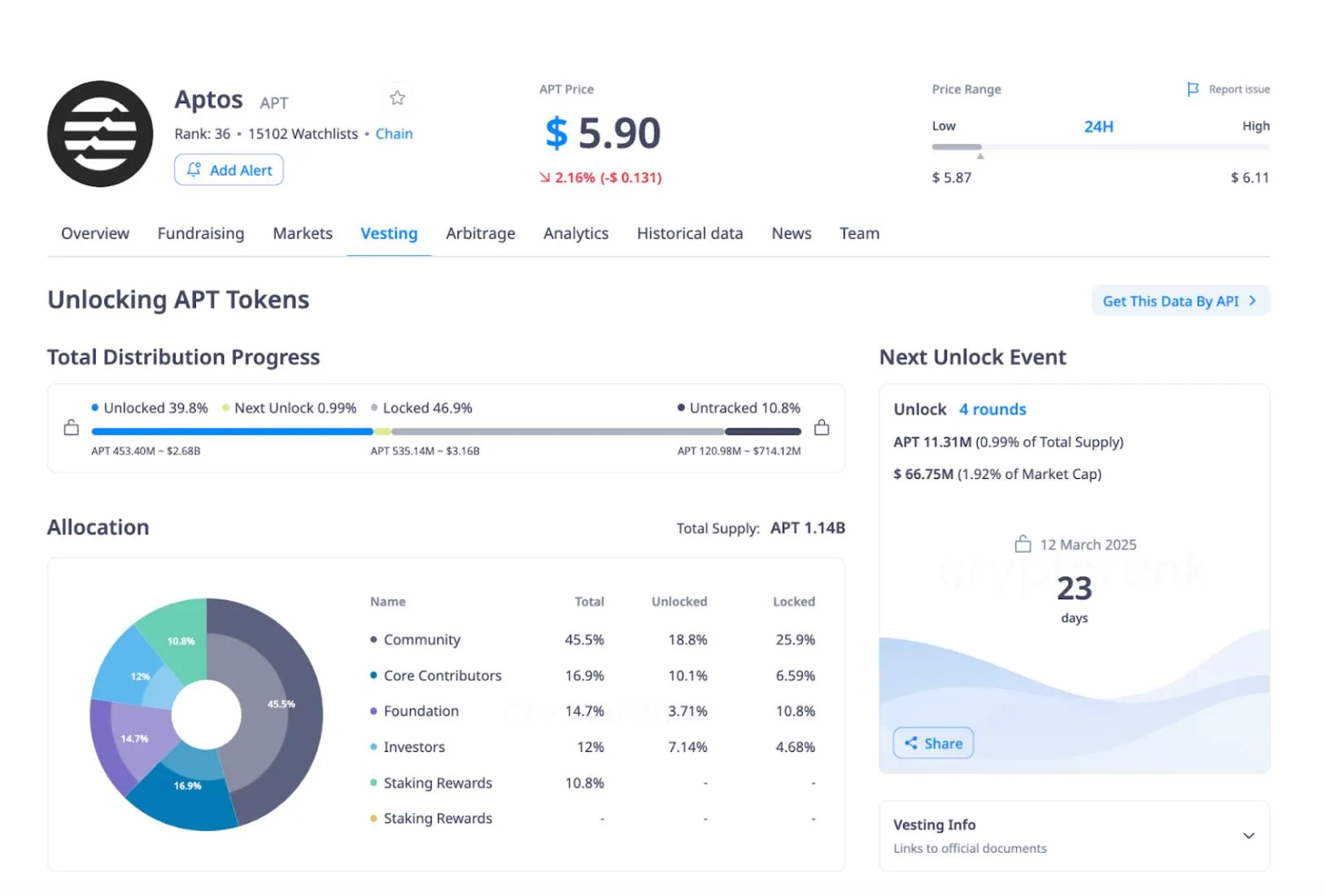
Some notable blockchain projects gained greater investor traction through token unlocks, including Arbitrum, Aptos, Solana, and Sui.
FDV in Cryptocurrency Understanding
The Fully Diluted Valuation, also called FDV, is an indicator that calculates a cryptocurrency’s total market capitalization assuming all tokens have been unlocked.
FDV=Token Price×Maximum Token Supply
The concept of FDV has gained prominence because several new crypto projects have launched with small token circulations while trading at high valuations.
Such an arrangement can be problematic as more tokens are unlocked and enter circulation. Today, it has become common practice for investors to:
- current market capitalization
- FDV ratios
- future unlock schedules
- circulating supply growth
before entering cryptocurrency positions.
Why Investors Monitor Crypto Vesting Calendars
Crypto vesting analysis has become a standard part of tokenomics research across the digital asset market.
Experienced investors usually take into account the following:
- Locked tokens as a percentage
- Token unlock schedule
- Distribution of tokens among investors
- Level of insider shareholding
- Token emission strategy
A fast token unlock schedule may lead to increased volatility in the initial stage after a project’s launch, due to more frequent unlocks. On the other hand, more gradual vesting could lead to lower token volatility, as it spreads over many years.
Cryptocurrency vesting also affects:
- Price action
- Liquidity
- Volatility
- Investor sentiment
- Sustainability
Tracking the vesting schedule allows investors to spot periods when supply growth can significantly influence market dynamics.
Conclusion
The practice of investing in cryptocurrencies remains significant for assessing investment potential in projects in the field of crypto tokens and token economics. The increase in supply through token unlocks becomes an increasingly important factor in investors’ decision-making process.
Frequently Asked Questions
What is crypto vesting?
Crypto vesting involves gradually releasing locked tokens over time.
Token Unlocks’ Impact on Price
A token unlock increases the circulating supply by adding the locked tokens to it.
What Is FDV In Cryptocurrency?
FDV or Fully Diluted Valuation measures the value of a crypto asset assuming that all tokens are unlocked and in circulation.
Why Are Token Unlock Dates Important for Investors to Watch For?
Token unlock dates are important for investors to understand potential dilution risk, insider allocations, and future supply increases.