Key Insights:
- The effects of the disruptions in Hormuz are placing the markets in the risk shock to inflation repricing dynamics in the world markets.
- The oil prices are still high even after partial normalization as it demonstrates persistent geopolitical risk premiums.
- Bitcoin is becoming more and more reactive to the liquidity conditions, instead of being directly responsive to the particular geopolitical developments.
The developments in Hormuz are transforming the global markets as marine traffic slowly gets back to normal after weeks of disturbance. The latest naval escorts by the United States have reinstated a limited shipping traffic through the strategic waterway.
With almost a fifth of the world oil trade, the chokepoint continues to be central to the sensitivity of the market. Investors are no longer rushing towards panic-based responses and towards a more controlled inflation repricing phase. This shift represents a significant change in the prior panic of an extended blockade and a huge supply shock.
Although there are still high risks, the partial normalization has eased the urgent fears of long-term energy deficiencies. Shipping patterns and geopolitical signals are under close observation, as further evidence of stability.
The changing scenario has kept on affecting international risk appetite and capital allocation approaches in the asset classes.
Oil Prices level after recent supply shock.
Prices of crude oil which had soared beyond $110 in the worst moments are slowly stabilizing. Before it slightly relaxed in the later trading sessions, Brent crude was trading at an average of about $114.
West Texas Intermediate also surpassed a $100 and above, as the expectations of tight supply during disruptions. The reported attacks on infrastructure in Fujairah and increased maritime aggressions across the Gulf were followed by the spike.
The destruction of major storage and export facilities enhanced the fear of long term supply limitations in the world markets. According to analysts, the markets continue to price a geopolitical risk premium associated with the continued uncertainty.
Though there is a bit of relaxation, inventories are tight and it is estimated that there is a shortfall of up to 15 million barrels per day. This unbalance has kept on promoting high prices despite slow shipping activity that is yet to recover.
Macro repricing indicates the alleviation of pressure in the energy markets.
The oil market stabilization is also affecting more macroeconomic forecasts, especially on the inflation trends in the world market. The decreasing near-term inflation projections, which were fueled by supply shocks, are being lowered by lower energy risk premiums.
This adjustment is also taking some of the burden off of central banks and may mean that monetary policy can become more flexible. Better liquidity conditions are developing as the markets unwind defensive positions built in the most volatile times.
The world bodies have cautioned that in case of sustained disruptions the oil prices might still hit $125. The International Monetary Fund pointed out dangers to growth, and the greater economic implications of long-term shocks.
In the meantime, the World Bank observed that the increase in the cost of energy would have a second-order effect in food and inflation sectors. These accruing effects signify the relevance of stability within Hormuz in ensuring harmonious global economic environments.
Bitcoin tracks liquidity trends over headlines
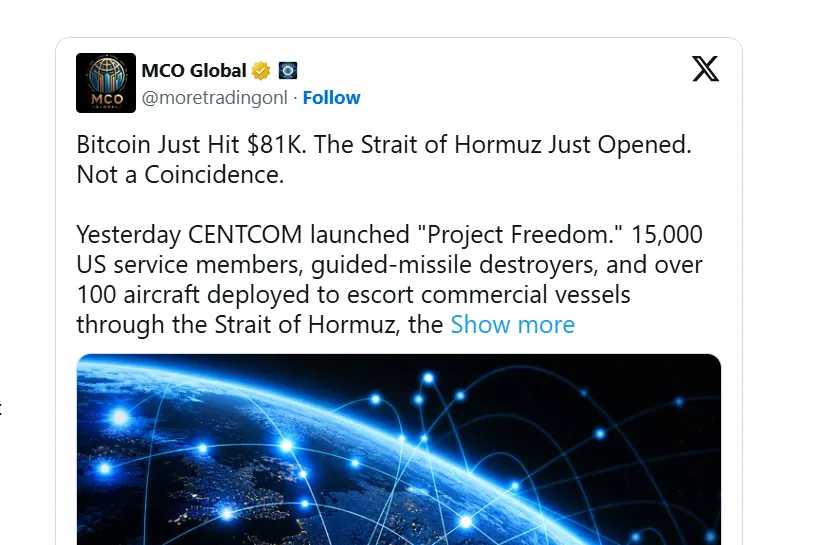
The trend of Bitcoin to the $81,000 mark can be seen as an indicator of increased liquidity and not a direct response to geopolitical changes. Earlier in the cycle, digital assets responded with sensitive reactions to escalation risks associated with Hormuz tensions.
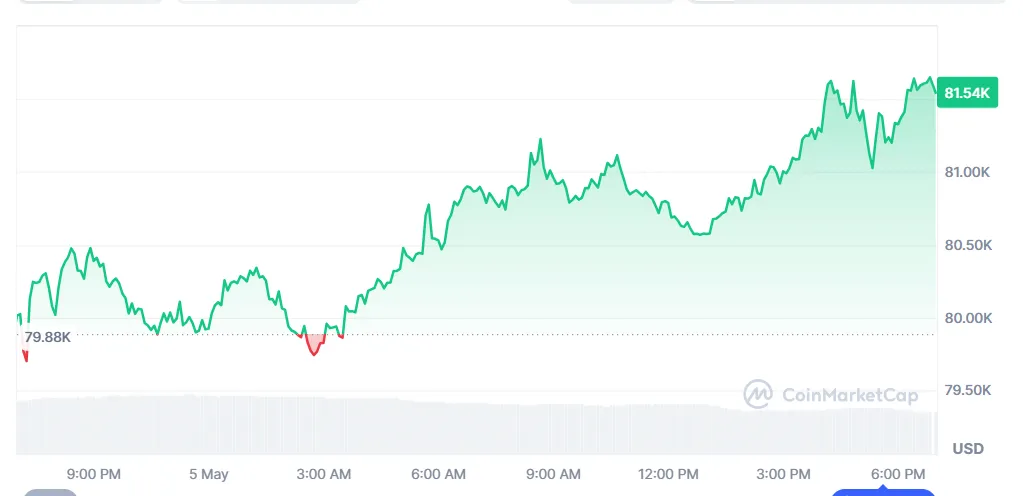
At present, the market is more responsive to macro factors that involve inflation expectations and capital flows. This move underscores the increased maturity of crypto markets in the context of larger financial systems and risk models and structures.
Although the oil volatility was reduced, the Bitcoin traded at lower than $77,000 in the recent Asian trading sessions. The small returns represent cautiousness as investors strike a balance between the improving market and other geopolitical risks that remain.
The renewed inflows to crypto markets are gradually taking place as traders slowly turn back to higher-risk assets. This rotation highlights the interdependence of energy markets, liquidity status, and digital asset performances.
Conclusion
The dynamic state of affairs in and around Hormuz has been continuously influencing market behavior in the global market, both in terms of energy and financial resources.
Although partial normalization has alleviated some of the immediate fears, underlying risks are major due to the current geopolitical tensions. Oil markets will continue to be volatile with the oil supply constraints and security issues prevailing in the region.
In the case of investors, there has been a shift in the focus to macroeconomic implications, especially inflation and liquidity situation. With markets shifting to recalibration rather than response to crisis, the risk/opportunity balance is still delicate.The future of Hormuz will contribute significantly towards shaping the future of global markets.
FAQs
1. What is the significance of Hormuz to the global markets?
About twenty percent of oil transactions worldwide are carried out by Hormuz, and as a result, it is very important to Hormuz in terms of stability of oil supply.
2. What was the cause of the recent oil prices explosion?
The rise of prices was caused by disruptions in the supply, damage of infrastructure, and increasing geopolitical tension in the Gulf region.
3. What is the reason why oil prices are becoming stable now?
Restricted shipping remedies and lessened immediate blockade anxieties are alleviating the supply worries and unpredictability.
4. What are the implications of these developments to Bitcoin?
Bitcoin is reacting more to liquidity and inflation expectations than actual geopolitical events.
5. Would the oil prices increase further?
Yes, the long term disturbances or a new wave of disturbances might drive prices up as the supply conditions are constrained.