- The tokenization of JPMorgan’s treasury funds was registered on Ethereum.
- Morgan Stanley and BlackRock added tokenized Treasury reserve assets.
- JLTXX fund offers digital wallet transfers and blockchain-based collateral utilization.
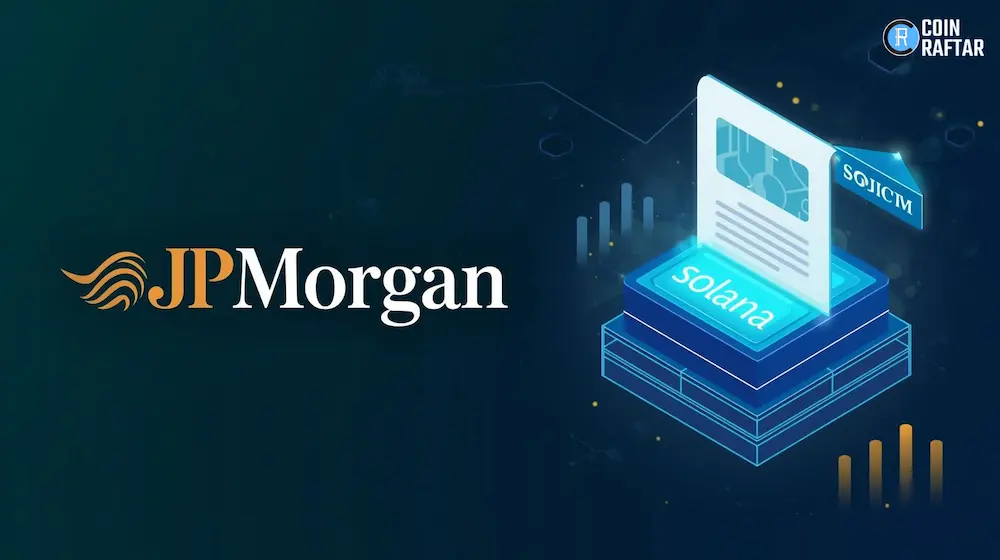
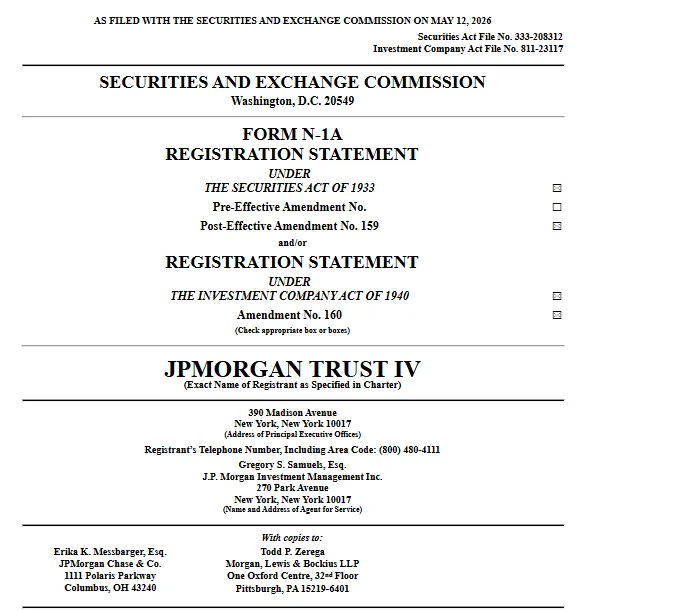
JPMorgan tokenized money market fund plans have added to growing institutional activity involving blockchain-based Treasury products and stablecoin reserve management. The banking institution filed paperwork with the U.S. Securities and Exchange Commission for the JPMorgan OnChain Liquidity-Token Money Market Fund under the ticker JLTXX.
According to the filing, the proposed fund would issue tokenized shares on the Ethereum blockchain while maintaining exposure to traditional financial instruments, including U.S. Treasuries and repurchase agreements.
Source: U.S. Securities and Exchange Commission
The filing showed that the tokenized shares would represent ownership interests in the underlying portfolio and would allow investors to transfer holdings through digital wallets.
JPMorgan also stated that transactions involving the proposed fund may settle within minutes instead of the standard one-to-two business day settlement period commonly associated with traditional money market products.
The proposed structure would still rely on a traditional custodian to hold the underlying assets despite the blockchain-based issuance model. The fund is expected to operate through JPMorgan’s blockchain division, Kinexys Digital Assets.
What the JLTXX Filing Includes
According to the SEC filing:
- The fund would issue tokenized shares on Ethereum
- The portfolio would consist of U.S. Treasuries and repurchase agreements
- Investors could transfer shares through blockchain wallets
- The tokenized shares may be used as collateral in crypto-related markets
- Settlement times may occur within minutes instead of several business days
The filing also disclosed that the JPMorgan tokenized money market fund would require a minimum investment of $1 million. In addition, the fund would carry a 0.16% annual fee after waivers.
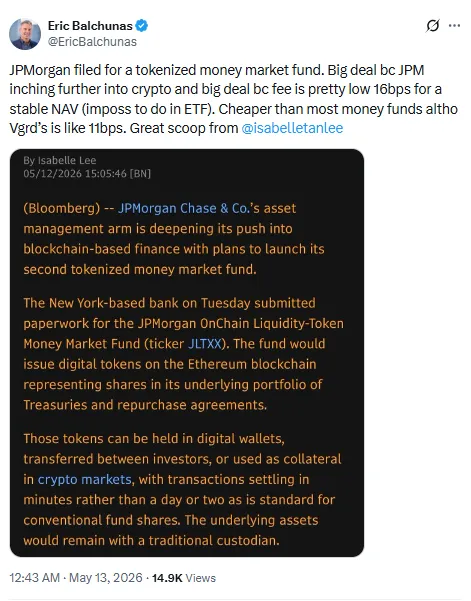
Bloomberg Senior ETF analyst Eric Balchunas stated on X that the filing represented a significant development because of the comparatively low fee structure for a stable net asset value money market product.
Source: Bloomberg Senior ETF analyst Eric Balchunas
Ethereum Continues Supporting JPMorgan Tokenization Products
The JPMorgan tokenized money market fund follows the launch of the bank’s earlier blockchain-linked investment product, the My OnChain Net Yield Fund, known as MONY. The fund launched in December and also operates on the Ethereum network.
MONY holds short-term debt securities designed to generate returns above traditional bank deposit rates. As previously disclosed, interest and dividends on the product accrue daily.
The latest filing also arrived shortly after JPMorgan participated in a tokenized Treasury pilot transaction involving the movement of a tokenized U.S. Treasury fund from the United States to one of the bank’s Singapore accounts. The transfer reportedly used XRP Ledger infrastructure alongside interbank payment rails and was completed within seconds.
Wall Street Expands Stablecoin Reserve Products
The JPMorgan tokenized money market fund filing comes as several financial institutions continue introducing blockchain-linked Treasury and reserve products.
In April, Morgan Stanley launched the Stablecoin Reserves Portfolio. The product allows stablecoin issuers to place reserve assets into one of the bank’s money market funds while earning interest on reserve balances.
At the same time, BlackRock filed applications with the SEC seeking approval for two tokenized money market funds. One proposed product, the BlackRock Select Treasury-Based Liquidity Fund, or BSTBL, reportedly manages around $6.1 billion in assets under management and is expected to tokenize those assets on Ethereum.
The JPMorgan tokenized money market fund filing therefore, adds to growing competition among major financial institutions seeking to expand tokenized Treasury products tied to blockchain infrastructure.
Real-World Asset Tokenization Continues Growing
Blockchain-based tokenization of traditional financial products has continued to expand across multiple asset categories. According to data from RWA.xyz, more than $32.2 billion in real-world asset exposures, excluding stablecoins, are currently tokenized.
The stated amounts refer to tokenized exposure to bonds, commodities, equities, and real estate. Capital market players have concentrated on tokenized instruments that can streamline the processes of operation and settlement speed.
Effects on Blockchain Treasury Instruments
Immediate effects:
- Broadening the range of investment in tokenized Treasury securities
- Increased participation of firms in blockchain settlement platforms
- Continuous utilization of the Ethereum blockchain platform for tokenized financial instruments
Future effects:
- Increased utilization of blockchain settlement platforms
- Increasing numbers of tokenized reserve management instruments
- Increased rivalry between firms involved in tokenized funds
Conclusion
The new JPMorgan tokenized money market fund filing will contribute to expanding institutional activity in blockchain-based Treasury instruments and reserve management platforms.
Frequently Asked Questions
What is the JPMorgan tokenized money market fund?
The JLTXX is a blockchain-based money market instrument that is backed by United States Treasury securities and repurchase agreements.
Which blockchain technology will be utilized for the fund?
According to the documentation submitted, the tokenized units will be powered by the Ethereum blockchain.
What is the minimum investment requirement?
The filing disclosed a minimum investment threshold of $1 million.
Who will manage the fund?
The proposed product will be managed by JPMorgan’s blockchain division, Kinexys Digital Assets.