Decentralized finance, also known as DeFi, is a decentralized approach to the financial system that involves users earning passive income by providing liquidity to trading pools. Most individuals invest in the hope of steady returns; however, market fluctuations can result in lower returns.
Impermanent loss occurs when token prices in a liquidity pool vary from the investment price. This affects profitability, and the implications are felt when the investors pull out their investments.
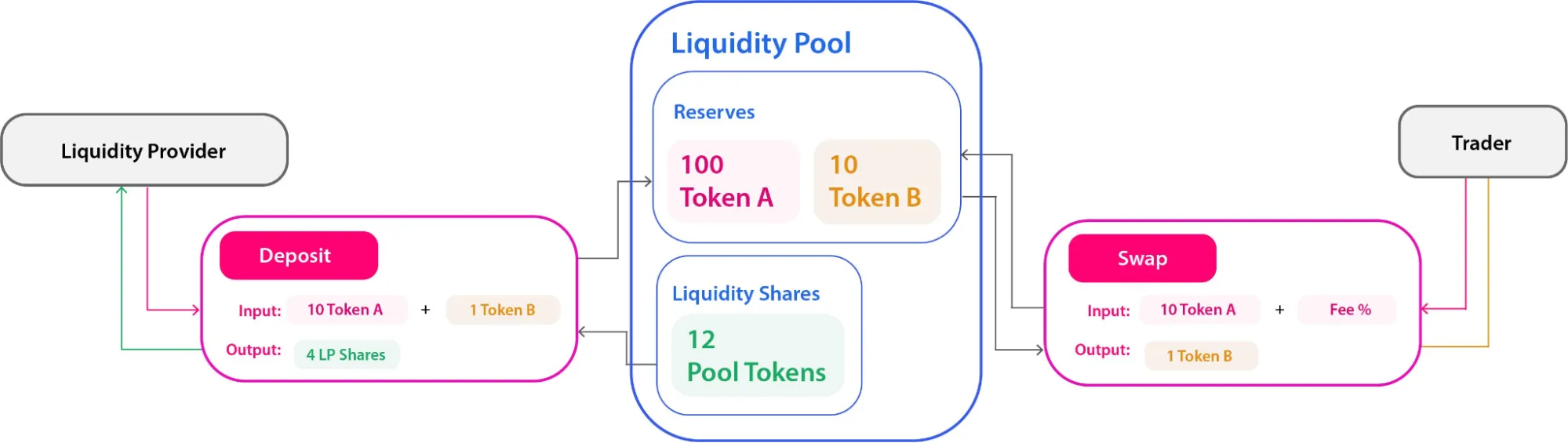
Liquidity pools form the core of decentralized exchanges by providing a new way to conduct trading activities, rather than using order books. Popular platforms such as Curve Finance and Balancer use AMM models to facilitate trading.
Source: readysetcrypto
Investors provide two types of funds worth the same amount, say ETH and USDT, and receive a percentage of the trading fees in the pool.
How Impermanent Loss in DeFi Emerges
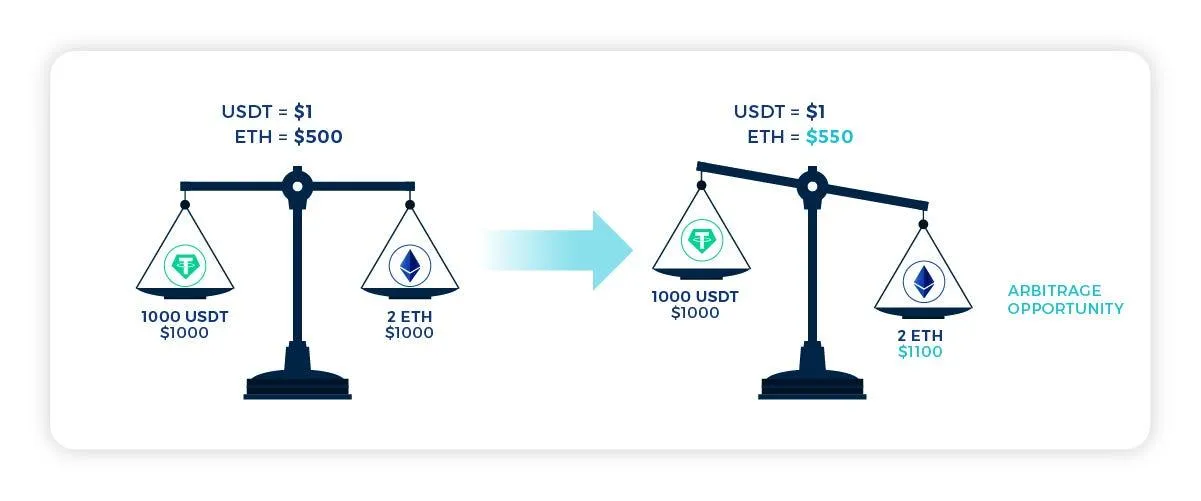
The concept of impermanent loss in DeFi is intrinsically tied to the difference in the value of the two tokens. If the value of one token grows compared to the other token, then arbitrageurs will buy that particular token from the liquidity pool at a relatively low price.
For example, if the price of ETH increases substantially, arbitrageurs will pull out ETH from the liquidity pool and deposit more USDT. Eventually, the amount of ETH deposited in the liquidity pool decreases as the price of ETH continues to rise.
Source: Medium
The bigger the gap between asset prices, the greater the change in the pool, making the gap between assets larger.
Impermanent Loss Instances in DeFi
This can be illustrated by providing an example of liquidity provision. When the user provides liquidity using ETH and USDT, at $2,000 per ETH, the distribution is even. But when ETH reaches its target price of $3,000, this pool will automatically reach equilibrium.
When this happens, traders purchase ETH from the pool at a relatively lower price. It means that there is less ETH available to the liquidity providers but more USDT.
If the investor withdraws the funds during this period, the overall value of the funds is lower than if the investor had just held the ETH outside the pool.
Slippage in Liquidity Pools Adjustment
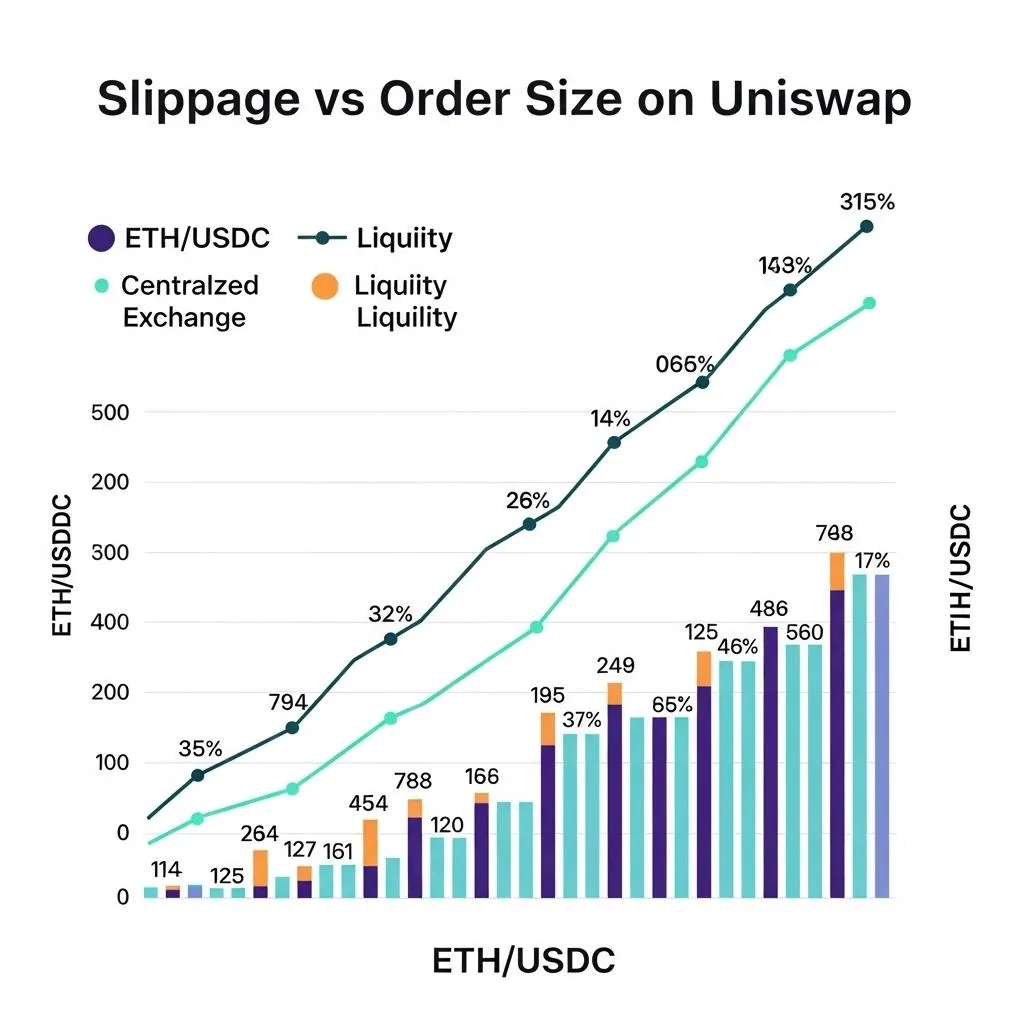
Slippage is an important factor in liquidity pools. The difference between the expected and the actual prices at which a transaction occurs is referred to as the price gap. Slippage is more likely to increase on decentralized exchanges when liquidity is low or trade volume is high.
Source: Sei
The more the slippage, the quicker the pool rebalances. Adjustments of the token ratios enhance the balancing process. This occurs at periods of high trading. The liquidity provider’s asset movements occur at a faster rate.
Slippage helps explain how quickly a location can change in a pool, based on market volatility.
Factors Affecting Impermanent Loss in DeFi
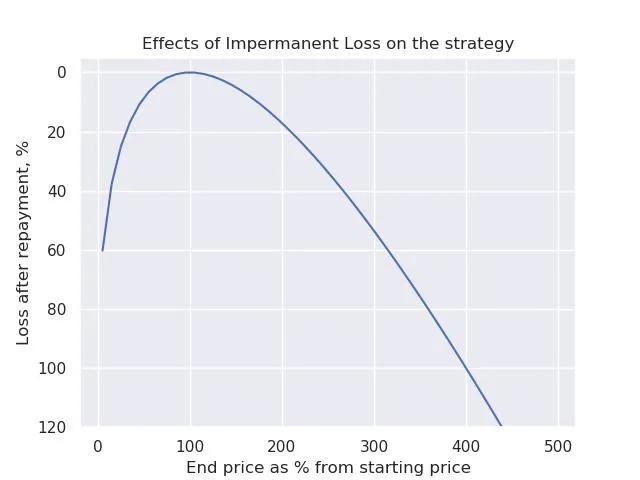
The impermanent loss in DeFi can be reversed in some cases. If the value of tokens returns to its initial state, then no losses will occur. It means the results will depend on the market state and the withdrawal period.
Source: Meduim
Liquidity providers can also earn trading fees from transactions within the pool. For pools with steady trade volume, trading fees can mitigate the impact of price divergence.
The size of impermanent loss depends on the price disparity between assets. Higher price volatility means greater reallocation of the pool to rebalance the shares that liquidity providers hold.
Management of Impermanent Losses
The management of impermanent losses in decentralized finance entails choosing strategies that minimize exposure to price volatility. This includes the use of stablecoin pairs, in which all the coins have stable prices. Such an arrangement would limit the degree of price divergence.
Furthermore, adding liquidity when the market is flat will help prevent major divergences. Also, one should avoid using very volatile token pairs.
Focusing on high-volume pools will increase the likelihood of fee generation, helping neutralize the impact of impermanent loss. In addition, some users choose to spread their money across several pools to diversify.
Conclusion
Impermanent loss is a real phenomenon in decentralized finance, linked to how liquidity pools work. With fluctuations in token prices, rebalancing occurs, resulting in different values when comparing investments in pools to those when liquidity providers hold tokens outside the pools.
FAQs
What is impermanent loss in DeFi?
In DeFi, impermanent loss is the difference in the prices of tokens from when they were first added to the liquidity pool.
Is impermanent loss forever?
Impermanent loss is not forever unless the diverging asset prices persist until the withdrawal point.
What leads to impermanent loss in DeFi?
Price divergence in paired tokens in a liquidity pool results in impermanent loss by rebalancing through arbitrage.