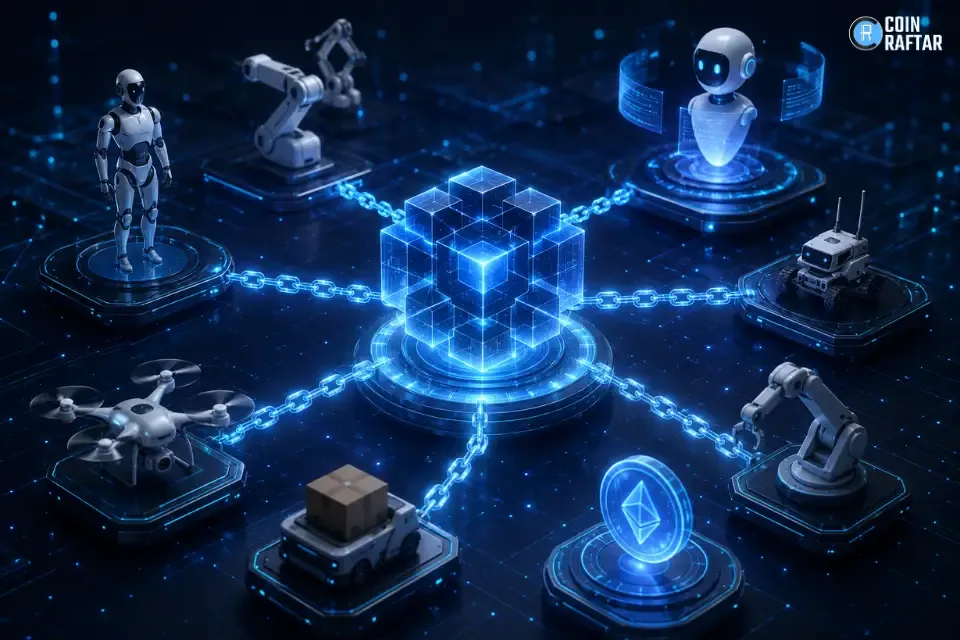
As the field of artificial intelligence transitions from software to robotics and autonomous systems, fresh issues of collaboration, trust, and regulation arise. One possible answer lies in blockchain, and Fabric Protocol is one such blockchain-based solution for providing an underlying decentralized infrastructure that enables connections between robotics, AI agents, and autonomous systems via smart contracts.
Created by the Fabric Foundation, a non-profit dedicated to creating infrastructure for intelligent machines, the protocol provides connections between the machine’s identity, behavior, and actions in a blockchain-based ledger format.
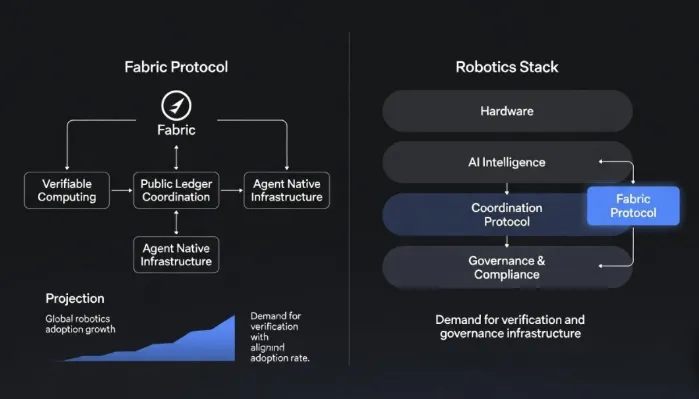
Fabric Protocol is a decentralized infrastructure layer that orchestrates robots, artificial intelligence agents, and autonomous systems through blockchain-enabled validation and smart contract enforcement. Fabric Protol is created by the Fabric Foundation, a nonprofit organization whose primary aim is to build infrastructure for intelligent machines in both the physical and digital worlds. The system also introduces ROBO, a fixed-supply utility token used for payments, governance, staking, and machine coordination across the network.
Source: Binance
The protocol is structured around four core design areas: robot financing, agentic payments, data coordination, and governance frameworks, described as constitutional robotics.
Machine Identity and Task Execution in Fabric Protocol
Fabric Protol uses cryptographic machine identity as a foundational component of its system. Each robot or autonomous agent is assigned a persistent digital identity linked to hardware-based cryptographic keys. This identity system is used for keeping the operational history, verifying the participation in any task and also paying out the ROBO tokens after successful payment settlement.
The decentralized coordination system works by using task pools, where tasks are matched to machines based on their capacity. Within these pools, the robot can place its bid based on its operational capabilities and reputation.
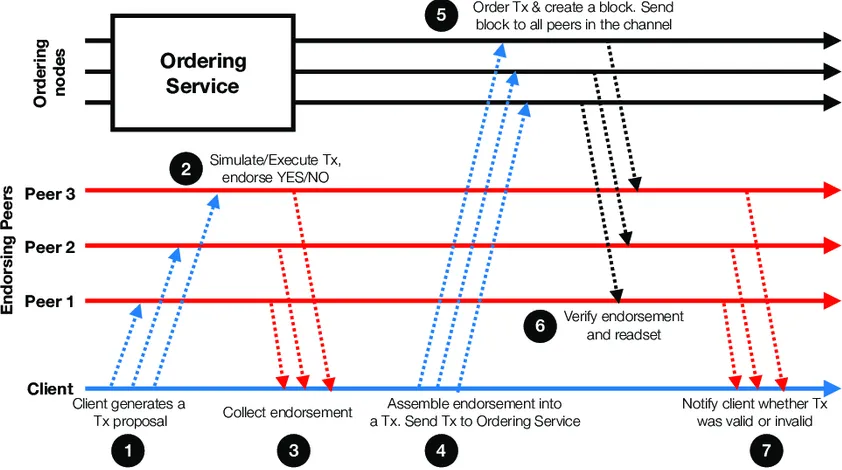
However, task completion verification is achieved through the Proof of Robotic Work (PoRW). In such instances, the robots have to offer evidence of the work that was done via GPS logs, camera images, and telemetry. Tasks that fail verification or present invalid proof do not receive compensation under protocol rules.
Fabric Protol Structures Robot Financing, Payments, and Data Systems
Fabric Protol introduces a financing model designed for robot manufacturers. Under this structure, original equipment manufacturers (OEMs) may access upfront capital by selling future revenue streams tied to confirmed robot usage. Users participating in the network may act as liquidity providers in this financing system.
Source: Research Gate
The protocol also defines an agentic payments layer that allows robots to conduct autonomous financial transactions. These transactions may involve costs incurred in utility charges such as energy consumption, maintenance fees, software services, and data services. The transactions occur using smart contracts without any form of human intervention.
The third aspect of the structure is the data flywheel technology. According to the Fabric Protocol, this concept represents a demand-led marketplace for robotics data where the collection of data is driven by the requirements of robotics and artificial intelligence developers rather than mass accumulation. The intention is to provide the relevant datasets required for machine training.
Constitutional Robotics forms the foundation of governance principles for autonomous systems. These governance principles are integrated into the protocol to set out boundaries and guidelines for how the machines operate within the network.
Utility and Design of the ROBO Token and Network
ROBO token is the utility token utilized in Fabric Protocol, having a maximum cap of issuance set to 10 billion tokens. As per the documents, there will be no additional tokens beyond the mentioned cap. There are several use cases for the ROBO token within the ecosystem. First, the ROBO token will be required to cover all network-related costs, including machine identification fees, coordination costs, and interactions within the network between agents. Also, ROBO can be used for stakes provided as performance insurance for tasks or just for participation in the network.
Additionally, the Governance system uses voting processes through ROBO voting systems. The token holders will be able to vote for modifications to the protocol structure, fees, and other variables, including limits on performance and operations.
ROBO is also used by autonomous agents to access computational resources, data services, and coordination infrastructure required for task execution. A buyback mechanism is described in which network-generated revenue is used to repurchase ROBO tokens from the open market.
ROBO became available for spot trading on Binance on March 4, 2026, with trading pairs including ROBO/USDT and ROBO/USDC. The token was listed with a seed tag designation at launch. It was also introduced as part of Binance’s HODLer Airdrop program as the 62nd project included in the initiative.
The listing expanded ROBO’s trading access across multiple liquidity venues as interest in AI-linked blockchain infrastructure continued to grow across the digital asset sector.
Risks and Development Dependencies in Fabric Protocol
Fabric Protocol remains dependent on multiple technical and operational factors. According to project information, long-term functionality relies on integrating robotics systems with blockchain-based coordination and verification mechanisms.
The key dependencies relate to the creation of a system that will identify machines, validate the Proof of Robotic Work mechanism, and implement task allocation in a decentralized manner. In addition, it is necessary to promote the protocol among robotics and AI companies and manufacturers.
Among the market risks are liquidity, distribution of tokens, and market activity in the sphere of cryptocurrencies. Another important dependency involves competition from blockchain protocols specializing in artificial intelligence and automation.
Conclusion
Fabric Protol is presented as a blockchain infrastructure system designed to support coordination between robots, AI agents, and autonomous machines using on-chain identity and verifiable task execution. The protocol integrates machine identity systems, decentralized task allocation, and sensor-based verification under a model referred to as Proof of Robotic Work.
Frequently Asked Questions (FAQ)
What is Fabric Protocol?
Fabric Protocol is a blockchain-enabled protocol that coordinates robots, AI agents, and autonomous entities based on on-chain ID and task verification mechanisms.
What is ROBO used for?
ROBO tokens are utilized in making payments on the network, in staking and participating in governance, and in machine coordination via Fabric Protol.
What is Proof of Robotic Work?
Robotic Work would need robots to provide proof based on sensor information such as GPS, video, or telemetry data before paying.