

The use of AI in the crypto sector is slowly growing and gaining traction in the various segments of the industry, especially in trading, blockchain analysis, DeFi and wallet management. The implementation of AI safety best practices has taken on a critical role in safeguarding crypto users that rely on AI applications for market surveillance and trading.
Furthermore, the scammers are now leveraging the AI-generated content like deep fake videos and phishing emails that masquerade as crypto companies for log-in details. AI has found its application in many cryptocurrency platforms, helping traders to analyze market trends, discover yield opportunities, make trades, and manage their portfolios.
However, with the increased deployment of AI agents, cybersecurity issues have arisen due to factors such as automation, wallet permissions, phishing attacks, prompt manipulation, and smart contract execution.
Contrary to traditional software that follows predetermined guidelines, an AI agent is able to evaluate the situation, take action and implement complex tasks without having to follow any specific directions. The dangers associated with AI-based crypto technologies have increased as automation techniques have become more widespread.
In today’s world, AI-powered bots have the capability to monitor every activity performed on the blockchain network, engage with decentralized applications, and consistently analyze vast volumes of data from the markets.
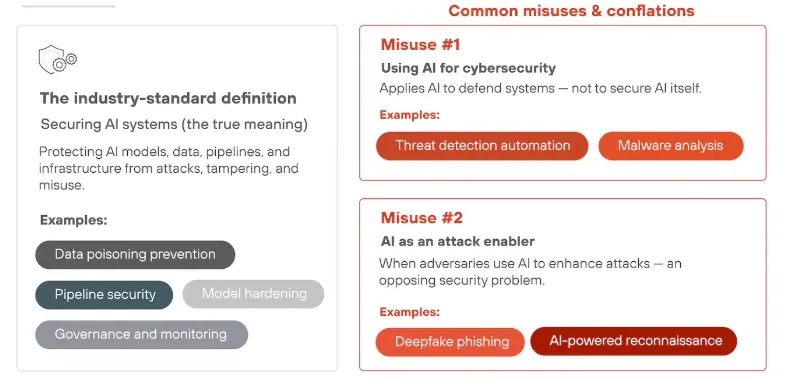
Source: Paloalto
Nevertheless, even with increased efficiency, the aforementioned tasks pose several threats that need to be considered by cybersecurity specialists.
What Are the Major Risks of AI in Crypto?
One of the most widely debated issues is AI hallucinations and the generation of erroneous answers. AI language models are known to generate information that appears genuine but is inaccurate.
This issue may arise in crypto trading, where it will involve:
- Wrong wallet addresses
- incorrect information about tokens
- Wrong information about smart contracts
- Misleading market analytics
Actions based on incorrect AI-generated information may result in losses to the user or even exposure to scams.Another type of threat that has become very relevant in crypto is the prompt injection attack.
These types of threats can be classified into two types by security experts:
| Type of Attack | Description | Potential Risk |
| Direct Prompt Injection | Intrusion using malicious commands in AI tools | Manipulated AI decisions |
| Indirect Prompt Injection | Hidden malicious command injection in websites/documents | Illegal transactions or leakage of sensitive data |
Prompt injection has grown more worrying in decentralized finance settings where AI programs can communicate with blockchain-based software applications or even websites in an automated manner.
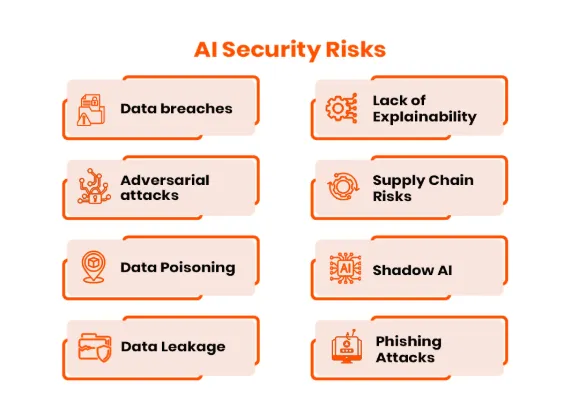
Source: Tredence
Experts have noted that hidden text manipulation might trick an AI program into making transactions or revealing confidential details.
AI-Generated Crypto Scams Keep Growing
Alongside the rise of AI technologies in cryptocurrency trading, cyber threats have also developed. These include:
- AI-powered assistance messages
- Deepfake videos
- Phoney trade communities
- Cloned voice messages
- Bogus exchange apps
Ledger and MetaMask, among other wallet providers, have consistently warned their users about phishing attacks aimed at stealing wallet credentials and seed phrases.
Blockchain cybersecurity companies have also been continuously identifying malicious smart contracts, crypto-stealing apps, and even fraudulent wallet plugins. If AI agents interact directly with smart contracts, there is an increased likelihood of unintended actions on the blockchain due to manipulation.
Best AI Safety Practices for Crypto Users
Security experts and crypto exchanges keep advising a number of best AI safety practices that can help minimize dangers related to the use of automated software and AI-driven crypto tools.
| Danger Area | Suggested Protection |
| Wallet Exposure | Constrain wallet permissions |
| Phishing Scams | Confirm trusted websites |
| Smart Contract | Restrain unnecessary approvals |
| Trading Errors by Bots | Closely supervise bots |
| Recovery Phrases | Don’t divulge seed phrases |
One key approach here is restricting permissions for wallets. AI agents need to be granted limited access based on the need-to-know approach.
For instance, in case when an AI application is only designed to process market data, it shouldn’t have permissions to conduct transactions. Another recommendation concerns the non-disclosure of the user’s private keys or seed phrases in any way, whether this concerns AI platforms or third-party software solutions.
Security specialists constantly come across new phishing campaigns that pretend to offer help with cryptocurrencies but actually aim at stealing wallets. Another frequently suggested safeguard relates to validating any output produced by AI prior to the implementation of a corresponding action.
Users are advised to check:
- Wallet addresses
- Details about smart contracts
- Protocol details
- Token information
- Trading signals
using official project documentation and blockchain explorers.A dedicated wallet can be considered another recommended safeguard when interacting with AI agents.
According to security specialists, it is better to use a wallet holding a small amount of cryptocurrency to separate all AI-related operations from the main balance.
AI Trading Bots and Smart Contracts Worries
Automated trading bots driven by artificial intelligence technology are gaining popularity in cryptocurrencies and other decentralized financial markets. Such systems use technical analysis, market sentiment, and other techniques to conduct trade activities on an ongoing basis.
Nonetheless, it is essential to follow security guidelines for AI, as automated systems cannot always predict market trends. This is due to liquidity changes, market manipulation, and volatility. Experts keep recommending that users do the following:
- Monitor your trading bots consistently
- Set up stop-losses
- Don’t use up your whole portfolio
- Use demo accounts to test bots
Another important issue is the authorization of smart contracts. The AI agents working with decentralized apps can ask for permissions that are kept even after the transaction ends.
Blockchain security organizations keep suggesting users check and withdraw excessive smart contract authorizations from their crypto wallets.
Conclusion
The use of AI within the crypto industry has always been increasing due to trading bots, blockchain analysis tools, and artificial intelligence agents. Nevertheless, problems concerning security have arisen and they involve phishing attacks, prompt injections, wallet permissions, and malicious smart contracts.
Frequently Asked Questions
How can AI safety practices be used in crypto?
These are the security practices used to counter the factors that affect AI agents, trading robots, phishing attacks, and automation in cryptocurrency.
Can an AI agent have access to a crypto wallet?
An AI agent may access a wallet only when given permission by a user.
Why do more incidents of phishing attacks happen using AI technology with cryptocurrencies?
The perpetrators of such fraud pretend to be legitimate cryptocurrency firms and send out artificial videos or email scams through AI technologies.








An impressive share, I just given this onto a colleague who was doing a little analysis on this. And he in fact bought me breakfast because I found it for him.. smile. So let me reword that: Thnx for the treat! But yeah Thnkx for spending the time to discuss this, I feel strongly about it and love reading more on this topic. If possible, as you become expertise, would you mind updating your blog with more details? It is highly helpful for me. Big thumb up for this blog post!