
Key insights
- Defend Developers PAC focuses exclusively on protecting blockchain software developers.
- The BRCA provision remains one of the most debated elements of the CLARITY Act.
- More than 160 former security and law enforcement officials support advancing the legislation.
Crypto developers are receiving new political backing as lawmakers continue negotiations over legal protections within the CLARITY Act. As Congress considers how to treat blockchain software engineers and developers under federal law, the newly announced Defend Developers PAC will promote the interests of developers, blockchain builders and decentralized finance innovators.
The political action committee is coming at an opportune time for the digital asset industry. The Senate is still working on the bill and industry groups are insisting on better clarity surrounding decentralized technologies.
New group aims to safeguard developers.
Defend Developers PAC was created to promote the American blockchain developers and decentralized finance contributors. Gavin Zavatone leads the initiative and is a policy lead at DeFi Education Fund.
Zavatone said that for years developers have had to work in a regulatory environment that is uncertain. He said it is often been “the case that the enforcement, instead of clear regulatory guidance, poses difficulties to those building decentralized software.”
The PAC will back politicians who are pro-developer protections and permissionless blockchain infrastructure. It’s led by policy people from DeFi Education Fund, Solana Policy Institute, and Uniswap Labs.
Some industry officials are seeing the effort as a means to help policymakers grasp software development as a digital asset as it continues to evolve.
The CLARITY Act’s negotiations are a key concern.
One of the main topics of discussion is the Blockchain Regulatory Certainty Act element of the CLARITY Act. The measure aims to make clear that non-custodial software developers are not automatically deemed to be “money transmitters.
Some argue that the developer should not be held responsible for what other individuals do with their Dapps. They believe that writing a software is not equal to the business of dealing with customers’ money.
But there have been concerns among some law enforcement agencies about the proposal. Some of the safeguards may make investigations of financial crimes and illegal activity more difficult, critics say.
A change to the bill scrubbed provisions that would have broadened sanctions protections, it is reported. This was part of a series of negotiations designed to secure more political support.
A rise of support beyond the digital asset sector.
The legislation has garnered support from outside the digital asset industry. Recently, the Blockchain Association convened 160 former national security, intelligence, and law enforcement professionals in the letter.
The signatories gave a description of digital asset legislation as both a national security and law enforcement priority. Their support helped propel the bill forward in Congress.
There has also been growing political interest in cryptocurrencies in recent years. Several groups have established political action committees to promote politicians and policies that are blockchain-centric.
The crypto industry became a major source for campaign dollars in 2024.Groups have been increasing their presence in Washington since then.
Crypto policy conversations have therefore been increasingly linked to the political campaigns and legislative priorities.
What is the new Senate Progress?
The CLARITY Act was passed by the Senate Banking Committee in May by a bipartisan vote. Since then, the bill has been referred to the Senate Legislative Calendar, which means it will be considered on the floor of the Senate later.
Before debate, the lawmakers will have to reconcile differences between the versions each are working on in the respective committees of the Senate. Senate Majority Leader John Thune has not been saying what the timeline will be for moving the floor action.
Senator Cynthia Lummis just responded to criticism from JPMorgan Chase CEO Jamie Dimon about anti-money laundering and bank-secrecy act regulations. In the bill, Lummis said there are several provisions that explicitly state that the existing AML and BSA requirements apply to Crypto companies.
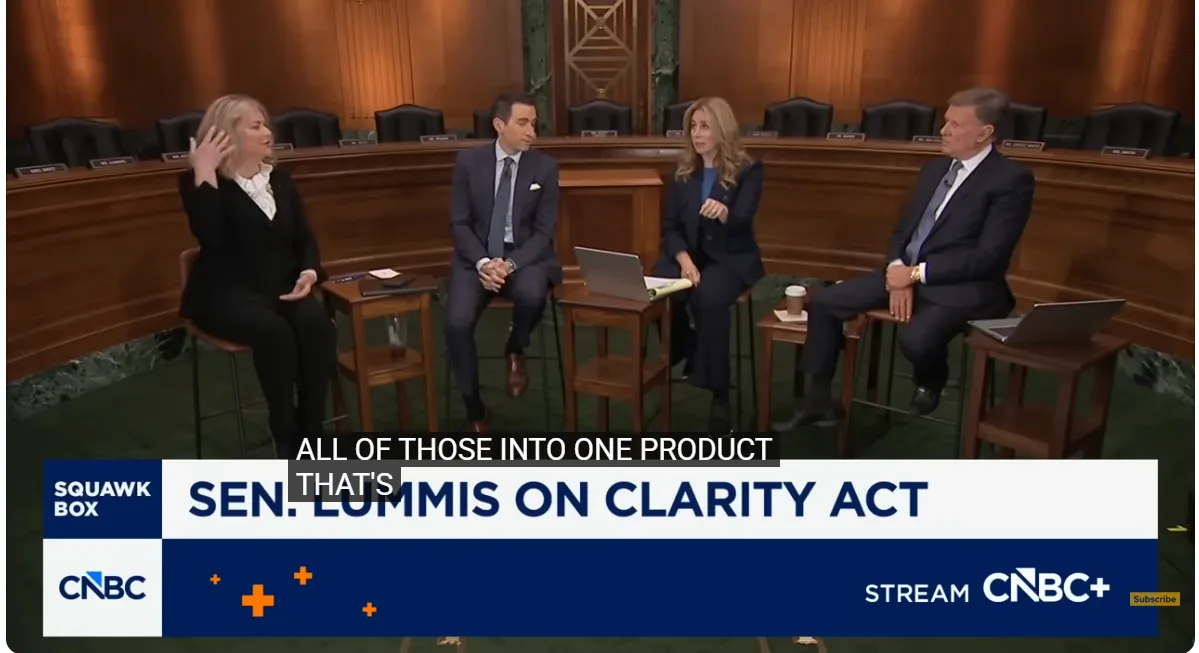
She also said that legislators are also making steps to merge a few digital asset laws into a single bill. Protection of decentralized finance is ongoing, but there are reports of progress.
Our industry has significant implications as well.
Defend Developers PAC is the latest sign of policy advocacy becoming an increasing priority in the Crypto sector. One thing that still needs regulatory clarity is the issue of how it will impact the industry.
Well-defined legal terms would have a bearing on the way that developers create decentralized applications in the United States. They might additionally influence investment options and also future innovation.
Meanwhile, lawmakers are still grappling with the issue of balancing innovation against enforcement.The outcome of the CLARITY Act debate may establish a framework for how Crypto development is regulated for years to come.
Conclusion
Crypto developers have gained a dedicated political advocate as Defend Developers PAC enters the policy debate surrounding the CLARITY Act. As legislators still hammer out software developer and decentralized finance builder protections.
The Senate’s proceedings are advancing and outside support is growing, turning to what can be accomplished by Congress in terms of innovation and regulation. The result could be key to shaping the future legal environment in which digital asset development takes place in the U.S.