Key Insights
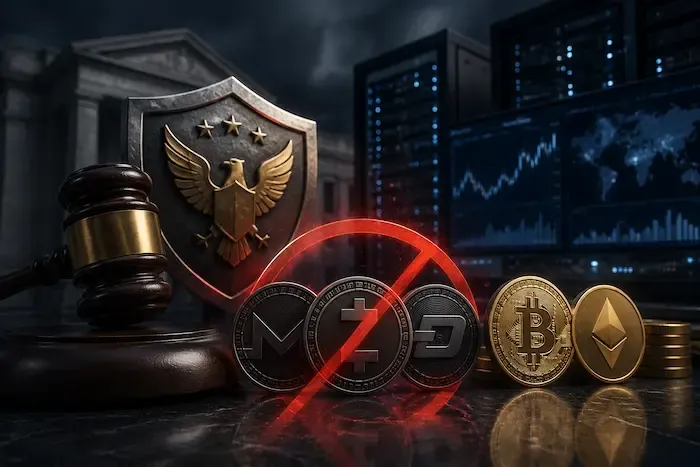
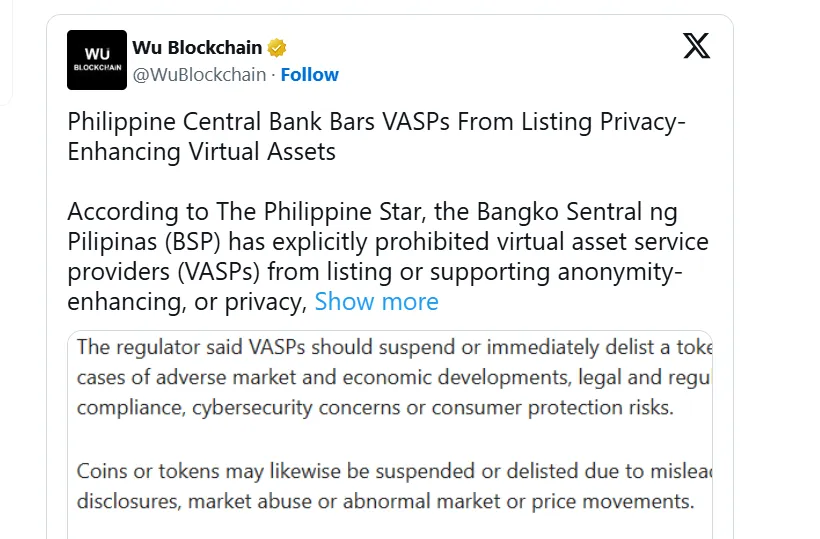
- BSP has banned new privacy coins from being supported by their licensed virtual asset service providers.
- The exchanges need to exercise a higher degree of care before listing digital assets.
- Now listed tokens must be monitored and delisted.
The BSP has ushered in a new era for crypto regulation in the Philippines, with the introduction of new regulations for virtual asset service providers (VASPs). The central bank has barred privacy-related cryptocurrencies from being linked to licensed services and increased the screening and monitoring requirements for all listed tokens.
The revised framework seeks to enhance the protection of consumers, increase transparency and set a higher standard of compliance for virtual assets that are provided to consumers in the Philippines. The measures apply to all BSP-regulated virtual asset service providers operating in the country.
BSP expands oversight of virtual asset listings
Under a memorandum approved by the central bank, virtual asset service providers must establish a stronger due diligence process before listing any digital asset. Providers are now expected to assess tokens across several key areas before making them available to customers.
The evaluation process encompasses issues of issuer credibility, market maturity, practical use cases, transparency, security, redemption, liquidity, and legal compliance.
Exchanges can check company records, audited financial statements, ownership and beneficial ownership details. Background checks of the directors/officers who are involved in a project may also be part of the assessment.
The maturity of the market will also have significant impact on listing decisions. To evaluate providers, they can look into trading volume, number of on-chain holders, market capitalization, years of operation, and exchange support.
Project documentations should be available to the user. The goal of a whitepaper is to clearly outline the tokenomics, blockchain infrastructure, goals, buy and sell approach, and risks associated with the project.
Privacy coins removed from licensed platforms
The one of the major changes is about the anonymity enhancing virtual assets. The BSP reiterated that licensed providers will no longer be able to mention and promote cryptocurrencies that emphasize privacy.
These assets are designed to obscure the information, and to make tracking easier. The restriction does not specify any particular types of tokens, but rather any asset that has characteristics that diminish the transparency of transactions.
The ruling is in line with global initiatives to tackle anti-money laundering issues related to anonymity in transactions.
The BSP stressed that it was not a restriction on the ownership of such assets, but on their use by licensed service providers. The move does away with regulated access to trading for privacy-minded tokens in the country, though.
The reserve reviews of stablecoins are tougher.
The central bank has also put in place new regulations for asset-backed and fiat-backed digital assets, such as stablecoins.
Virtual asset service providers will now have to consider the entire lifecycle of such tokens. The issuance procedures, redemption systems, minting processes, burning mechanisms, and reserve management practices will be discussed in the reviews.
It is regulators’ intent that during market stress, providers verify reserve assets if they wish to meet redemption requests. Assessment will include the quality of reserves, liquidity and withdrawal.
The BSP said that these are being taken “to assist in market stability and confidence on valuations of the tokens”.
The new standards strengthen exchanges’ obligations to ensure that the issuers of stablecoins are financially sound and transparent.
The ongoing compliance becomes a core requirement.
The framework does not end with the initial listing. Once approved, providers are responsible for keeping a close eye on digital assets and setting thresholds for suspensions or delisting.
Removal may be requested for legal infractions, cybersecurity concerns, or for failure to make disclosures that are accurate and honorable, or for market manipulation or unusual price activity.
Whenever there are significant risks, exchanges should act promptly,” the BSP said. This imposes higher compliance requirements on the sector and helps to bolster accountability on platforms with listed assets.
The measures follow other efforts by Philippine regulators to deepen their operations in the digital asset market.The adjustments are made after several years of increased supervision, and as part of the efforts to ensure adherence to international standards in local rules.
Higher Standards is reshaping the market.
The updated regulations may affect the running of virtual currency exchanges in the Philippines.
It may be easier for large exchanges to meet the additional requirements. If it doesn’t have liquidity, transparency or clear utility, smaller projects may encounter some problems in getting listed.
The modifications also appear to be related to Binance’s move to return to the Philippines market via the SEC’s sandbox program. The regulators have stressed that participation in the sandbox is not a substitute for the BSP’s licensing procedures.
Conclusion
The BSP has recently issued new regulations to revise the nation’s virtual asset regime. The decision to ban privacy coins and enhance the listing requirements seeks to increase transparency and investor protection.
The new rules impose tougher rigour on due diligence, regular monitoring and swift response to risks that may arise. As the Philippines continues to ramp up enforcement on the digital asset ecosystem, compliance standards have also risen for crypto exchanges and token issuers.