
Key Insights:
- Binance is launching almost zero fees in the U.S. hoping to shake up the competition and win over cost-conscious traders.
- The relocation may provoke a price competition among the large exchanges, lowering the total cost of trade.
- The regulatory oversight continues to be a major determinant in the long-term Binance position in the U.S. market.
Binance has added almost zero trading charges to its U.S. platform, which represents a significant change in pricing policy.The announcement underscores the fact that Binance has worked to gain users in a market where usage has been low.
The trade made it clear that spot trading was now zero-maker with only 0.02% taker fees.The pricing is universal,and does not need any trading volume requirement or subscription based incentive to get cheaper prices.
Chief executive Stephen Gregory said that American traders have undergone too much expenditure in digital asset platforms in the past.He also highlighted that Binance will focus on demonstrating that regulated platforms can be affordable without compromising the operational compliance standards.
Coinbase Pricing Model is challenged by Zero Fee Structure.
The new architecture makes Binance one of the cheapest exchanges that are currently trading in the United States market.In contrast, Coinbase imposes fees of 0.60%-0.40% on less-volume users.
Coinbase taker fees are estimated at about $60 on a $10,000 order, which is much more expensive than other exchanges.In the meantime, Kraken charges between 0.25% and 0.40%, based on the volume of trade.
The Binance almost free pricing system has the potential to cut the trading costs by up to 98% to retail users.The relocation makes Binance a formidable rival, especially among low-end traders who may want to have regular access to the market.
Typically, Binance worldwide imposes approximately 0.10%, both as a maker and a taker on its main platform.Nonetheless, there are extra discounts on high volume traders and those paying fees in its native token.
Regulatory Pressures Keep Good Binance Growth
With aggressive pricing, Binance remains the subject of increased regulatory attention in the United States.The company has in the past been sued by The Securities and Exchange Commission, an issue that has caused a lot of disturbance to the company.
In 2023, Binance stopped U.S. dollar operations, making the platform essentially a crypto-only trading platform.This has changed with regulators dropping the civil case and Binance is now able to resume fiat deposits and withdrawals.
Binance and its former CEO Changpeng Zhao also admitted guilt in another legal settlement that included compliance violations.The case led to a $4.3 billion settlement and provided a monitoring system under a court to ensure continued supervision.
The recent questioning has been heightened by the accusations of transactions with the Iranian organizations amounting to more than $1.7 billion.Binance refuted these allegations, terming them as unsubstantiated as it filed suit against reporting organizations.
Competitive Landscape And Impact On the Market deepen
The fee cut is coming at a time when traditional financial institutions are increasing their entry into the crypto industry.Charles Schwab has recently proposed to provide spot crypto trading at a 0.75% transaction fee.
This trend indicates growing convergence of traditional brokerage offerings and online asset trading.The pricing approach of Binance could speed up changes across the industry as competitors will have to re-evaluate their fee structure.
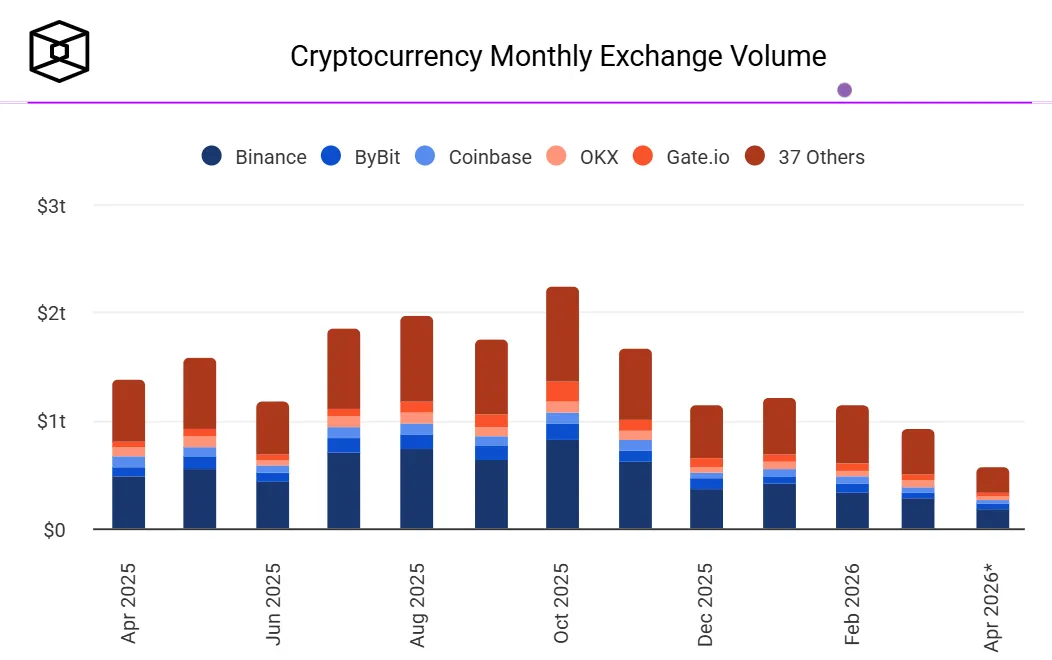
According to CoinGecko data, Binance.In the recent past, US had a trading volume of $14.8 million in a day.This number is still much less than the Binance platform in the world, which had already processed $10.7 billion in the same time.
Coinbase and Kraken recorded $1.9 billion and $1 billion respectively, which puts Binance in the limelight.Current market position of US.The disconnect highlights the issue Binance will encounter in regaining trust and increasing the number of U.S. users.
Conclusion
The move by Binance to introduce close to zero trading commissions is a calculated effort to redefine its presence in the U.S.The plan is aimed directly at the cost-conscious traders and increases the competition between the existing exchanges and the new ones.
Nonetheless, regulatory control and legal obstacles of the past are still key variables that will impact the long-term growth trend of Binance.When maintained, the pricing model may reestablish the industry standards and reduce the barriers to retail crypto engagement to a considerable extent.
FAQs
So why does Binance lower trading fees in the U.S.?
To gain more customers and compete with the existing exchange that has more expensive trading structures, Binance lowered fees.
What is the difference between maker and taker fees on exchanges?
The maker fees accrue when adding to the liquidity by use of pending orders whereas taker fees accrue when the trade is executed on the spot.
Has Binance become the lowest cost U.S. exchange?
According to the existing statistics, Binance has one of the lowest trading fees in comparison to Coinbase and Kraken.
Will other exchanges reduce their charges in reaction?
The action can cause competitive changes, with exchanges trying to keep users when prices are getting higher.
Does regulation reduce the growth of Binance?
Yes, the constant monitoring and regulatory needs still affect the growth and the ability to operate Binance.