
The number of individuals entering the crypto sector is increasing in 2026. Most of these people spend time reading a crypto white paper before investing in any blockchain project.
A white paper is usually used by different stakeholders in the industry to assess the utility of cryptocurrencies, their governance structures, the future goals of the project ecosystems, and additional advancements in blockchain technology.
For most blockchain projects, a white paper comes before the launch of their platform and token offerings. Basically, a white paper fulfills different functions such as guiding, serving as a prospectus for investments, giving information about the project ecosystem, and providing a structure for doing business. There is a need for white papers in the crypto industry due to the emergence of decentralized finance platforms, layer-two systems, tokenized assets, and AI ecosystems.
Furthermore, the regulatory authorities are taking an interest in the increasing significance of disclosure, governance, treasury, and token classifications in the digital asset sector. For this reason, professionally crafted crypto whitepapers became extremely relevant for providing information about investment opportunities and for building the reliability of the blockchain ecosystem.
What is contained in Crypto Whitepapers?
There is a similar structure to most crypto whitepapers, which is mainly devoted to the purpose of the project, its technology, tokenomics, and future goals.
Projects usually identify the existing problems that they want to solve. It can be related to various issues such as slow international payments, centralized finance, security problems, lack of scalability, and others.
Then, it becomes evident how the blockchain ecosystem solves the identified problem. Among the most common topics, there are smart contracts, dApps, cross-chain technologies, artificial intelligence integration, blockchain infrastructure, and Layer-2 scalability solutions.

Bitcoin’s Whitepaper Source: bitcoin.org
In a crypto whitepaper, the technical part may be used to provide details about the working mechanism of the blockchain and whether it is practical. It normally includes the governance model, network, security system, scalability, and consensus mechanism including the proof of work and proof of stake among others. From the investors’ point of view, this section could indicate that the project does not have any substance at all.
Examples include bitcoin, which uses Proof of Work to enable P2P payments and Ethereum, which uses the blockchain for smart contracts and dApps.
Importance of Tokenomics for a Crypto Whitepaper Guide
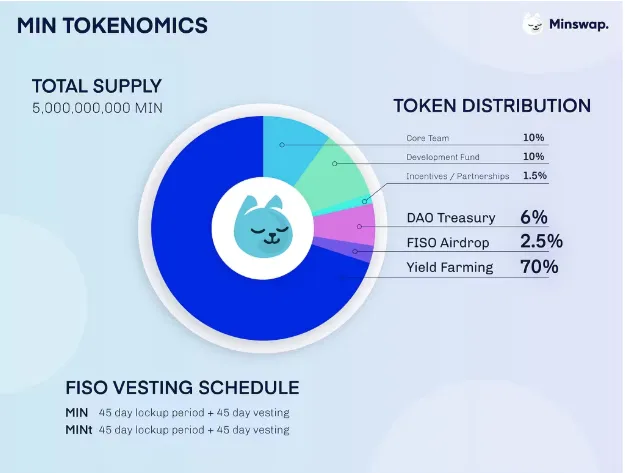
Tokenomics is still one of the crucial parts of a crypto whitepaper since it directly influences the token supply, inflation rates, sustainability of the ecosystem, and future use of the blockchain platform.
Source: Coinbound
Some of the information that you should look at in a crypto whitepaper include:
- Total token supply
- Circulating supply
- Inflation models
- Token burning
- Token allocations to the team
- Vesting schedule for investors
- Staking incentives
Here’s an example of how tokens could be distributed within a project. The project may choose to distribute 40% of its tokens to the general investors, 20% for ecosystem growth, 15% as staking rewards, 10% for the founding team, and 15% for partnerships and marketing efforts. Investors analyze the allocation to determine whether it is balanced.
Strong vs Weak Crypto Whitepaper Contrast
| Aspect | Strong Whitepaper | Weak Whitepaper |
| Transparency | Visible and authenticated developers | Anonymous founders |
| Usefulness | Concerted contribution within the network | Lack of clarity on the usage of the tokens |
| Timetable | Realistic roadmap | Impractical planning |
| Technical Detail | Clearly explained technology | Too few details provided |
| Token economics | Fair token distribution plan | Biased allocation of tokens |
| Community | Good community development strategies | Marketing-driven community engagement strategies |
Investor Analysis of Crypto Whitepapers
Cryptocurrency investors continue to consult white papers when analyzing different blockchain networks prior to participating in an ICO or another decentralized finance venture.
Major aspects that investors examine are:
- Token utility
- Inflation issues
- Token vesting periods
- Governance mechanisms
- Management of treasury tokens
- Ecosystem growth plans
- Scaling possibilities
Professional investors generally review the whitepapers of various crypto coins among different blockchain systems to find out if there is anything innovative in their technology and business model or not.
The roadmap of the project is another major consideration while evaluating a project for investment purposes. The majority of the blockchains have their roadmap, which includes the launch of tokens, listing on exchanges, mobile app development, ecosystem expansion, and partnership development.
Red Flags Keep Showing Up in Some Crypto Whitepapers
Although the sector has become increasingly mature, certain red flags keep emerging in some crypto whitepapers.
These risks are:
- Unrealistic promises of profit
- Plagiarized content
- Insufficiently explained technologies
- Unproven cooperation
- Overuse of marketing terms
Projects that fail to explain issues of scalability, management systems, token usefulness, or the need for blockchain are often perceived skeptically by investors.
Anonymous teams are another major risk faced by the cryptocurrency industry. Although some blockchain projects operate with hidden founders, unverifiable identities continue to increase investment risk for many market participants.
Why Regulatory Oversight Is Increasing
Regulators worldwide are paying closer attention to digital asset disclosures as cryptocurrency adoption expands.
Several jurisdictions now require projects to disclose:
- Risk statements
- Governance structures
- Token classifications
- Treasury allocation details
- Investor transparency policies
Europe’s Markets in Crypto-Assets framework, commonly known as MiCA, is among the regulatory systems increasing disclosure standards for blockchain projects entering the market. As a result, many blockchain ecosystems now publish both technical whitepapers and legal compliance documents to address evolving regulatory requirements.
What Investors Should Monitor Before Investing
Before participating in any blockchain project, investors often review several core areas inside crypto whitepapers:
- Whether the project solves a real-world problem
- Whether the token utility is clearly explained
- Whether vesting schedules are transparent
- Whether the roadmap appears realistic
- Whether developer identities are verifiable
- Whether GitHub activity remains active
- Whether partnerships can be independently confirmed
These evaluation methods are increasingly used to avoid poorly structured blockchain ecosystems and higher-risk cryptocurrency projects.
Conclusion
Crypto whitepapers have remained one of the key research instruments within blockchain-based ecosystems until 2026. Such whitepapers give investors insight into the economics of the project, its governance structure, token functionality, scalability, and sustainability prior to participating in the crypto markets.
FAQ
Why do blockchain projects publish whitepapers?
Blockchain projects issue whitepapers because these papers help explain how their ecosystem works and how the cryptocurrency operates in the platform.
Is a crypto whitepaper legally binding?
In general, whitepapers have no legal weight and their main aim is informative in nature.
What does token vesting mean?
The release of tokens for some particular teams, investors, and other entities is called token vesting.
Can whitepapers of cryptocurrency be misleading?
Yes, indeed they can be. Certain projects could deliver misinformation about their projects or take ideas from others’ technological innovations.