Cryptocurrency networks are always changing and becoming more secure, and making changes to governance, and so forks are now becoming an important part of blockchain technology.
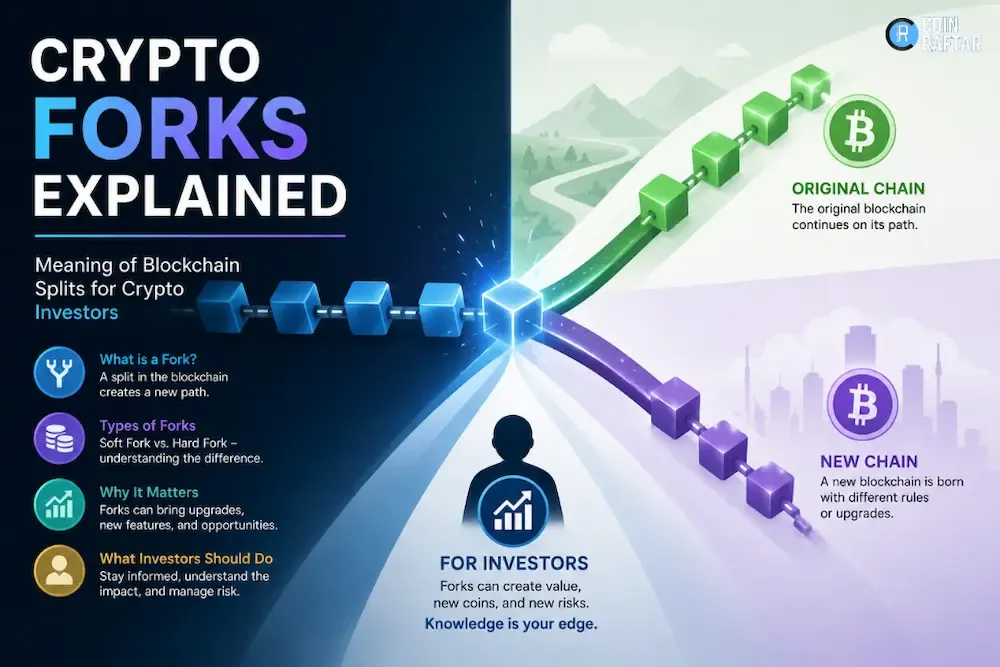
A fork is when a blockchain network changes the software rules of transactions and blocks, and makes a new version of the blockchain. Those involved in the network will then have to determine if the new version is to be adopted or if the old version is to be continued.
Since the blockchain operates on a decentralized consensus mechanism, all miners, validators, and nodes should use the same software rules to ensure ledger consistency. Once developers roll out any software update, the community can choose to adopt it or not. Disagreements among the members will lead to splitting the blockchain into two networks having the same history before the fork.
The most prominent blockchain systems, such as Bitcoin and Ethereum, have undergone several forks as they have evolved.
Why Do Crypto Forks Happen?
The majority of crypto forks occur when blockchain developers work to improve network functionality. The main reasons behind initiating crypto forks include:
- blockchain updates
- enhancements in security
- improvements in transactional performance
- disputes on governance issues
- bug corrections
Upon releasing new protocol rules, validators and nodes choose whether to follow the old or the new rules.
If all members support the new protocol rules, no blockchain fork occurs; if some members reject the changes, the blockchain splits into separate blocks.
How Blockchain Forks Occur
A blockchain is a series of computers that all run the same software to make sure transactions are valid and create blocks. At any time the protocol rules for software change, it will be up to network members to determine if they should update
In the case where only one type of software is used by the nodes in the network, the blockchain is identical. But once some groups use other protocols to validate blocks, a blockchain fork will occur.
Once the chain is split, two separate chains will exist and have their own ecosystem and validators.
Hard Fork Definition
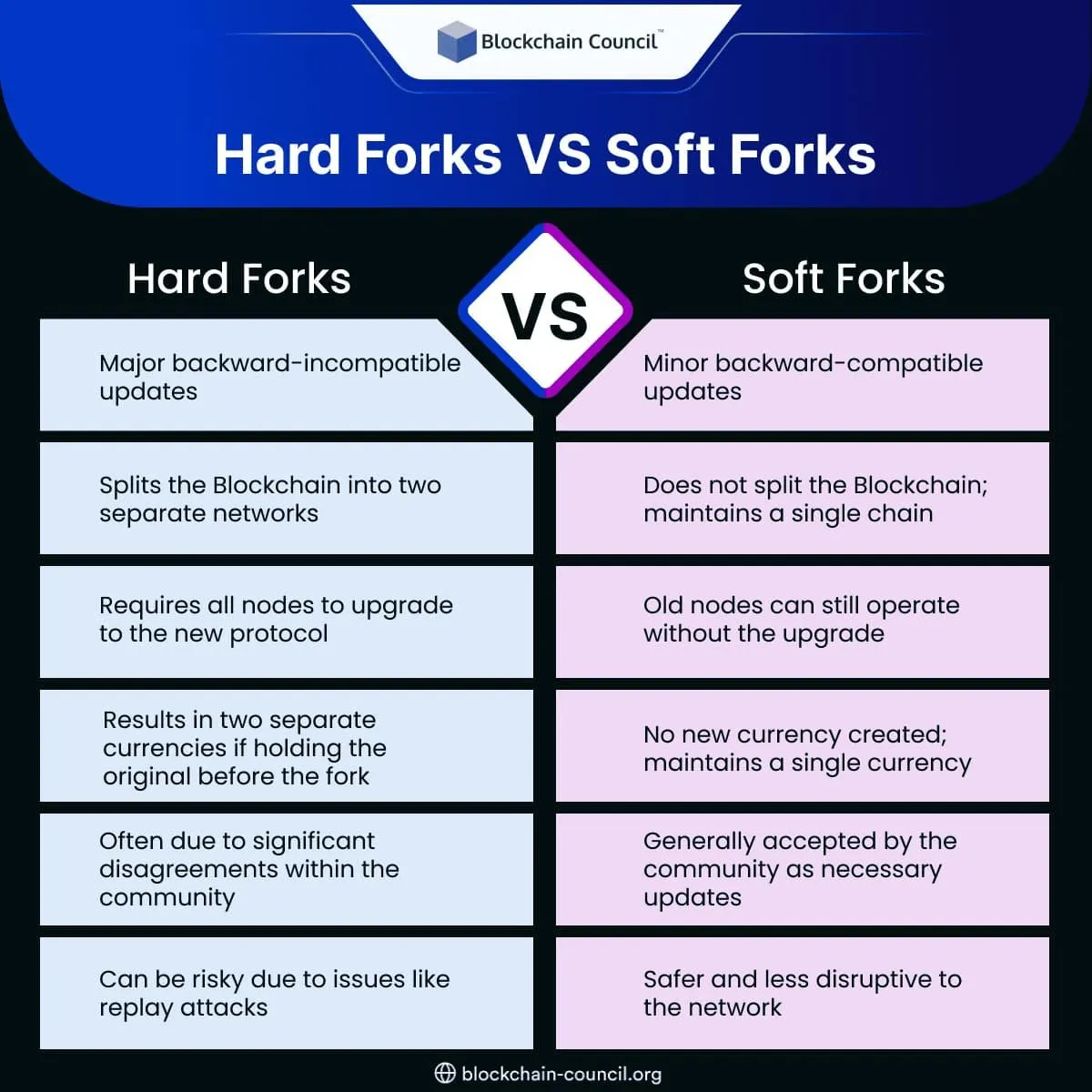
It refers to an upgrade to the blockchain network that cannot work together with its previous version. Older nodes cannot verify blocks on the upgraded blockchain.
All participants in the network require updating their software for the latest version in order to gain access to the upgraded blockchain. Disagreements among various communities regarding hard forks can lead to permanent splits in blockchain systems.
One of the most notable examples includes the split of Bitcoin and Bitcoin Cash in 2017. In a similar conflict, Ethereum and Ethereum Classic clashed regarding the recovery of money lost in the theft of funds from the DAO.
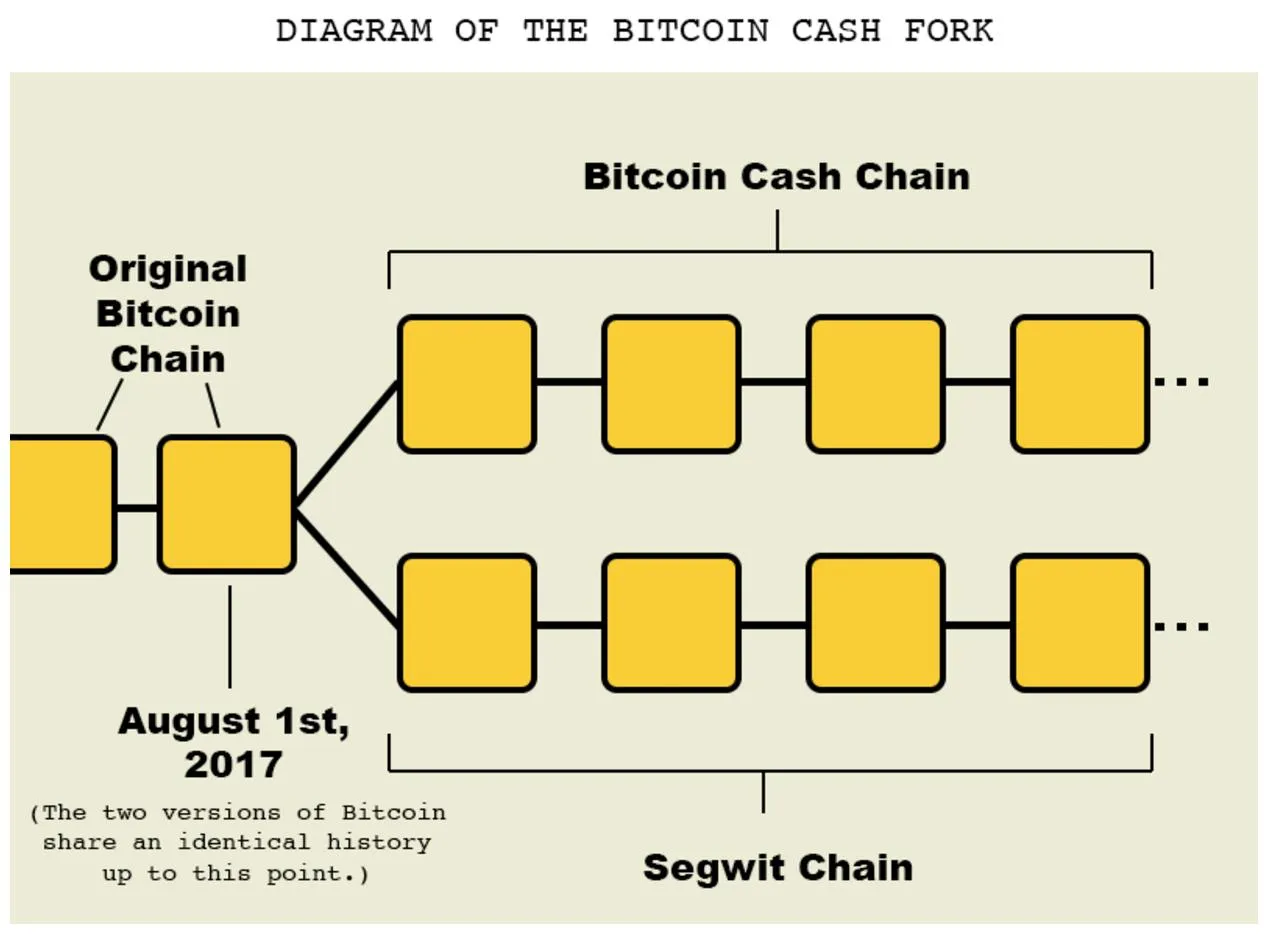
Source: All private keys
Once there is a hard fork, the exchange, wallet, mining, and validation software need to be updated since the old blockchain will no longer recognize the transactions done on the new network.
What is a Soft Fork?
A soft fork is a blockchain upgrade that does not affect backward compatibility. Old software versions on nodes will be able to validate new blocks created by the upgraded software, but will not necessarily support all of the new features.
Soft forks have much less impact as they are not a total blockchain network shutdown but enable blockchain networks to run without all users being required to update immediately.
They are usually adopted for:
- enhancing security
- improving transactions
- increasing functionality
Unlike hard forks, soft forks do not result in separate blockchains but keep the same blockchain network. Backward compatibility is still maintained, hence soft forks are considered a smoother method to improve a decentralized blockchain network.
Source: Blockchain council
What is the significance of Crypto Forks in Blockchain Development?
For the blockchain network, forks give a means of adapting to changes in terms of technology and blockchain implementation. The network needs to be updated periodically for scalability, security, and growth in its use.
Forks can help networks in the following ways:
- scalability
- security improvements
- lowering transaction fees
- additional capabilities
- conflict resolution
But when the forks are significant, they can bring short-term uncertainty to cryptocurrency markets, particularly if they involve a controversy regarding technical or governance matters.
Major cryptocurrency forks are closely watched by the trading and mining community, as they can have an impact on the stability of the network and the value of the token.
Forks Influence on Crypto Investors
A crypto fork has a significant impact on crypto investors as it involves changing token prices, wallet compatibility, and new coins, opportunities for trading on cryptocurrency exchanges, and mining or staking processes.
During the upgrading process of the chain, crypto exchanges can restrict the ability of users to deposit and withdraw money until the whole process becomes stable.
For some types of hard forks, a certain number of tokens may be distributed to initial token holders as a result of the blockchain split. Not every such new ecosystem has survived. Because crypto forks directly change the rules of blockchain software and network compatibility, investors typically monitor major upgrade announcements before implementation dates.
Conclusion
Cryptocurrency forks are still a relevant topic for discussions, as the process enables blockchain-based systems to evolve by introducing changes, improving their safety, and changing transaction regulations. Hard forks and soft forks play various roles, but both affect the development of the blockchain environment.
FAQ
Can a crypto fork create a new cryptocurrency?
Yes. Hard forks lead to new blockchain systems that feature their very own cryptocurrencies.
Does a soft fork cause a blockchain fork?
Soft forks do not divide the blockchain as they are backward-compatible.
Why do blockchain forks occur?
Blockchain forks happen because of some changes in the network, for example, security improvements, upgrades, bug fixing, etc.
Are cryptocurrency forks frequent?
Yes, cryptocurrency forks are quite a frequent occurrence in most blockchain systems.