

Behind every successful blockchain network are crypto nodes, which are computer networks ensuring everything works correctly. They are critical to verifying transactions, achieving consensus, and ensuring the safety of blockchain systems.
Thousands of nodes help store system data, verify transactions, and send changes to the distributed ledger, and thus the ecosystems, such as Bitcoin and Ethereum, run on them. With the increasing use of blockchain for DeFi applications, stakeholder services, and digital assets transfer, crypto nodes will play a critical role in the development of some of the largest blockchain ecosystems. This is because cryptonodes enable transparency in blockchain systems and prevent manipulation and centralization.
A cryptonode is a device that uses blockchain technology to record and disseminate information. These machines operate continuously to ensure synchronization of blockchains by all participants of the network. Nodes are crucial to blockchain networks, as it is impossible to conduct transactions on the blockchain without them.
Verification of Crypto Nodes on Blockchain Transaction
Cryptocurrency transactions are sent through the blockchain network by using crypto nodes. The crypto nodes then verify these transactions before forwarding them to other nodes within the network.
Some of the aspects validated during transaction verification include wallet balances, transaction signatures, double spends, and adherence to network regulations. Once transaction verification is complete, transactions are grouped into blocks and recorded in the blockchain.
As a result, the blockchain network can operate openly because nodes independently verify transactions. It will also ensure that no invalid transactions occur on the blockchain network.
For efficient operation in the blockchain network, nodes need to communicate with each other so that ledger information remains up to date. Nodes in the blockchain network exchange data with one another.
What Is a Full Node of a Blockchain Network?
A full node contains the entire transaction history of the blockchain and independently validates all transactions and the new blocks added to it, in accordance with the blockchain protocol.
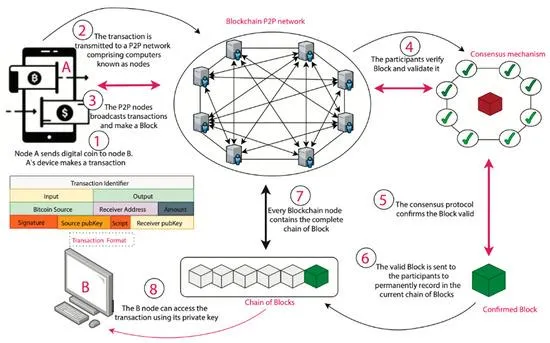
Source: mdpi
Such nodes are crucial to the process of decentralization, as they don’t rely on external validation services but instead validate activity within the blockchain network according to its consensus rules.
The duties of a full node involve:
- transaction validation
- Recording information about transactions in a blockchain
- enforcing consensus rules
- data transmission to other nodes
Thousands of full nodes operate on the Bitcoin network at present. This decentralization ensures that the network remains stable as a whole without depending on any centralized services provided by infrastructure suppliers. Running a full node will require consistent internet access, significant computing resources, and sufficient storage, since the computer must hold the entire blockchain ledger.
Although full nodes improve the security and decentralization of blockchains, they may not offer financial rewards to their operators.
Validator Nodes Aid Proof-of-Stake Blockchain Networks
Validator nodes can be used in the Proof-of-Stake blockchain networks. While full nodes create blocks through computation races, validator nodes reach consensus using their cryptocurrency holdings.
The functions of validator nodes in blockchain systems include:
- Transaction Validation
- Block Proposing
- Consensus participation
- Blockchain security
As Ethereum has switched from proof-of-work to proof-of-stake, the network requires a large number of validator nodes to provide security and transaction execution.
In most cases, validator nodes are operators earning staking rewards for participating in consensus algorithms on blockchains. On the contrary, several settings are required by validator nodes. There is usually a need for operators to lock up a definite sum of cryptocurrency before joining the network of validator nodes. According to the Ethereum protocol, at least 32 ETH should be locked up to create a separate node.
Difference Between Full Nodes and Validator Nodes
| Feature | Full Node | Validator Node |
| Holds blockchain | Yes | Usually |
| Verifies transactions | Yes | Yes |
| Needs staking | No | Yes |
| Gains rewards | Occasionally | Usually |
Some validator nodes can double as full nodes, depending on the blockchain network’s architecture.
Significance of Crypto Nodes in Blockchain Networks
Cryptocurrency nodes remain important for maintaining decentralization, security, transparency, and immunity to censorship in blockchain networks. With many nodes in blockchain networks, manipulation becomes harder due to the need for validation by multiple entities.
Blockchain networks have built large ecosystems that encourage stakeholder involvement in staking and node operations. The validator nodes play an essential part in proof-of-stake and Layer 2 networks, including Solana and Avalanche.

Avalanche validator Source: cryptonews
Public engagement in node operations is common in blockchain networks, though the technical requirements vary from one ecosystem to another.
The full node generally requires the following:
- internet connectivity
- space provision
- processing power
The validator node may also include:
- staking requirement
- configuration settings
- availability management
Conclusion
Nodes in cryptocurrency networks ensure that blockchain networks continue to function and provide essential services such as transaction verification and data dissemination.
Frequently Asked Questions
Is anyone able to run a cryptocurrency node?
Yes, there are several blockchain networks where one can run a cryptocurrency node publicly, but the requirements may differ.
Are full nodes compensated for their services?
No, they are not always compensated, as full nodes do not usually earn money from running their nodes, though they contribute to the decentralization and security of blockchain networks.