

Key Points:
- Caution was also put back on Ethereum as the Foundation proceeded to sell 5,000 ETH, of which 3,750 ETH have already been sold at a price of approximately $8.3 million.
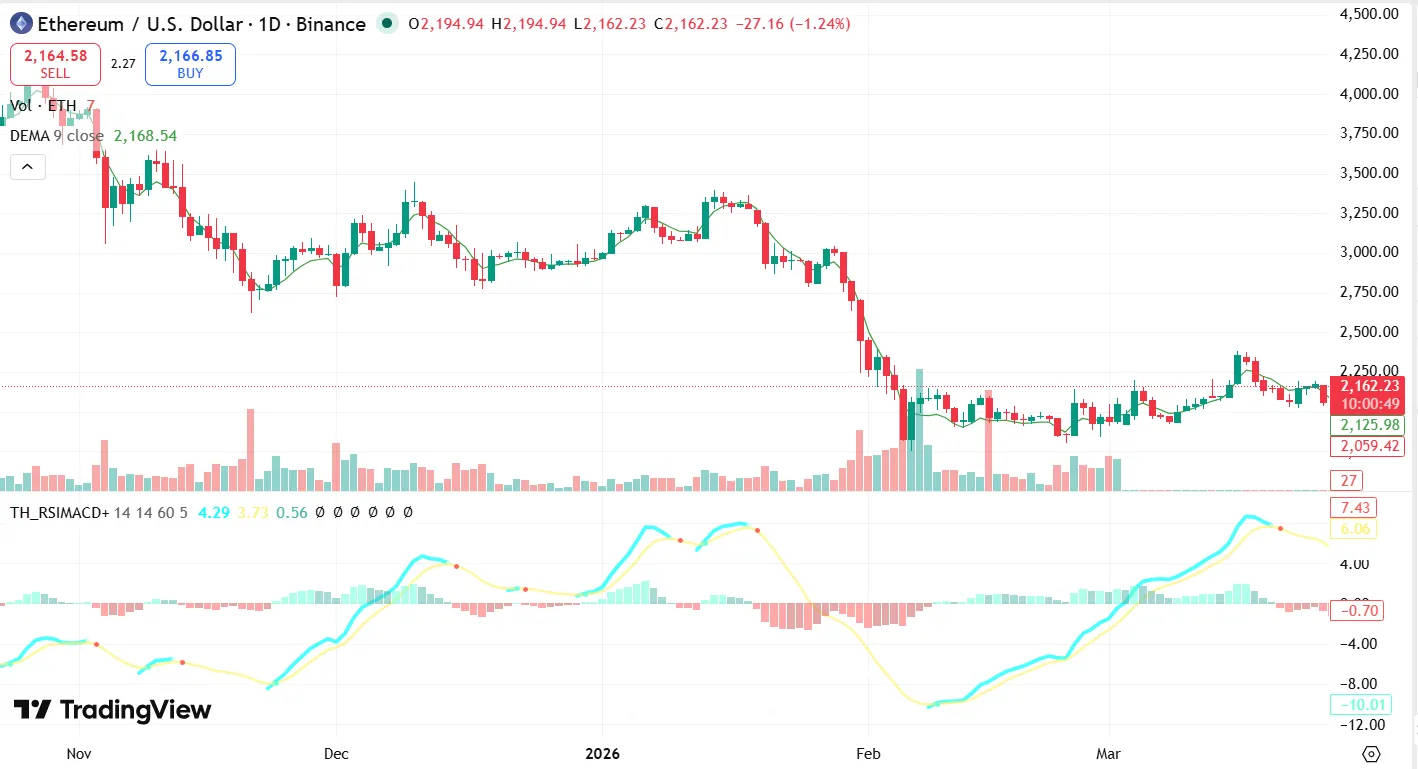
- The action in price was confined between ranges of about $2183 and $2250 and $2300 and below with the resistance around $2250 to $2300 and support around $2000.
- New U.S. Treasury stablecoin regulations and a new push to the Clarity Act added further caution to the digital asset markets.
The ethereum traded close to the current price of $2,183 following a brief recovery on April 9 as the traders absorbed treasury sales and a more solid regulatory environment. The Ethereum Foundation announced that it would swap 5,000 ETH, as CoWSwap, to support research, grants, donations and operations.
Chain tracking revealed that 3,750 ETH had been sold so far at an approximate of $8.3 million at an average price of approximately $2,214. That treasury action fell into an environment of wider digital asset markets that considered policy uncertainty and risk-averse risk appetite following a short-term relief rally.

The Foundation had structured the conversion as a matter of treasury management, and not a declaration of direction, and market exposure was secondary to stability of funds. A TWAP structure with decentralized infrastructure was also an indicator that there was an attempt to minimize disruption and prevent sudden strain on exchange books.
The transition to stablecoins provides the organization with a better view of its budget in cases when it requires funding of multi-year work despite frequent volatility of tokens. Nevertheless, the sentiment can be formed rapidly by large sales by a highly monitored institution in an ecosystem, since it is interpreted by traders as a viable supply indicator.
Resistance cluster maintains pressure on recovery efforts
The most recent action further rekindled debate regarding the broader treasury system of the Foundation: a combination of staking, DeFi implementation, borrowing stablecoins, and periodical monetization. Previous reports indicated that the group had progressed towards 70,000 ETH staking objective, which demonstrates yield generation continues to be significant alongside spot sales.
That mix implies that diversifying the treasury has minimized the reliance on constant selling, but has not completely removed conversion activity. To Ethereum market participants, the sale highlighted that operational discipline remains a priority when reserves are required to finance development, grants, and ecosystem commitments.
Caution was evident in the price action as the ETH traded within an intraday range of approximately between $2,167 and $2,264. Ethereum was traded at an average of about $2,183 on Thursday, as the cryptocurrency closed below the session high and near the levels noted in the draft.
The source continued to be mixed with technical readings showing that bullish momentum on some gauges crashed against weak trend strength and overbought oscillators. That division aids in understanding the reason why buyers stabilized the downturn, but could not generate the follow-through required to create a cleaner breakout.
New Treasury regulation eases compliance on stablecoins
The underlying material put the near-term resistance of between $2250 and $2300 with price trailing a close zone of 100-day average. The support was concentrated around the price of $2,000 and a further downturn would open up the market to the price of $1,925 to $1,800 in the event of increased selling.
The draft had a weekly baseline that was pegged at a low range of $2,190 to $2,195 and small chances of continuing to move upwards. That thinking can appear abnormally narrow, but it has Ethereum in a Catch-22 between elastic demand and market supply.
The regulation came as an additional layer following the United States Treasury, FinCEN and OFAC proposed GENIUS Act regulations on April 8. Treasury claimed the suggestion would subject authorized payment stablecoin issuers to the standards of the Bank Secrecy Act and sanctions.
In the case of crypto markets, that is important since the stablecoins are at the center of the exchange liquidity, collateral utilization, treasury activities, and settlement. Though the rule itself is not directed at Ethereum, it increases the compliance burden on instruments that are becoming increasingly popular in treasury conversions.
Postpartum opinion now determines after cross-heading headlines
The Treasury Secretary, Scott Bessent, urged the Congress to enact the Clarity Act, claiming that the nation still does not have clear digital asset regulations. That call solidified the feeling that policy is a dynamic market variable, particularly at a time when traders are already experiencing less aggressive risk appetite.
It is on that context that Ethereum traders lacked a single, clean catalyst, but rather, a series of overlapping headlines that complicated a straightforward bullish story. Treasury sales, stablecoin regulation, and lawmaking discussion all made the reluctance appear reasonable rather than just temporary nowadays.
The immediate question is whether the buyers can justify existing backing and imbibe treasury-associated flows without letting sentiment eat away further. Anyone above $2,195 would be better, but the real resistance would still be found at higher levels around $2250.
In case price does not have support at its immediate level, the lower markers of the draft re-enter the picture, beginning just above $2,000 and going downward. Ethereum is, as yet, suspended between the positive elements of ecosystem building and a short-run tape where prudence continues to be more rewarding than belief.