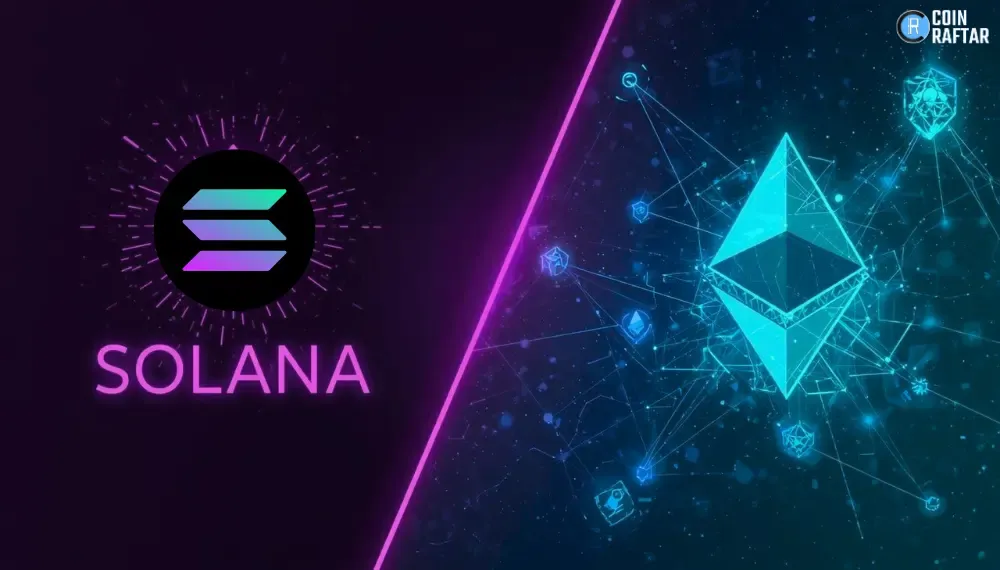
- Ethereum L2 is based on ECDSA, and exposed keys may be compromised in the future if quantum computing technology advances.
- Solana runs Falcon 512 to prepare against quantum threats without affecting network performance.
- Blockchain data stored in the past can be decrypted in the future.
The threat of quantum computing is currently making the rounds following comments by Anatoly Yakovenko, co-founder of Solana Labs, on the quantum safety of Ethereum Layer 2 protocols: “Ethereum L2S are not quantum safe.”
The remark came during a Solana protocol developer update that announced advancements in post-quantum crypto, especially in signature verification on Falcon-512.
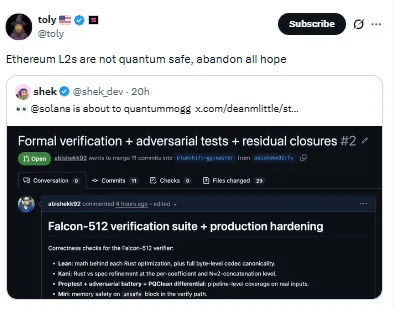
Source: Anatoly Yakovenko
What Caused the Quantum Risks Debate?
The quantum risks debate in the blockchain context is being revived due to the nature of the current cryptography algorithms used in Ethereum Layer 2 networks.
The algorithms in question continue to use the Elliptic Curve Digital Signature Algorithm (ECDSA) with the secp256k1 curve. Such algorithms protect wallets and validate transactions within the current state of technology.
At the same time, after transactions, connected public keys may be revealed. There is a possibility that quantum computing technology could affect such data in the future, after transactions have already taken place.
Quantum Risks associated with blockchain technology are usually depicted via the “harvest now, decrypt later” concept. It involves harvesting blockchain transactions and storing their data, with the idea that these transactions will be decrypted if quantum decryption becomes possible.
Yakovenko referred to this when discussing quantum risks in blockchain technology. If quantum computers continue to develop to the point where they can run Shor’s algorithm, it would enable a level of data analysis previously not possible.
Zero-Knowledge Systems Also Face Theoretical Exposure
The discussion extends beyond wallet signatures into the structure of zero-knowledge proof systems used in Ethereum scaling solutions.
Technologies such as Groth16 and Plonk are widely used in zkEVM-based designs and depend on elliptic-curve pairings. These cryptographic foundations are also part of the broader quantum risk conversation.
However, the same elliptic-curve structures that support these systems are also associated with theoretical vulnerabilities in quantum-computing models. This overlap has placed multiple layers of Ethereum’s structure within the same risk category.
Solana Development Focuses on Falcon-512 Integration
While the discussion continues, Solana developers have begun testing post-quantum cryptographic tools. Based on internal data, it appears that the Falcon-512 signature algorithm, which protects quantum computers, is now being implemented in Solana clients.
Anza and Firedancer developers, among others, have developed prototypes of the Falcon technology, enabling tests to be run in a safe environment. The emphasis here is on preserving system efficiency while implementing quantum security. Falcon provides small signatures and supports a high transaction rate.
The project is still at an early stage, part of a larger research project, and is not yet a full deployment plan.
Roadmap to Post-Quantum Adoption by Solana Foundation
The Solana Foundation has formulated a roadmap for gradually adopting post-quantum cryptography. The initial move towards adoption will be through research and wallets, rather than immediate changes to protocols, according to their official statement.
The strategy mirrors the prevailing belief that quantum computing has not yet reached a point where urgent changes are needed. The road map lays stress on preparation, which makes it possible to test and gradually incorporate into the system.
Wallet-level updates are the initial action point in the plan, giving people a chance to update their encryption without updating the whole system.
Immediate Implementation on Live Networks
Though there have been many developments, Solana does not foresee any immediate changes on its live blockchain.
According to the foundation, the proposed implementation process will only proceed once there is further development in quantum computing. The topic links issues such as wallet security, public key disclosure, and zero-knowledge proofs into a single discussion of quantum computing advancements.
The threat quantum computers pose to blockchains is a relatively new field, with current activities focused on research and preparations for future implementation.
Conclusion
Quantum risks in blockchain have become part of ongoing technical discussions as networks evaluate future cryptographic security. Yakovenko warned that Ethereum’s Layer 2 relies on existing systems, while Solana is advancing its early-stage work on post-quantum alternatives.
FAQ
What is Quantum risk in blockchain?.
Quantum risk refers to the threat posed by quantum computing to the cryptography used in blockchain technology today.
Are there any current risks for the Ethereum Layer 2 network?
While no current risks are known, discussions have occurred about future risks should quantum computers become a threat.
What is Falcon-512?
Falcon-512 is a post-quantum cryptographic digital signature that is quantum-resistant.