

Bitcoin’s monetary policy is one of the tightest in the financial world. The cryptocurrency’s maximum supply was built into the network when it launched in 2009, with a total of 21 million coins. This is one of Bitcoin’s most significant features and is a main reason it is considered a scarce digital currency.
By August 2025, it is estimated that some 19.91 million BTC had already been mined, leaving less than one million coins to be mined. The halving cycle slows Bitcoin’s issuance, though, and the last Bitcoin is unlikely to be minted until about 2140.
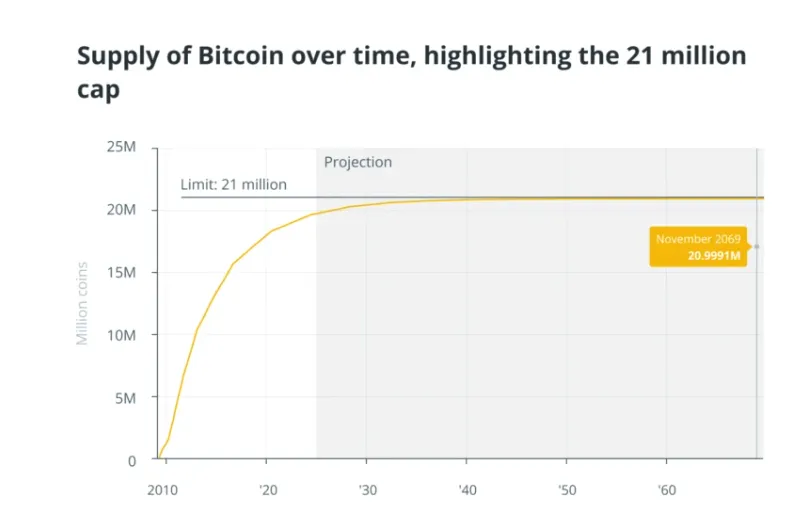
Source: Trading View
Once that point is reached, Bitcoin’s economic system will move to a new stage in which it is entirely based on transaction fees, with no new bitcoins minted.
Understanding Bitcoin’s Mining Schedule
The validation of transactions and the securing and strengthening of the blockchain is known as bitcoin mining. The miners get their rewards through block processing that includes transaction fees and block rewards.
There is an algorithm of generating bitcoins that makes them generated gradually. Each four years, miners’ rewards get halved, which slows down the process of issuing new coins, keeping the quantity of issued coins steady.
Under the present reward policy, miners receive 3.125 BTC for each processed block. The protocol also automatically adjusts the difficulty settings to keep the average time to mine a block at 10 minutes, even as the network’s hash rate fluctuates. This is a controlled issuance schedule, and will cause the volume of Bitcoins issued to gradually taper off until the last Bitcoin is mined.
What Happens After All Bitcoins Are Mined?
After all Bitcoins are mined, no new BTC will be added to circulation. The total number of coins to be issued will be permanently fixed at 21 million. The biggest adjustment that will be made is in the area of miner pay. The block rewards will be eliminated and miners securing the network will only earn from transaction fees.
A transaction fee is paid by users and is included in all transactions. Once the last Bitcoin is mined, these fees will be the main economic driver of network security. The change is not anticipated to happen overnight. Bitcoin’s halving schedule provides more than a century for the network to gradually shift from a reward-based model to a fee-based model.
Bitcoin Security and Miner Incentives
One of the most frequently discussed questions surrounding what happens after all Bitcoins are mined concerns network security.
Currently, miners receive both newly issued Bitcoin and transaction fees. From 2140 onwards, mining must rely solely on revenue from the transaction fees. The viability of the model will be based on the activity of the network and the demand for transactions.
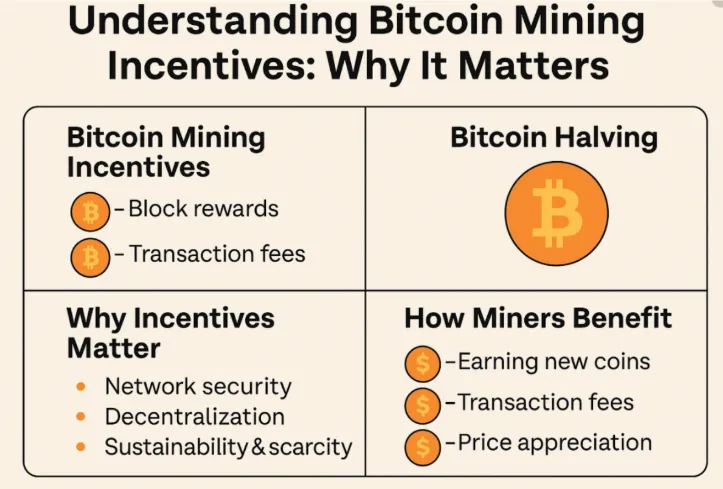
Source: ViaBTC
Nevertheless, the issue is directly connected with the network’s hash rate. In case mining remains profitable, then miners should continue contributing their resources towards validating the transaction.The Bitcoin blockchain technology has been programmed to have an auto-adjust mechanism where the level of difficulty will decrease as more miners depart from the network, making mining easier for other miners on the network. This makes it possible to keep networks operational regardless of fluctuations in the number of people mining.
Lost Bitcoins May Make Bitcoins Scarcer.
Bitcoin’s maximum supply of 21 million coins may be reached, but it is expected that less than this amount will be circulating.
Blockchain researchers have estimated that as much as 20% of all mined Bitcoin may be lost forever, as a result of lost private keys or discarded storage devices or forgotten wallets.Consequently, market participants may find that the actual amount of supply available to them will be well short of the official supply cap.
What will happen once all bitcoins are mined? Possible Network Scenarios
Some possible scenarios have been mentioned that can occur after reaching Bitcoin’s maximum limit.
Transaction fees may rise due to competition for limited block space, and if miners get income solely based on fees. Scalability solutions could be further increased. The technologies developed to increase transaction efficiency could reduce traffic while still allowing access to the Bitcoin network.
However, there is also a common scenario where consolidation takes place among miners. If transaction fees do not yield miners sufficient revenue, the smaller miners will withdraw from the market while the larger ones keep mining. The Bitcoin network has already undergone several economic phases due to halvings and is likely to do so again in the future.
Timeline for Bitcoin Mining Schedule
2009: Creation of the Bitcoin platform
2012: First Bitcoin halving
2016: Second Bitcoin halving
2020: Third Bitcoin halving
2024: Fourth Bitcoin halving
August 2025: Around 19.91 million BTC mined
2140: Last Bitcoin to be mined
This timeline is considered to be one of the most transparent monetary systems in online banking.
Conclusion
What happens after all Bitcoins are mined is no longer a theoretical question but a long-term transition already built into Bitcoin’s design. The network is expected to move from a system supported by block rewards to one sustained entirely through transaction fees.
Bitcoin’s fixed 21 million supply will remain unchanged, while mining incentives, transaction economics, and network participation continue evolving over the coming decades. Although the final Bitcoin is not expected to be mined until around 2140, the framework governing that transition is already operating through the protocol’s halving mechanism and fixed issuance schedule.
FAQs
How many Bitcoins remain to be mined?
By the time August 2025 rolled around, about 19.91 million BTC have been mined, with only slightly over a million BTC left to mine.
When will the last Bitcoin be mined?
The last Bitcoin is projected to be mined somewhere in the year 2140.
What will happen to the miners once all the Bitcoins are mined?
They will not get the block reward but rather depend solely on transaction fees.
Will Bitcoin still run once all the Bitcoins have been mined?
Yes. The system is meant to work past when it meets its mining cap.
Is there enough Bitcoin?
No. It is estimated by experts that about 20% of mined Bitcoin will never see the light of day again due to loss of access keys and wallets.







I do agree with all the ideas you’ve presented in your post. They are really convincing and will certainly work. Still, the posts are very short for newbies. Could you please extend them a bit from next time? Thanks for the post.
Yes for sure