Key Insights:
- Brad Garlinghouse believes that the value of any cryptocurrency will be derived from its utility over time, not from financial engineering.
- Strategy’s STRC preferred shares have fallen well below par value, increasing scrutiny of its funding model.
- Investor concerns continue to grow as Bitcoin weakness pressures Strategy’s capital structure.
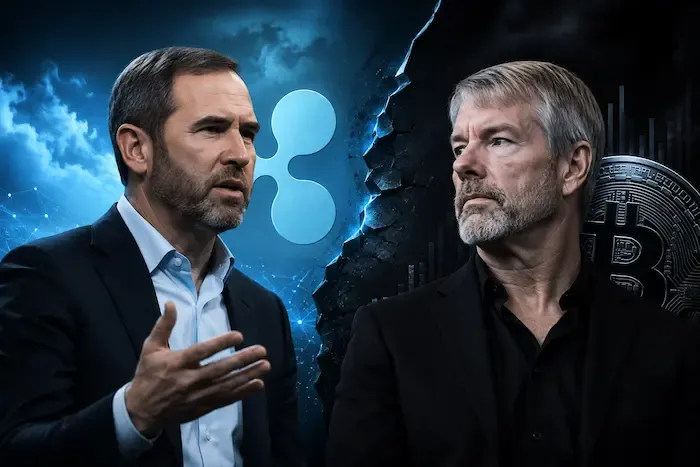
Bitcoin became the center of a fresh industry dispute on Friday after Ripple CEO Brad Garlinghouse criticized Strategy Chairman Michael Saylor’s financing approach. Speaking during a CNBC interview, Garlinghouse argued that the company’s reliance on preferred stock offerings to fund additional Bitcoin purchases fails to create durable value for investors.
His remarks arrived as Strategy’s securities faced mounting pressure and as broader market volatility pushed Bitcoin below key price levels. The comments also highlighted a growing divide within the digital asset sector over whether long-term success comes from utility-driven adoption or aggressive treasury accumulation.
Garlinghouse questions Strategy’s capital raising approach
Garlinghouse used the interview to challenge the financial structure that Strategy has built around its cryptocurrency holdings. He said sustainable value emerges from solving real-world problems, building liquidity, and earning trust over time.
According to Garlinghouse, borrowing capital to purchase additional digital assets does not create the same long-term benefits. He reiterated a view he has expressed for years, stating that utility remains the primary driver of value across the crypto sector.
He also directed criticism toward Michael Saylor’s strategy, arguing that excessive focus on financial structuring has produced unintended consequences for investors and the wider market.
“Financial engineering does not drive long-term value,” Garlinghouse said during the interview. He maintained that assets gain lasting value when they support meaningful economic activity rather than leverage-driven accumulation.
Investor attention turns to strategy securities
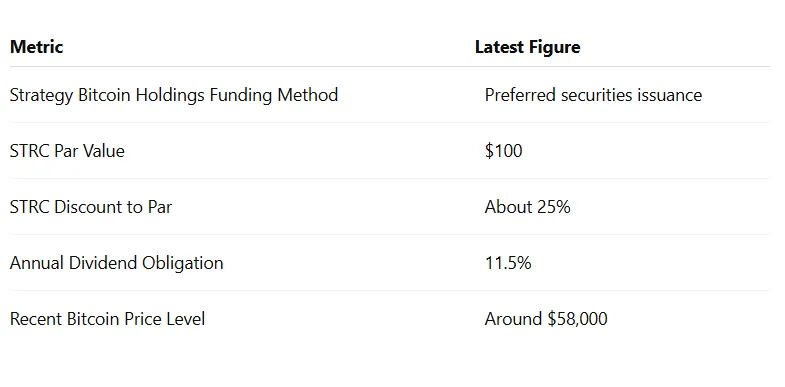
Garlinghouse pointed to Strategy’s STRC preferred shares as evidence that investors are becoming more cautious. The preferred stock recently traded roughly 25% below its intended $100 par value, while carrying an annual cumulative dividend obligation of 11.5%.
The decline has intensified debate around the sustainability of Strategy’s financing model.
Cryptocurrency market weakness weighed on Strategy’s common stock, which also fell to the lowest level since February 2024.
The focus of investor attention has grown from market performance.
- CryptoQuant recommended that Strategy should hold onto its cash rather than making more acquisitions.
- Rosen Law Firm has begun an investigation of possible securities claims.
- Investors still consider the risk of repeated share issuance and leveraged accumulation as a risk.
Additional concerns emerged from insider transactions. Regulatory filings showed Strategy director Jarrod Patten exercised options to acquire shares before selling the position on the same day. Filings also indicate he sold tens of thousands of shares over recent months, generating millions of dollars in proceeds.
Industry divisions become more visible
Despite his criticism, Garlinghouse emphasized that he remains bullish on Bitcoin itself. His comments targeted the financing structure surrounding the asset rather than the cryptocurrency.
He described Bitcoin as digital gold and argued that digital assets offer significant advantages in moving value across borders. Garlinghouse contrasted that view with Ripple’s business strategy, which focuses on payment infrastructure and institutional blockchain adoption.
According to him, Ripple processed approximately $16 billion in payments during the past year. He cited that activity as evidence that blockchain networks can generate value through practical use cases.
The debate reflects a broader question facing the industry. Meanwhile, some companies are maintaining their treasury growth, and others are focused on payments, tokenization and financial infrastructure.
Investors are reportedly not panicked but are taking cautious steps in the market, according to the market data. Anchorage Digital research revealed that there was a higher demand for downside protection in cryptocurrency-related assets.
However, derivatives pricing has not reached levels typically associated with severe distress or forced deleveraging.
Broader consequences for the digital asset market
Garlinghouse’s criticism arrives at a sensitive time for the sector. Falling asset prices have increased pressure on companies that rely heavily on leverage or capital markets activity.
Consequently, investors are increasingly looking at balance sheet strength, dividend commitments and funding expenses. The conversation could also impact the methodologies that public firms will use for future cryptocurrency treasury methods.
Those who favor Strategy say that long-term appreciation may happen, but those who don’t say it exposes risks which become more apparent during market declines.
The row is a testament to two different visions of the future of the industry for now. One is the gathering and arranging funds, the latter is the making of benefits and adoption. But as markets for bitcoin become volatile, investors will continue to evaluate which one will be more robust over the long run.
Conclusion
Garlinghouse’s comments have come at a time when market conditions are tight, and have added to the uncertainty surrounding Strategy’s financing plans. He believes Bitcoin has much to offer, but he says it’s not about leverage but the practical uses. The discussion on how crypto firms generate value seems far from over as investor questions mount and Strategy’s shares come under pressure.