Key Insights
- Tether has suspended the creation of new aUSDT mints and positions for the liquidation of Alloy by Tether.
- Existing users have to withdraw XAUT collateral and redeem aUSDT before Sept. 17, 2026.
- The firm is hanging on to XAUT and focusing on products with a greater level of demand and liquidity.
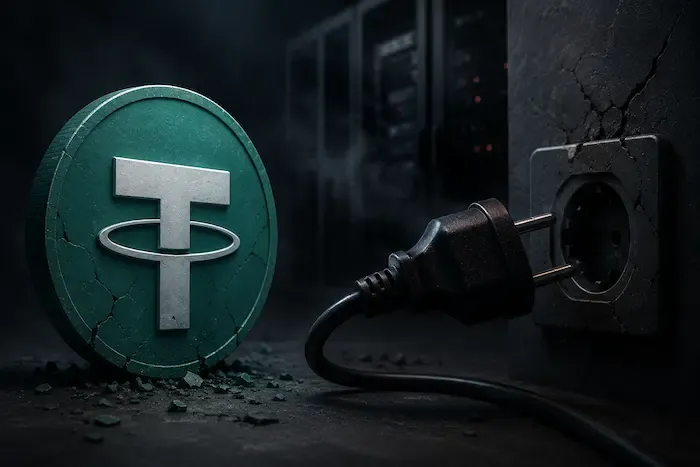
Tether has announced the end of its Alloy by Tether project and the end of support for the gold-backed stablecoin aUSDT after performing a user activity review and market demand assessment.
The move follows the launch of the product in 2024 and comes as part of a wider drive to prioritize assets with greater adoption and liquidity throughout the company’s ecosystem.
The company has already shut down new position creation and even aUSDT minting. Position closing and redemption of collateral is still possible for existing users during the 3-month transition period.
An alloy experiment is coming to a close.
Alloy by Tether is a digital asset platform launched in June 2024, which enables developers to create digital assets based on Tether Gold (XAUT). It is most famous for its flagship token, aUSDT, which allowed users to make a stablecoin that was backed by tokenized gold and dollar-pegged.
The structure gave investors access to dollar liquidity without selling their gold exposure. It also allowed the company to test how tokenized gold could function within on-chain financial markets.
Under the wind-down plan, users may continue returning aUSDT and withdrawing XAUT until Sept. 17, 2026. After that date, collateral locked in positions that remain open will no longer be recoverable through the platform.
Current platform figures show why the product remained a niche offering.
Metric Value
aUSDT Market Capitalization: About $1.27 million
Gold Backing : 14.73 kilograms
Gold Value: About $2.2 million
Redemption Deadline: Sept. 17, 2026
The market size remained modest compared with the company’s larger products. While Alloy demonstrated the viability of gold-backed collateral, adoption never reached meaningful scale.
Portfolio shift favors larger products
The company said Alloy generated valuable insights into tokenized real-world assets and collateralized digital products. However, the review concluded that resources would be better directed toward products attracting stronger demand.
The move follows earlier changes across the stablecoin portfolio. Support for EURT, the euro-pegged stablecoin, ended in 2025. The company also retired CNHT due to limited demand for the yuan-linked token.
All those decisions reflect a more concentrated product strategy. The company seems to be focused on consolidating around more highly traded, widely used product lines, instead of having to offer smaller offerings.
Most significantly, the shutdown is no indication of an end to tokenized gold.
XAUT is still one of the company’s fundamental products and still has a significantly larger market share. According to the company’s release, the token has a market value of just over $3 billion and is supported by over 22,000 kilograms of real gold.
That difference is an example of experimentation and adoption. AUSDT, with its new use case, was the one that was added, while XAUT actually gained scale.
The impact of the decision on digital assets
The closure is part of a broader trend seen throughout the digital asset industry. New architecture keeps proliferating, and user engagement and liquidity are the keys to future success.
As interest in real-world assets being tokenized has been rising, Alloy joined the scene. The platform demonstrated this concept of having gold backed collateral with a dollar pegged asset, also having an over-collateralized design.
However, the demand for market products stayed focused on larger stablecoins and old-fashioned digital assets. Smaller products, then, were frequently unable to develop a regular flow of liquidity.
In cases of tokenization projects, it places an additional emphasis on a vital principle. New technology can gain traction, but eventual adoption is what will make it last.
The transfer could also sway the issuers’ future product assessments. More focus on the utility, liquidity and measurable demand of the user, rather than expanding of new products.
The broader growth plans will be kept in place.
The Alloy shutdown comes as Tether moves beyond the stablecoins and tokenized gold. The company has taken the plunge into Bitcoin mining, artificial intelligence, cloud infrastructure and robotics.
It has also been more active in the tokenization platforms and digital asset infrastructure space. In recent years, some initiatives have been undertaken, such as the plans for the stablecoin GELT, which is tied to the Georgian lari.
Those moves point to both a contraction of product lines and expansion of business lines. It is more of a reallocation of resources, rather than a retreat, to retire aUSDT.
Conclusion
Alloy is shutting down after two years of testing gold-backed stablecoin derivatives. Now Tether is turning its focus to products that are more liquid with broader adoption and better growth opportunities.
aUSDT will lose its presence from the market but XAUT will still be an important part of the company’s long-term strategy.