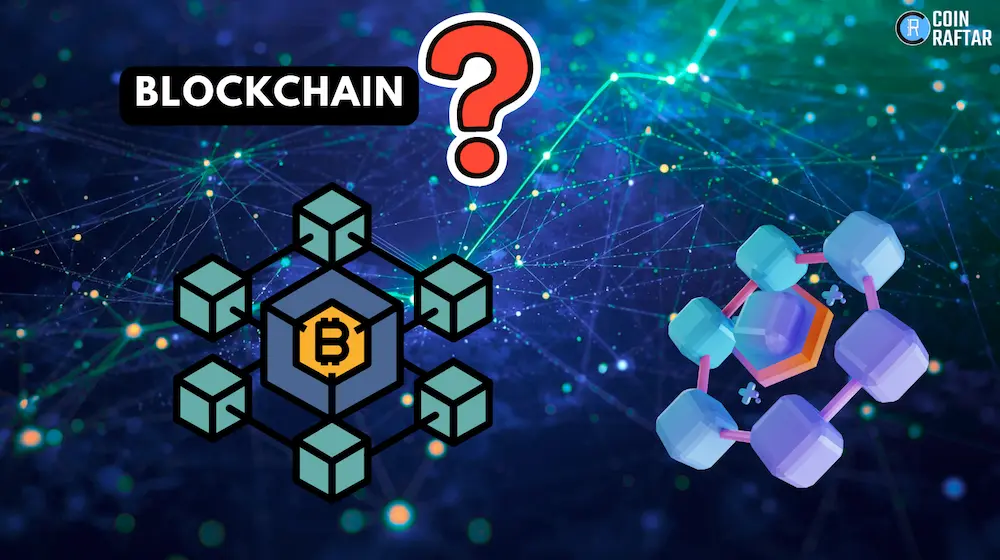
The Connection Between Blockchain and Web3 starts with the understanding that both terms are related; however, they do not mean the same thing. With ongoing debate on what the internet of the future will look like, blockchain is increasingly becoming part of Web3 because of its ability to run apps without central intermediaries.
Knowledge of Web3 and its Aims
The internet has gone through various phases, named Web1, Web2, and Web3. Web1 consisted mostly of static sites that provided information to users. There were no many interactions, and information creation was left to the site providers.
However, in Web2, the level of interaction between users was much higher. People were involved in social networking activities, sharing information, and conducting business transactions. The drawback of Web2 was the centralization of user information on a few firms.
 Source: EDUCBA
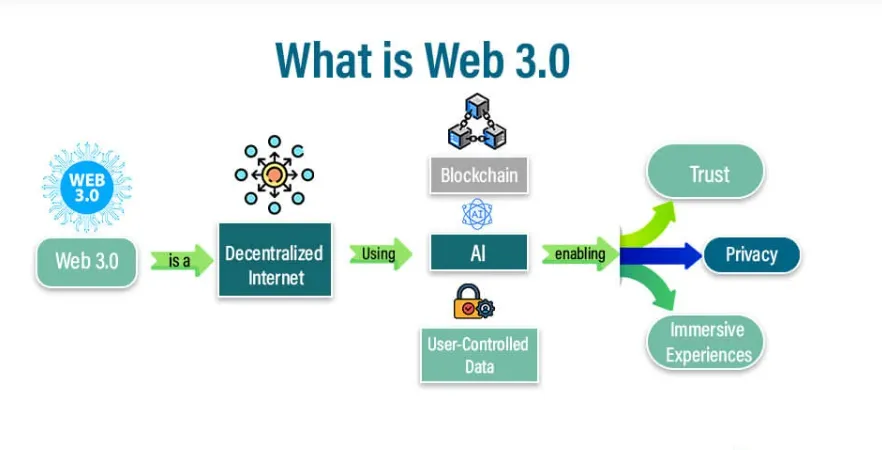
Web3 is a different method altogether. This theory revolves around decentralized networks where individuals can communicate, trade value, and contribute to the governance of the system without depending solely on a centralized entity. As per the available sources, Web3 technology attempts to facilitate transparency, ownership by the users, access, and participation.
The Role of Blockchain in Facilitating Web3
One such technology that drives Web3 technology includes blockchain.
Decentralization
One of the key features of Web3 is minimizing dependence on any central bodies. In blockchain technology, information is stored by multiple participants rather than a single organization.
Permissionless Access
Most applications developed using blockchain technology do not require permission from a central body to access their networks. Internet users can use such networks from anywhere in the world.
Trustless Transactions
Conventional online service providers depend on third parties who can vouch for transactions and keep records of transactions. Users can perform transactions without any need for trust through consensus and distributed ledger provided by blockchain technology.
Verification and Transparency
All transactions made on blockchains are verifiable in public. Following transactions on blockchain technology, members can independently verify transactions and ownership.
Censorship Resistance
Given the characteristics of blockchain technology, it becomes almost impossible to tamper with records after transactions have been verified. This may be useful in securing transaction history and ownership of records registered on blockchains.
Use of Blockchain Technology and Web3
The connection between Web3 and blockchain technology can be seen through use cases. Cryptocurrencies provide an ecosystem in which transactions can be made for trading purposes. Unlike other payment systems, this one supports payments on blockchain networks without any intermediaries.
Self-Custodial wallets help people to become the owners of their digital funds. They enable users to interact with Web3 applications in order to engage in transactions without transferring control of their funds and digital assets. The second best case in point would be non-fungible tokens. They serve to represent digital collectibles, game assets, and user IDs that could be stored in a blockchain.
Finally, decentralized autonomous organizations also serve as an example of interaction between blockchain and Web3. They use blockchain-based voting mechanisms that allow users to govern themselves without a central authority.
Blockchain vs Web3
Although they are used interchangeably, blockchain and Web3 play different roles.
| Feature | Blockchain | Web3 |
| Meaning | Distributed ledger technology | Conception of the decentralized Internet |
| Main Function | Records and confirms data | Enables decentralized web services |
| Role | Provides infrastructure | layer and ecosystem |
| Ownership | Conforms ownership records | Promotes user ownership |
| Governance | Supports voting | Allows community involvement |
It is clear from the table that blockchain operates as an underlying technology whereas Web3 consists of a broad array of applications and services running on a decentralized model.
Other Technologies Associated With Web3
Blockchain is not the only technology associated with Web3 development.
Some other technologies include:
- Augmented reality (AR)
- Virtual reality (VR)
- Internet of Things (IoT)
- Metaverses
The former three offer interactive possibilities, and the latter can provide an immersive experience, while the blockchain enables the underlying infrastructure necessary.
Challenges Facing Blockchain and Web3
The existing data identifies a number of other issues concerning the use of blockchain and Web3 technology. The management of digital wallets and private keys will be necessary for users while working with decentralized apps. Scalability may be an issue for blockchain networks based on transaction volume.
Finally, regulatory requirements for digital assets and blockchain governance vary in different jurisdictions.
Importance of the Relationship Between Blockchain and Web3
The relationship between blockchain and Web3 can shed light on how decentralized technology can help facilitate services in the future internet world. Blockchain ensures a transparent backbone for transactions, ownership management, governance structures, and digital identities.
Web3 expands the role played by blockchain by developing applications based on decentralized participation. Although Web3 is likely to comprise other types of technologies other than blockchain in the future, from what is available now, it appears that blockchain is an important component of the technology.
From the digital asset, decentralized application, NFT, and DAO frameworks offered by blockchain, many functionalities can be achieved.
Conclusion
To comprehend the relationship between blockchain and Web3, one needs to discern the difference between the former and the latter. While blockchain serves as an infrastructure used for recording transactions and ownership verification, Web3 constitutes a conceptual idea of decentralized internet services.
FAQs
Are blockchain and Web3 synonymous?
Not really. Blockchain is merely a technology while Web3 is a term for decentralized internet services.
How is blockchain important for Web3?
The significance of blockchain in Web3 is that it provides the foundation for Web3 ownership, transactions, governance, and transparency of Web3.
What is the role of cryptocurrencies in Web3?
Cryptocurrencies are basically decentralized means of digital transactions.