
MultiSig wallets being used in scam activities is another phenomenon that is taking root among social media and crypto users, especially within the Tron network, where the scammers manipulate the wallet permissions settings to defraud cryptocurrency from victims.
Scams begin when victims share their seed phrase or private key in publicly available mediums such as YouTube, Telegram, Twitter, and even commenting sections attached to the crypto material. Once the scam begins, the process involves making the victims feel as though they have discovered something that gives access to the crypto wallet containing considerable amounts of cryptocurrency, mainly USDT tokens.
This is done through the Tron network. Once the victims import the crypto wallet into their own crypto wallet, it is evident that these funds can be accessed and used. Nevertheless, the wallet is actually set up as a multisig wallet. Victims who attempt to move the funds quickly discover that the wallet lacks sufficient TRX to cover network fees.
At that stage, users often send their own TRX into the wallet to cover transaction costs, believing they can transfer the visible USDT balance. The transfer then fails because the scammer still controls the wallet’s main signing authority.
The scam structure relies on greed-based manipulation rather than direct wallet hacking. The victim voluntarily sends cryptocurrency to the wallet, but lacks the permissions required to access the funds.
What Is a Multisig Wallet Scam?
Multisig wallets are those that facilitate transactions only when multiple approvals have been gained. In this regard, multisig wallets differ from other types of wallets where the user needs just one key for transaction purposes.
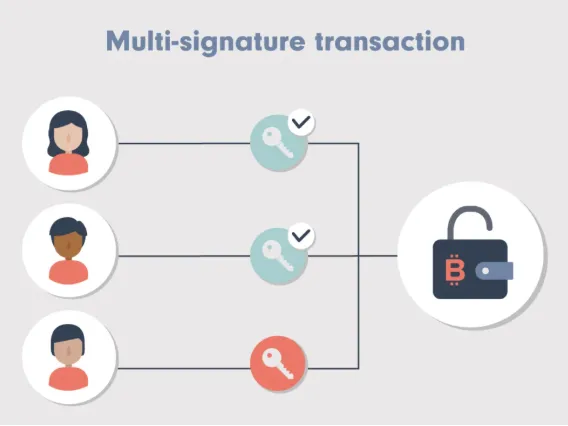
Source: SunCrypto
In the case of a scam, the scammers may announce a seed phrase for a public limited-permission wallet while having a full wallet with ownership permissions. Permission settings in blockchains like Tronscan may be visible through blockchain explorers.
In the case described in the article, for instance, a bait wallet with more than 2,000 USDT was accessible after importing the public seed phrase; yet, the account still had another address with full owner permission.
This makes it impossible for the victim to move their funds even after paying transaction costs.
Typical Method of How the Scam Operates
This type of scam usually operates using a similar method from different channels.
| Scam Steps | Description |
| Public Seed Phrase | scammers put wallet seed phrases in the public domain |
| False Opportunity | The wallet contains significant amounts of USDT |
| Need for Gas Fees | Not enough TRX to make any transactions |
| User Pays Fees | User sends his/her TRX to pay the fees |
| Unable to Make Transactions | Multi-signature prevents withdrawal |
| Profit for Scammer | The scammer keeps the sent TRX |
Some of the more complex examples include phishing and impersonation techniques. Here, hackers impersonate as customer service or crypto platform representatives who trick the user into upgrading from a traditional wallet to a multisig wallet, during which time they covertly add the hacker’s address as a signatory on the wallet.
Why Tron Multisig Wallet Scams are Hard to Detect?
According to Tron, one problem noted was that wallet users were unable to verify whether the wallet they were using was restricted in any way before engaging with it. The wallet applications could show the user balances as expected, but it will only hide permission systems until the user investigates the account settings or blockchain explorer data manually.
There have been repeated warnings from security companies such as SlowMist and CertiK regarding phishing campaigns as well as the manipulation of permission structures aimed at cryptocurrency owners in decentralized finance environments.
A few wallet companies have now introduced warning systems that notify users of any interactions they may have with suspicious multisig wallets or permission structures.
Important Security Measures
| Security Practice | Purpose |
| Maintain secret seed phrases | Prevent any kind of unauthorised wallet access |
| Download only authorized wallet | Mitigate phishing threats and risks due to fraudulent software |
| Perform wallet permissions audit | Detect unknown co-signers |
| Utilize hardware wallets | Provide an extra layer by authorizing transactions offline |
| Two-factor authentication | Further enhances account security |
| Verify wallet permissions regularly | Identify suspicious changes |
As the report highlights, legitimate wallet providers and cryptocurrency exchanges do not ask users for their seed phrases or private keys. The report also advised against the use of imported wallets using recovery phrases available on the internet.
The hardware wallet was seen as yet another layer of security, since physical verification is required to validate a transaction.
Why Multisig Wallet Scams Remain Popular
Based on the information collected by Tron, it is clear that the spread of multisig wallet scams remains popular due to the combination of a wallet balance and financial opportunities. The schemes also remain inexpensive to execute because they do not require the use of malware; instead, they rely heavily on social engineering tactics.
As crypto use becomes more prevalent across decentralized finance networks and social media platforms, there have been many efforts to monitor permission-based wallet attacks, phishing, and fake support impersonations.
Conclusion
Scams related to multisig wallets have become more common in crypto communities, as scammers exploit wallet permissions and publicly available seed phrases to target potential victims. The fraud is mainly aimed at individuals trying to retrieve visible crypto balances from wallets still owned by another address.
FAQs
Can a multisig wallet stop any transaction?
Yes. Transactions can only be performed in multisig wallets with multiple signatures.
Why do scammers share seed phrases publicly?
The seed phrase usually controls only a limited-permission account, while another wallet retains full authority.
Is the use of Tron wallets prevalent in multisig scams?
According to the given material, these scams are quite common for the Tron platform because of its multisig authorization mechanism.






I love your blog.. very nice colors & theme. Did you create this website yourself? Plz reply back as I’m looking to create my own blog and would like to know wheere u got this from. thanks