Key Insights:
- The cryptocurrency Bitcoin outperformed market sentiment and geopolitical fears as peace talks were put on hold.
- The traders watched the Strait of Hormuz due to the potential for oil disruption to have an impact on global risk markets.
- The sentiment around crypto remained negative, as investors have been waiting to see further progress in the diplomatic talks between the two countries, Iran and the United States.
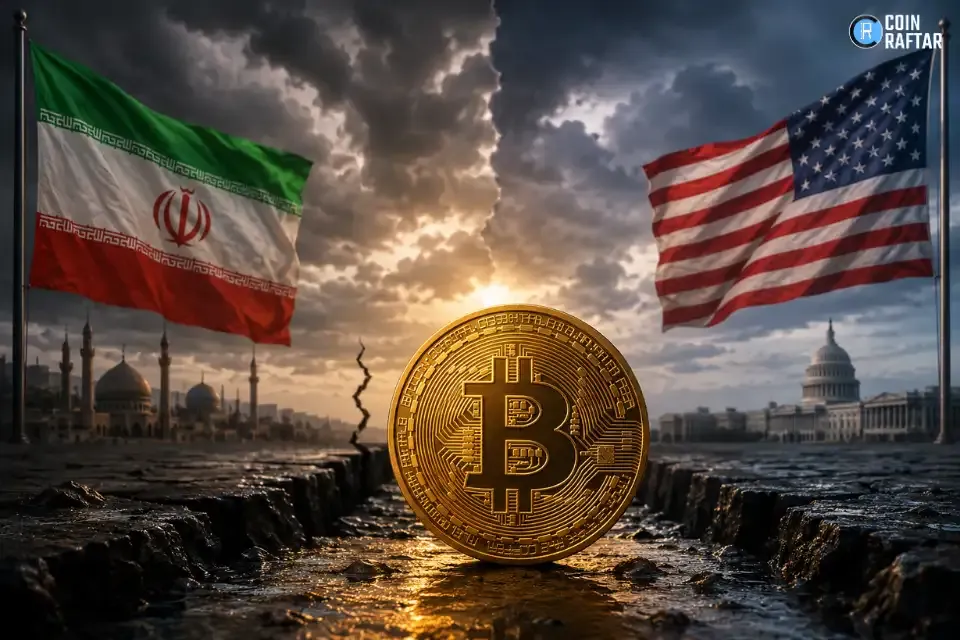
Bitcoin continued to trade lower as news of new peace talks between Iran and U.S. surfaced. Markets were slightly guarded as traders pondered the chances of talks and the wider risks of the Middle East situation.
The Kobeissi Letter reports that Iran had reacted to a U.S. proposal for a possible ceasefire agreement. The demands from Tehran were related to sanctions relief, compensation for war damages, and guarantees for regional security. The reported U.S. terms appeared stricter and included nuclear restrictions and limits on asset releases.
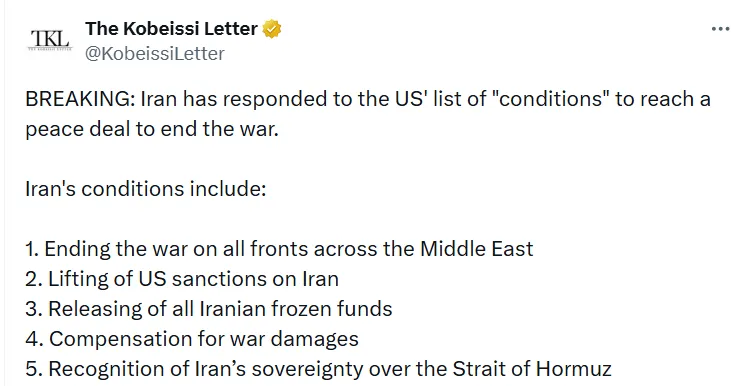
Iran and U.S. reportedly exchange conflicting peace conditions
According to reports, Iran requested several conditions before accepting any peace arrangement. Tehran reportedly demanded an end to fighting across the Middle East and the removal of U.S. sanctions.
Iran also requested the release of frozen funds and compensation for damages caused during the conflict. Another reported demand involved recognition of Iran’s sovereignty over the Strait of Hormuz. The reported U.S. conditions moved in a different direction.
Washington reportedly rejected compensation payments and refused to release frozen Iranian assets. The proposal also included the transfer of 400 kilograms of uranium to the United States.
The terms reportedly allowed only one Iranian nuclear facility to remain operational. Reports also stated that any ceasefire would depend on continued negotiations between both sides.
Bitcoin reaction remains cautious
Bitcoin traded near $78,400 during the latest market session. The asset posted a modest daily gain, but momentum remained weak across the broader crypto market.
Ethereum was trading in the vicinity of $2,190, with XRP, BNB, and Solana seeing modest gains. Buying pressure levels were low and caution was written into market activity.
Short-term price action indicated that investors had not yet forgotten geopolitical tensions as a key risk factor. Bitcoin’s weekly chart also didn’t turn up, despite minor daily rallies. Ethereum dipped in the weekly chart, adding to the digital asset market’s lack of clarity.
The analysts said that the traders were not bold enough to take large trades as talks were still ongoing. Investors were also watching oil prices and shipping dangers in the Strait of Hormuz.
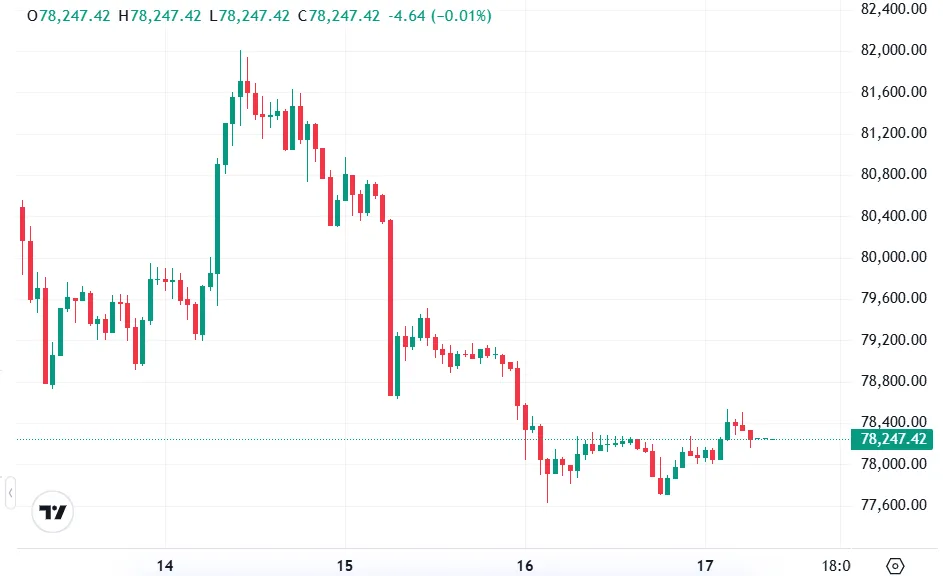
Key market insights
- Traders reacted carefully despite reports of possible negotiations
- Oil supply concerns continued influencing crypto sentiment
- Safe-haven demand remained mixed across global markets
Strait of Hormuz risks keep global markets on edge
The Strait of Hormuz remains one of the world’s most important energy routes. Reports cited earlier Reuters estimates showing the passage handled nearly one-fifth of global oil and liquefied natural gas flows before the conflict started on February 28.
Any threat to shipping activity in the region could affect global energy prices. Rising oil prices often increase inflation concerns and reduce appetite for risk assets.
The conflict saw crypto traders closely monitor the waterway, seeing it as a key indicator of the overall financial stability.The reported Iranian demand for sovereignty recognition over the strait added another sensitive element to negotiations.
Crypto markets continue tracking war headlines
The digital asset market has reacted sharply to major developments connected to the conflict. Earlier reports showed Bitcoin briefly falling after President Donald Trump rejected a previous Iranian peace response.
The asset reportedly dropped from $81,430 to $80,520 before recovering above $82,000 within hours. Similar moves appeared throughout the conflict whenever military threats or negotiation setbacks surfaced.
Few short rallies throughout crypto markets were seen on the back of temporary peace signals. Failing offers and rising rhetoric brought traders into a defensive mode, though.
In addition, investors were looking for further clues in the U.S. dollar and commodity markets. Crypto sentiment, analysts noted, didn’t just focus on technical considerations but instead on the geopolitical climate.
Impact and analysis
The new reports indicated that there was still a significant gap between the two parties on the main demands. From the perspective of Iran, the priority was to negotiate for the lifting of sanctions and regional recognition, while the U.S. terms reportedly included nuclear restrictions and negotiation leverage.
The markets were cautious due to the uncertainty prevailing. Bitcoin’s performance has been stronger than previous bear market rallies, but traders have not been taking risks with their trades. But, even with daily positive returns, the overall crypto market wasn’t showing much signs of life.
Further price changes would likely be influenced by diplomatic developments and regional stability, analysts said. Any escalation in the Strait of Hormuz could have an impact on markets, as well as crypto assets. Any escalation in the Strait of Hormuz can rapidly have an impact on both markets and crypto assets.
Investors seemed to be more concerned with holding on to their capital than anything else and watching all the significant news that came out of the negotiations.
FAQs
Why were the Bitcoin reports in Iran and the U.S. the reason for Bitcoin’s reaction?
Investor confidence and the global markets are affected by geopolitical tensions, which may lead to reactions by crypto traders.
What did Iran have in mind for its price?
Iran demanded that sanctions be lifted, compensation and the return of their frozen assets, and recognition of the Strait of Hormuz.
What did the U.S. offer in the proposed deal?
Aid was not proposed that included any restriction on nuclear, no asset releases and uranium transfers, reports said.
The Strait of Hormuz is significant for what reason?
It is a major global oil and gas transit route, therefore, it is an important route for energy markets.
What has been the attitude of the crypto market in the conflict?
Peace reports, military threats and negotiating steps have caused markets to experience dramatic fluctuations.