
The Maximum Extractable Value (MEV) refers to the extra value that a validator or block producer can create from manipulating the order of transactions in a block. MEV is an important term in decentralized finance, particularly on the Ethereum blockchain, where there is substantial transaction volume and transparency.
The reason is the additional gains from manipulating the transaction sequence within a block. This would be even more critical as DeFi grows increasingly popular, as it will affect trading fees, execution, slippage, and network efficiency.
This works based on the public visibility of the transactions before they are executed on the blockchain through the mempool.
In the process, the validators will select, exclude, delay, or order transactions based on what the blockchain provides. Trading bots have found ways of earning from these transactions before they are fully executed.
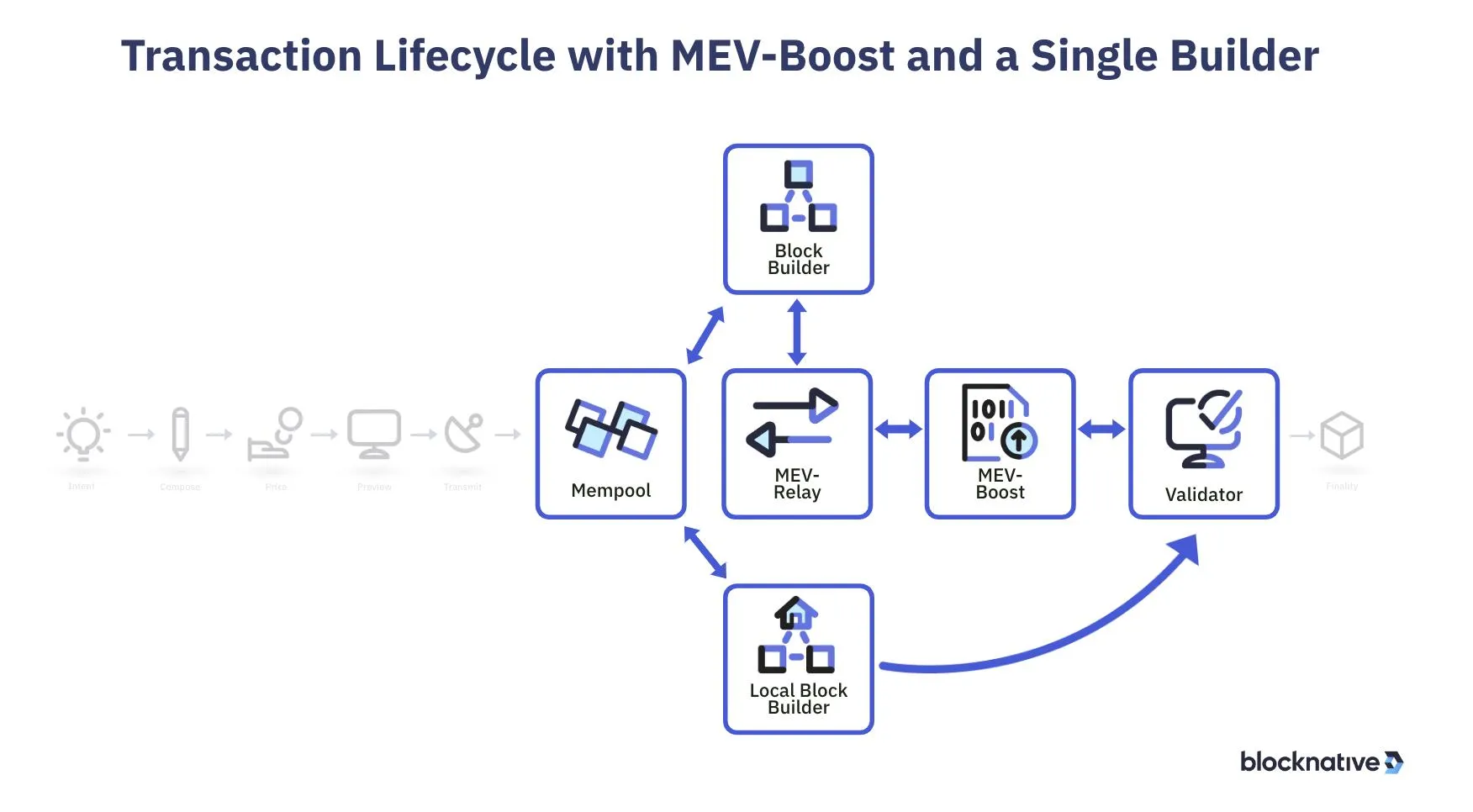
Source: blocknative
The rise in popularity of MEV is informed by blockchain infrastructure. It has continued to thrive, especially on decentralized exchanges like Uniswap.
Maximum Extractable Value Mechanism
Transaction ordering is an important element that dictates the functioning of Maximum Extractable Value in the decentralized finance system.
Upon submission, the user’s transaction request will be added to the mempool. Because all data is public, the bots will have time to react to the transaction request before it completes.
Validators will have the power to:
- Rearrange transaction order
- Give preference to high-paying transactions
- Exclude certain transactions
Due to the transparency of transaction visibility, bots often raise gas costs to secure transaction execution priority in the subsequent block. This creates an environment where bots can compete to exploit price moves in the active market.
Front Running and Sandwich Attacks Increase MEV Opportunities
Many trading techniques have become known as key contributors to maximum extractable value in the blockchain space.
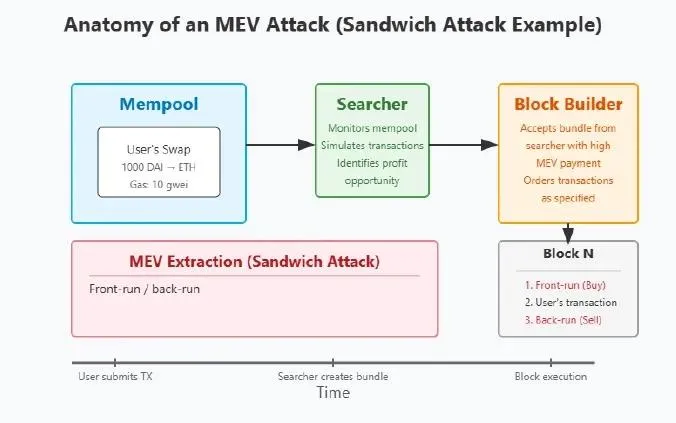
In front-running, a bot realizes that a transaction will soon alter the price of an asset and inserts its own transaction ahead of it by paying higher gas fees. Once the transaction moves the market price, the bot sells the asset at a premium price.
Back-running involves a totally distinct architecture. While the former strategy involves placing the order before the transaction occurs, the bot initiates the order right after the large transaction.
Source: Kudelski Security
A sandwich attack involves a combination of both tactics:
- A bot initiates an order before the transaction is placed by the user
- The transaction conducted by the user alters the market price
- A bot initiates an order right after that
Such a structure may cause slippage for regular users but bring profits for an automated trader. As stated by the principles of trading in DeFi markets, sandwich attacks are among the most well-known types of MEV activity in DEXs.
Liquidation Bots Are Another Source of Maximum Extractable Value
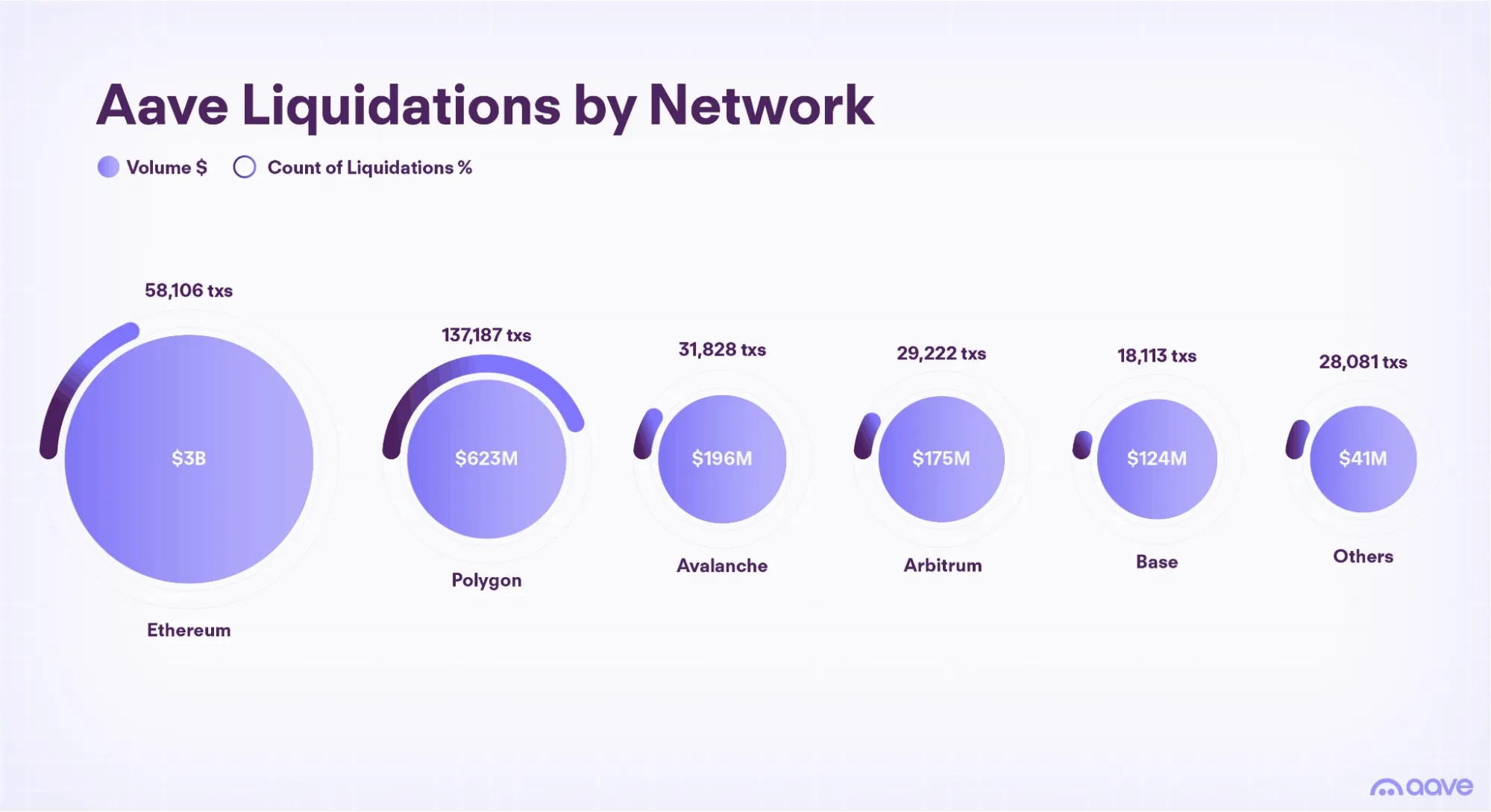
Alongside DEXs, MEV activity occurs on other platforms, such as lending protocols on blockchains. For example, the Aave protocol stipulates that borrowers must provide collateral equal to the funds they have deposited. In case this figure decreases, opportunities for liquidation arise.
Source: aave
Bot-driven monitoring in such situations is continuous, and bots strive to execute liquidations faster than other traders.
Liquidations are another factor contributing to Maximum Extractable Value in DeFi platforms, as they are usually rewarded with fees or reduced collateral costs for positions. Bots competing in liquidations usually increase during periods of high market volatility.
Distribution of MEV Was Altered Due to Ethereum’s Proof-of-Stake System
MEV distribution was altered following The Merge, when the Ethereum blockchain transitioned to Proof-of-Stake.
As a result, there was a wide-scale implementation of the Proposer-Builder Separation mechanism or PBS.
How does it work?
- Block builders optimize transactions
- Proposers create blocks and earn rewards
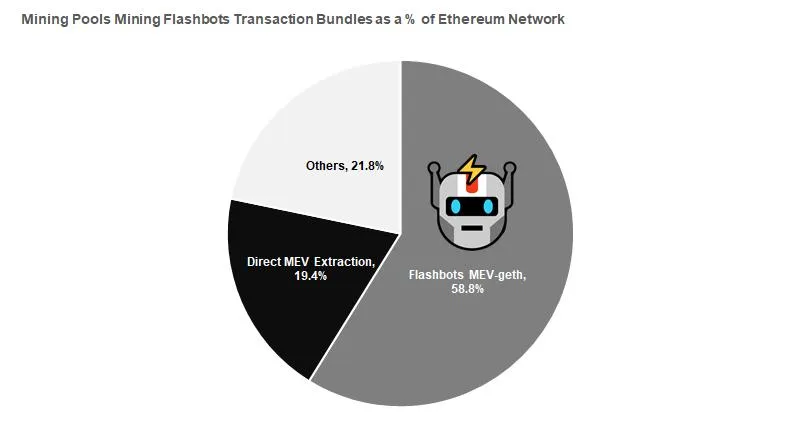
The model thus distinguishes between the block-building process and the validation process, creating a specific market for the chance to place transactions. Organizations such as Flashbots later introduced infrastructure designed to improve transparency around MEV extraction while reducing harmful transaction practices.
Source: Medium
The system also introduced alternative methods for submitting transactions outside the public mempool.
Why Maximum Extractable Value Matters for DeFi
Maximum Extractable Value continues to affect several aspects of the blockchain market.
Negative effects include:
- Higher transaction fees
- Increased slippage
- Less predictable execution prices
- Competitive advantages for sophisticated trading bots
At the same time, some forms of MEV contribute to market-balancing activity.
Arbitrage systems, for example, identify price differences between decentralized exchanges and execute trades that reduce those gaps. MEV is therefore linked to both the operational risks and efficiency of blockchain networks.
MEV Risk Management Strategies
There are several measures that blockchain network participants use to minimize their MEV risks.
Some of them are:
- Employment of private transaction relays
- Employment of reduced slippage tolerance
- Not conducting big transactions when the network is congested
- Utilizing MEV-resistant trading sites
These strategies make transactions private and significantly less likely to be targeted by automated trading bots. The developers are working on other mitigation strategies, such as encrypted mempools and different transaction orderings.
Conclusion
Maximum Extractable Value has become a major operational component within decentralized finance and blockchain transaction systems. The process influences transaction prioritization, gas costs, slippage, and liquidations in the DeFi space.
FAGs
Is Maximum Extractable Value only applicable to Ethereum?
No, while Ethereum remains a major center for MEV activity, the mechanism also exists on other blockchain networks with active DeFi ecosystems.
Are all forms of MEV bad for users?
No, the Arbitrage trading system can be cited as a type of activity that can lead to equal pricing on decentralized exchanges.
What makes MEV happen?
MEV occurs because pending transactions on the blockchain are public before they are confirmed.