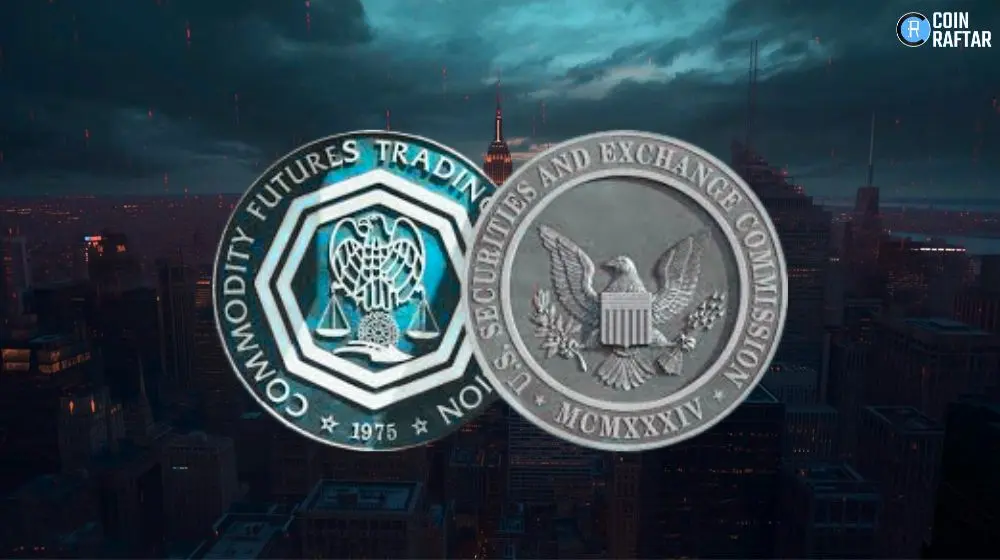
In the U.S., crypto regulation hinges on whether a token is a security (overseen by the U.S. Securities and Exchange Commission) or a commodity (regulated by the U.S. Commodity Futures Trading Commission). The classification shapes issuance, trading, and compliance rules.
Introduction
The American digital asset market is in a critical junction, as a current jurisdictional conflict arises between the U.S. Securities and exchange Commission and the U.S. Commodity Futures Trading Commission. The central issue in the discussion is a simple question; at what time will a token be considered a security and at what time will it be a commodity? The response defines the regulatory framework and agency that will be overseen.
There are major implications of this classification. A token is not required to be SEC-registered, disclosed, and subject to investor protection in case it is regarded as a security. Had it been a commodity, it would be subject to the jurisdiction of CFTC, especially in derivatives and in enforcement of anti-frauds. In the case of exchanges, investors and crypto projects, the difference defines market access, compliance requirements and long-term sustainability in a changing regulatory environment.
Who Regulates Crypto in the U.S.?
The two main areas of cryptocurrency regulation in the United States are the U.S Securities and Exchange Commission and the U.S Commodity Futures Trading Commission. The agency with authority is subject to much dependency on whether a digital asset is considered to be a security or a commodity.
The Role of the SEC
SEC is mainly charged with the responsibility of protecting the investors and to regulate the securities markets in the U.S. The cryptocurrency industry applies the Howey Test to determine whether a token is an investment contract and, therefore, a federal law security.
Where there is a token that is deemed a security, registration, sale and trading of the security should be done based on registration and disclosure rules. The SEC has put significant emphasis on ICOs, token sales, and staking programs and is likely to treat them in an enforcement-based fashion. The agency of the former Chair, Gary Gensler, stated that a large number of tokens was in its custody.
The Role of the CFTC
The CFTC oversees the derivatives markets in the United States such as futures and swaps. It has made it known that some digital resources are commodities, the most famous of which is Bitcoin and Ether, and they fall under its scope of control.
Consequently, the CFTC regulates crypto derivatives exchanges and regulates fraud and market manipulation in commodities markets. Although its jurisdiction is restricted over spot markets compared to the securities regulation by the SEC, it is involved in institutional trading and crypto-linked financial products regulation.
What Is a Security?
According to the U.S. law, a security is basically any financial instrument that involves an investment in business enterprise, both in traditional forms, such as stocks and bonds, and some types of contractual agreements, called investment contracts. In SEC v. W. J. Howey Co., the Supreme Court developed the Howey Test, according to which the instrument may be regarded as a security when the person invests money in a common enterprise with a justifiable expectation of future gains based on the efforts of other people -a criterion that continues to be the main focus in assessing the digital tokens.
What is a Commodity?
A commodity is a simple good or raw material i.e. gold, oil, natural gas, or agricultural goods that can be substituted with other-units of the same commodity and that are traded according to standard quality and quantity. These commodities may be classified into hard commodities, which are energy products, and metals, and soft commodities, comprising of grains, livestock, and other agricultural products. They are both purchased and sold in spot markets as well as derivatives including futures and options and their value is mostly determined by supply and demand in the world markets.
Key Differences Between Commodities and Securities
Definition and Nature
Commodities are physical raw materials or primary commodities such as oil, gold or farm produce that can be exchanged with other units of that kind and are used in consumption or in industrial production. Securities are intangible financial instruments, which are either a representation of ownership or a claim of an entity but not of a good.
Regulation and Oversight
The U.S. Commodity Futures Trading Commission normally regulates commodities, and the prices of commodities can mainly be dictated by the market supply and demand. The securities are under the regulation of the U.S. Securities and Exchange Commission that implements the guidelines to safeguard the investors and make the markets transparent.
Trading Mechanism
Commodities are mainly dealt in special exchanges like the Chicago Mercantile Exchange typically by way of futures contract that determine a price at a later date that the good will be delivered. The securities are traded in stock exchanges such as NYSE or NASDAQ, where ownership is transferred immediately after purchase.
Price Determination
The prices of commodities are influenced by supply and demand, level of production, weather, and political occurrences. Security prices are subject to aspects such as financial performance of the company issuing it, interest rates and investor sentiment.
Tangibility
Physical goods that can be either stored or delivered are commodities whereas intangible goods, which signify a claim on ownership or a claim on money, are securities.
Role in the Economy
Commodities are essential inputs in manufacturing, energy, and consumer goods, directly affecting global supply chains. Companies are the main users of securities when they raise capital and investors when they seek to make wealth.
The SEC vs. CFTC Turf Debate
The lack of a comprehensive federal crypto framework is one of the main causes of a jurisdictional conflict between the U.S. Securities and Exchange Commission and the U.S. Commodity Futures Trading Commission. The digital assets are not easily categorized in the existing statutory category and regulators are left to use the decades old securities and commodities laws on the quickly advancing blockchain technologies. This has seen both agencies claim jurisdiction over various parts of the crypto market and therefore has brought about ambiguity and confusion.
The SEC typically asserts jurisdiction over a token that is similar to an investment contract, whereas the CFTC regulates digital assets that it believes to be commodities, especially in derivatives markets. The absence of clear policy delineated by legislation governing the Congress has resulted in effective enforcement governed by actions. Different market structure bills have been presented by lawmakers to help in defining oversight, though a consensus has not been reached historically, which extended regulatory ambiguity.
The matter has been heightened through high-profile legal battles. A law suit filed by the SEC against Ripple Labs concerning the classification of XRP regulation took the form of a landmark case in token regulation. Equally, the legal action against Coinbase brought up the basic issue of exchanges registration and token listing. These and increased political and industry clamor have increased the demand of more explicit statutory guidance to bridge the SEC-CFTC chasm.
What this means for Crypto Tokens.
For New Token Projects
Provided that the token is considered a security under the U.S. Securities and Exchange Commission, the issuers might come under registration and periodic disclosure requirements, as well as, increased compliance costs. Failure to comply will be punishable by the enforcement mechanism, and regulatory classification will be a significant determinant in the design of tokens and the launch strategy.
For Exchanges
The number of exchanges selling tokens that are treated as securities might be forced to become registered securities exchange or broker-dealer, potentially subject them to considerably more regulation. This has seen some of the platforms delisting some of its assets, which has added operational uncertainty and changed listing standards.
For Investors
Classification of securities may offer greater investor protection, such as necessary disclosure and antifraud protections. Nevertheless, clearer regulations can lead to less liquidity and availability of emerging projects as tokens on the U.S. platforms are limited.
For Stablecoins and DeFi
Stablecoins and DeFi protocols are still in a process of potential classification and changing federal regulation. Regulatory grey issues still provide an ambiguity on adherence requirements, regulatory frameworks, and their eventual inclusion into the U.S. financial system.
FAQs
- What determines if a token is a security or commodity?
If it meets the Howey Test as an investment contract, it may fall under the U.S. Securities and Exchange Commission. Otherwise, it may be treated as a commodity regulated by the U.S. Commodity Futures Trading Commission.
- Why does the SEC regulate some tokens?
Because tokens that function like investment offerings must comply with federal securities laws.
- What does the CFTC regulate in crypto?
Crypto futures, swaps, and anti-fraud enforcement in commodity markets.
- Do exchanges need to register?
Yes, if they list securities. Requirements differ for commodity-only platforms.
- Why does classification matter?
It affects compliance, investor protections, market access, and innovation.
Conclusion
It all depends on one question in the future of crypto regulation in the United States: is a token a security or a commodity? The question is whether regulation goes to the U.S. Securities and Exchange Commission or the U.S. Commodity Futures Trading Commission- and establishes the principle of regulation of the issuance, trading, compliance and investor protection.
Although the boundaries are now being defined with action taken, and even court rulings, this has been delayed due to the lack of a complete comprehensive federal framework. To token issuers, exchanges, investors and new sectors such as stablecoins and DeFi, regulatory clarity is vital. As oversight is still being honed by Congress and regulators, the SEC-CFTC split will be settled in ways that will dictate how innovation and integrity of the market live together in the dynamic American digital asset work.