Key Insights:
- Layer-2 technologies have allowed for cost savings and reductions in network overload while helping to maintain some of the key security features of the Ethereum platform.
- Today, rollups are responsible for the majority of all transaction activity on Ethereum, allowing for faster transaction speeds and more widespread adoption of Web3 applications.
- As Total Value Lock (TVL) and Daily User Activity (DUA) grow, we see that Layer-2 solutions are a necessity and not simply a choice for the future of blockchain technology.
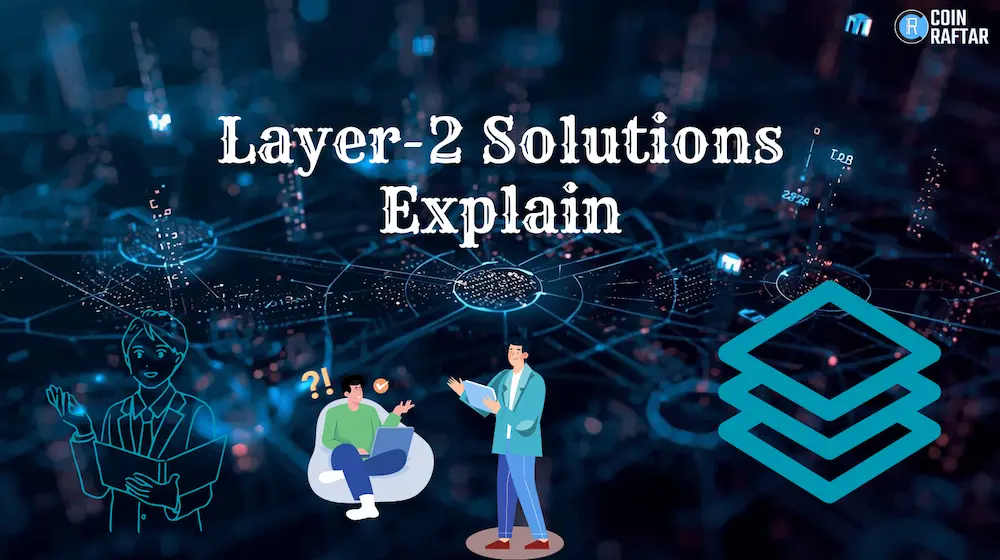
A breakdown of Layer-2 technology, adoption data, and its role in blockchain’s future
Historically, blockchain networks like Ethereum have faced a major limitation in terms of scale.
While the ability to decentralize and secure transactions has been an advantage of Layer-1 (L1) blockchains, the maximum number of transactions that can be processed by them (approximately 15-20) is also the reason for high costs and delays in times of increased usage.
To mitigate the effects of these limitations, solutions were created at layer-2 (L2) that allow users to process their transactions at a fraction of the price and still benefit from the L1 security that Ethereum offers.
Simply stated, layer-2 solutions alleviate some of the burden of processing transactions on the main chain, allowing for faster and lower-priced transactions, while preserving the trust that blockchain networks were built upon.
By the year 2025, L2 networks will no longer be seen as experimental; they will play a vital role in the emergence of blockchain technology.
Optimistic Rollups
Optimistic Rollups assume transactions are valid and post compressed data to the Layer-1 blockchain. If a dispute arises, fraud proofs can challenge invalid transactions. This method reduces the load on the mainnet while retaining security.
The usage of Optimistic Rollups has been greater for the two leading implementations, Arbitrum and Optimism. Currently, Arbitrum holds the largest amount of TVL (approximately $16.6 billion) among these L2s and is expected to hold that title as we enter late 2025.
In addition, Coinbase-backed Optimistic Rollups with the name Base have achieved approximately $10 billion of TVL.
Zero-Knowledge Rollups
(ZK) is a new protocol technology that generates proof of work or proof of stake in the form of cryptographic proof(s) that can be submitted timely (in minutes, if not seconds) to provide finality and remove the need for lengthy dispute timeframes.
The leading ZK solutions include zkSync Era, Starknet, and Polygon zkEVM, with zkSync and Polygon zkEVM having established themselves as cost-effective ZK Rollup solutions that provide high-throughput transaction processing at a significantly low cost and near-infinite finality.
Both L2 implementations have created a dramatic increase in blockchain scalability as they can allow thousands (if not hundreds of thousands) of transactions every second, far surpassing the number of transactions that Layer-1 can process.
Real-World Adoption: Usage, Costs, and Developer Trends
Adoption Figures in 2025
Layer-2 solutions have matured into core infrastructure for blockchain scaling. According to recent adoption statistics:
- Layer-2 networks collectively processed over 1.9 million daily transactions in 2025.
- Stablecoins make up over 70 % of Layer-2 activity payments and transfers.
- Over 65 % of new smart contracts are deployed on Layer-2 networks, and not directly on Layer-1.
This reality demonstrates that most everyday blockchain interactions — from decentralized exchanges to NFT trades — are now happening on Layer-2 rails rather than on the main Ethereum chain.
Cheaper, Faster Transactions
Layer-2 adoption has significantly cut transaction costs and boosted speed. Ethereum mainnet fees, which once routinely spiked above tens of dollars per transaction, have dropped dramatically as rollups absorb the bulk of traffic while posting compressed summaries to Layer-1.
Layer-2 transactions can now cost less and with high User experience . This is through wallet integrations and abstracted bridging tools that have reduced onboarding friction. This helped Layer-2 networks attract mainstream participants.
Challenges and the Road Ahead for Layer-2 Networks
Even as Layer-2 adoption surges, challenges remain.
Interoperability and Fragmentation
Layer-2 networks like Arbitrum, Base, Optimism, and zkSync serve specific niches. Despite this, interoperability remains limited.
Therefore,Bridging assets freely across different L2s without complicated steps is still an area that needs active development.
Trust and Performance Versus Decentralized Solutions
When comparing layer-2 networks with traditional payment methods, performance and usability can be measured as two sides of a coin.
For instance, the use of Optimistic Rollups requires verification of all transaction data via Fraud Proofs, resulting in some delay before confirmation of a completed transaction.
On the other hand, Zero-Knowledge Rollup requires a vast amount of additional complex Cryptography, consuming significant time and energy resources to accomplish this addition.
There is an ongoing focus on maintaining the integrity of decentralized systems through adequate decentralization, particularly for primary functions like sequencer responsibilities.
Regulatory Frameworks Are Evolving
The world is still acclimatizing to the potential for Blockchain scaling through Tokenization and Smart Contracts on layer 2 networks .
They have to establish the existence of a specific regulatory framework for entities that will enable future participation by large financial institutions, etc.
Conclusion Ultimately, Layer-2 Technologies Will Create the Future for Blockchain Growth
Layer-2 solutions will have progressed from experimental forms of scaling, as of 2025, to essential infrastructure for almost all Blockchain Ecosystems.
By providing both reduced fees for performing transactions and vastly increased throughput (the number of transactions processed in a given time), they will have lowered the barriers to entry for everyone.
Both Users and Developers will easily be able to participate in decentralised systems because they are accessible to each through layer 2 Solutions.
Layer 2 Technologies will have amassed strong adoption metrics over the next several years: Millions of transactions performed daily; tens of billions of Dollars in Total Value Locked (TVL).
Additionally, Layer 2 Technologies will account for a significant proportion of all transactions taking place via Smart Contracts on Blockchain networks.