Key insights:
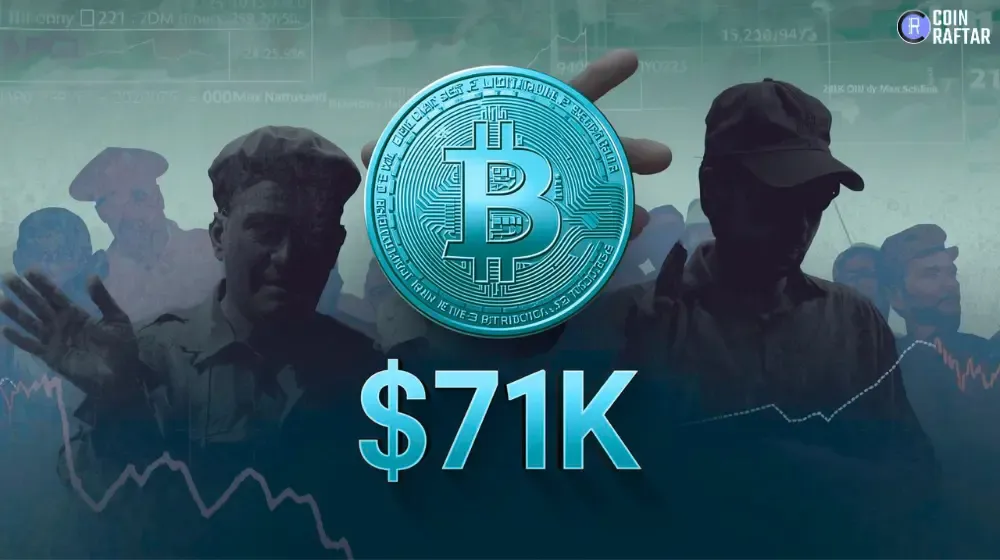
- Bitcoin stayed above $71,000 as falling oil prices and Iran-Israel peace talks improved global risk sentiment.
- Brent crude dropped below $100 after reports of a 15-point peace proposal delivered to Tehran.
- ETF inflows and institutional demand continue to support crypto prices despite geopolitical uncertainty.
Bitcoin moved higher on Wednesday as global markets reacted to reports that Iran may pursue a broader agreement with Israel rather than a temporary ceasefire. The shift in diplomatic tone reduced immediate risk concerns, encouraging investors to return to equities, cryptocurrencies, and other assets that depend on stable macroeconomic conditions.
Bitcoin traded above $71,000 after briefly falling near $69,000 earlier in the session, following headlines about negotiations involving Washington and Tehran. Traders responded quickly to reports that a one-month ceasefire proposal could form part of a wider agreement limiting Iran’s nuclear activity.
The risk of de-escalation contributed to stabilizing the situation in markets that were shaky over a few weeks because the fear of conflict caused volatile traders to sell off assets in a flash in commodities, stocks, and even in the digital realm. Risk appetite improved as investors interpreted the diplomatic signals as progress toward stability, even though military activity in the region had not completely stopped.
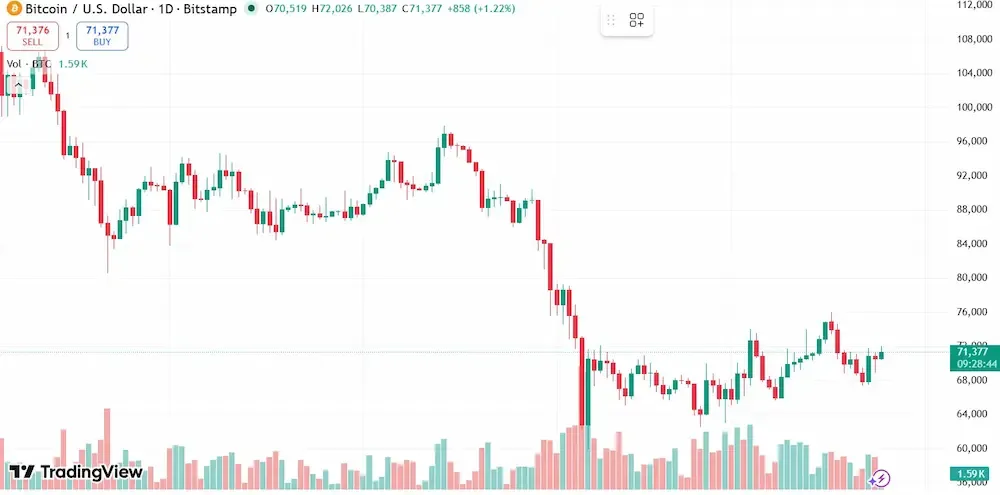
Bitcoinprice: Tradingview
Oil drop below $100 boosts market sentiment
Oil prices reacted first to the reports, with Brent crude falling more than 4% within minutes after news of the proposed agreement reached traders. The benchmark dropped from above $104 to below $100, later trading near the $96 to $98 range depending on regional supply updates.
Lower oil prices reduced concerns about inflation and energy shortages, both of which had pressured global markets since the conflict intensified earlier in the month. Energy costs remain a key factor for investors because higher crude prices often force central banks to maintain tighter monetary policy for longer periods.
As crude declined, equity futures moved higher in Asian trading, while the dollar weakened slightly, signaling renewed demand for risk-sensitive assets across global markets. Bitcoin followed the same pattern, recovering losses as traders shifted from defensive positions toward assets expected to benefit from improved liquidity conditions.
Bitcoin price reaction shows strong risk correlation
Bitcoin has increasingly moved in line with global risk sentiment rather than acting as a safe-haven asset during periods of geopolitical stress. Earlier in the week, the cryptocurrency dropped below $70,000 when oil surged and markets feared supply disruptions across the Middle East energy corridor.
The recent recovery at over $71,000 shows how fast the sentiment can revert when the traders feel that the tensions could be alleviated or the negotiations may avoid further upheavals. Market participants also pointed out that Bitcoin has been trading above the $70,000 range in a number of sessions thus according to the analysts, this is evidence of a strong support.
In the last few days, we have seen prices rise to nearly $75,000 and fall to less than $70,000 then stabilize, which indicates how news of the conflict has facilitated short-term volatility. Although the fluctuations have occurred, the overhanging has not been affected, and this shows that buyers still protect important levels even in times of uncertainty.
Institutional demand and ETF flows support prices
One of the key reasons why the declines may not go further is institutional participation, as the inflows into the spot exchange-traded funds have been able to stabilize the market. Big corporate consumers have grown too, among them Strategy, which has repeatedly raised funds to grow its already huge cryptocurrency portfolio.
Bernstein analysts opined that the recent correction was probably a temporary bottom, and the price would end the year at about $150,000 on the basis of further growth in demand. They further cited the increasing interest of asset managers and of public companies as proof that trends in long-term adoption are still there.
Geopolitical risks might dominate short-term trading, but because of the existence of strong institutional flows, Bitcoin has not experienced many downside movements, and it has been able to quickly recover after every sell-off.This pattern has reinforced the view that the market now relies heavily on professional investors rather than only retail speculation.
Peace proposal headlines keep traders cautious
Reports indicated that the United States delivered a 15-point plan to Tehran through diplomatic channels, outlining terms aimed at ending hostilities and preventing nuclear escalation. Separate media coverage said the proposal included a temporary ceasefire, restrictions on weapons development, and commitments designed to reduce the risk of future conflict.
Meanwhile, reports on new strikes in Tehran indicated that the situation is still quite fragile and traders are unsure of whether a permanent agreement can be achieved through negotiations. Some pressure on the energy markets is also present, despite the recent decline in crude prices, as shipping activity through the Strait of Hormuz continues to be limited.
Bitcoin is currently trading in a tight band as traders weigh the upward trends in diplomatic talks against the threat that negotiations might go bad. The response to the market indicates that mood can shift fast, and each new news can alter the prices of various commodities, equities, and digital assets.