Key Insights:
- The LIT listing in the Upbit exchange allows Korean traders to directly access a Korean KRW market.
- The initial restrictions of Upbit are designed to mitigate high volatility in the initial trading process.
- Ethereum-only transfers make network verification essential for LIT users.
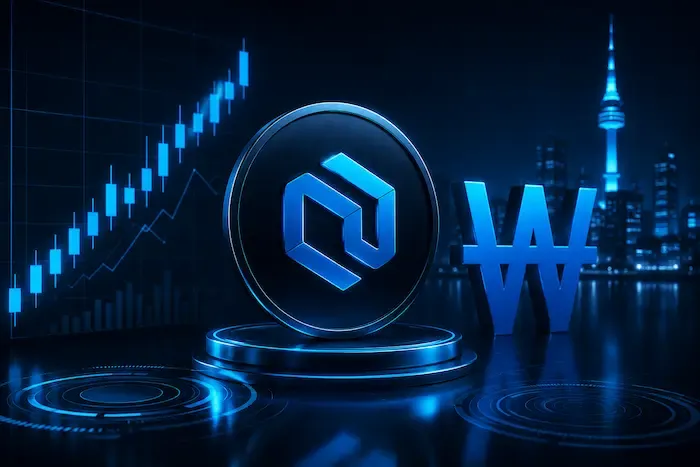
LIT Upbit trading began at 1:00 PM KST on Aug. 24, giving Korean traders direct access to Lighter’s token through the Korean won market. The listing expands LIT’s local trading access, while Upbit has introduced temporary order controls and strict Ethereum network requirements.
Upbit opens a new KRW trading route
Upbit announced the LIT/KRW market on Aug. 24, with trading scheduled for 1:00 PM KST. The exchange already supported LIT through its Bitcoin market, giving it an established reference price.
라이터(LIT) KRW 마켓 거래지원 안내
✅ 지원 마켓 : KRW 마켓
📅 거래지원 개시 시점: 2026-08-24 13:00 KST🔗 공지 바로가기:https://t.co/7e7U3VqOkS#Upbit #LIT@Lighter_xyz pic.twitter.com/zkKtDzZeJv
— Upbit Korea (@Official_Upbit) August 24, 2026
Upbit cited LIT’s previous BTC market closing price at 0.00004500 BTC. That price equated to approximately 4,803 Korean won and provided a reference for the new market’s initial trading controls.
However, the reference price does not guarantee LIT’s opening price. Supply, demand and liquidity can quickly create differences once KRW trading begins. The new market removes the need for Korean traders to use Bitcoin as an intermediate trading pair. As a result, the listing could improve access and increase local participation in LIT.
Upbit has also warned that trading could face delays if the market does not have sufficient liquidity. That condition highlights the uncertainty surrounding the early stages of a new trading pair.
Opening controls target early volatility
Upbit introduced temporary restrictions to manage trading during the market’s initial phase. Buy orders remained restricted for approximately five minutes after trading began.
During the same period, the exchange restricted sell orders priced at 10% or less of the previous day’s closing price. The measures seek to limit unusually aggressive price movements during early trading.
Furthermore, Upbit restricted trading to limit orders for approximately two hours. Market orders and other conditional order types remained unavailable during that period. These measures can reduce disorderly trading, but they cannot eliminate volatility. Thin liquidity can still cause substantial price movements when traders enter or exit positions quickly.
The first hours will therefore provide an important test for LIT’s Korean market. Traders will watch volume, spreads and price differences against international LIT markets.
Ethereum network rules create transfer risks
Upbit supports LIT deposits and withdrawals only through the Ethereum network. Users sending tokens through unsupported networks could face delays or difficulties recovering their funds.
The exchange has also provided a designated LIT contract address. Users must verify both the network and contract information before transferring assets. South Korea’s Travel Rule requirements also apply to relevant transactions. Deposits from unsupported exchanges may not receive automatic credit to a user’s Upbit account.
Upbit can also require ownership verification for transfers involving personal wallets.In some cases, the exchange will ask for more information regarding the source of the funds.
These requirements create an operational risk separate from LIT’s market performance. A trader can correctly identify the token but still encounter problems by selecting the wrong transfer network.
LIT has utility beyond exchange trading
LIT serves as the utility token for Lighter, a decentralized perpetual futures protocol. The platform uses an order-book structure while processing its trading activity through an Ethereum layer 2 environment.
The token also supports staking and liquidity participation within the Lighter ecosystem. LIT holders can stake tokens to obtain participation limits in the Lighter Liquidity Pool.
Staking can also provide certain fee-related benefits at qualifying levels. Those benefits give LIT a role beyond speculative exchange trading. The Upbit listing could therefore broaden access to a token tied directly to Lighter’s protocol infrastructure. But, more exchanges does not mean more demand.
The new KRW market will be able to grow in depth only as trading volume increases, liquidity grows and sentiment improves. Additionally, the overall volatility of the cryptocurrency market can impact LIT’s performance following its listing.
Korean liquidity could dictate LIT’s next move
The launch of the LIT market on the Upbit will provide a direct trading platform for South Koreans and will help boost the token’s visibility in the country. The major Korean exchanges can have an impact on the short-term trading volume when new assets are given pairs in KRW.
But there are a few factors that immediately limit traders. Trading is subject to a few buying restrictions for the first few minutes of each trading session, and trading is limit only throughout the first 2 hours of each trading session.
After those controls expire, Upbit can expand order functionality unless it extends the restrictions. The exchange may also delay trading if liquidity remains insufficient.
The market’s early performance will offer the clearest indication of local demand. Traders will likely focus on opening prices, transaction volume and price gaps with overseas markets.
The listing also demonstrates how exchange access can influence token liquidity. A direct KRW market can bring new participants while exposing the asset to concentrated short-term trading pressure.
Conclusion
The LIT Upbit listing gives Lighter’s token direct access to South Korea’s won-denominated cryptocurrency market. Upbit has combined that access with temporary trading restrictions and Ethereum-only transfer support.
The market’s development will depend on liquidity, demand and price discovery. For traders, careful network verification remains essential as LIT establishes its new Korean trading route.