
key insights
- The proposed bill is an official legalisation of state asset management from physical to digital asset ownership.
- The government bond tokenization marks the increased trust in blockchain for public financial infrastructure.
- The changes in the law are integrated to provide a more transparent pathway for stablecoins, tokenized securities and future products in the digital asset space.
South Korea said it plans to revise the state asset management rules to recognize cryptocurrencies and other digital currencies under new legal structures. The proposal is part of the nation’s largest public sector blockchain program and further solidifies its long-term priorities on asset management in the public sector through the digitization of assets and finance.
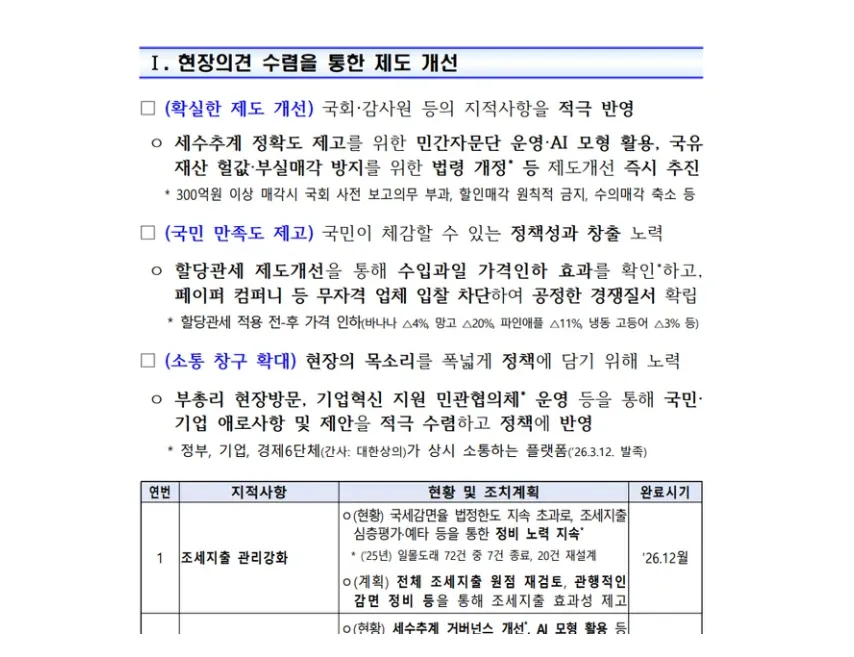
The Ministry of Economy and Finance presented the proposal during a policy briefing at the President’s Blue House on Wednesday. The ministry said the National Asset Basic Act will replace the State Property Act of 1950, creating a broader legal definition of state assets that includes virtual assets and intellectual property alongside traditional holdings.
Government broadens state asset definition
The existing State Property Act was introduced when government assets mainly consisted of land and buildings. However, officials said today’s economy requires a framework that reflects digital ownership and intangible assets.
Under the proposed law, South Korea will replace the traditional focus on preserving and selling public property with a value-driven management model. Authorities plan to establish dedicated standards for managing different categories of state assets while improving their long-term economic value.
The ministry also reiterated plans to introduce blockchain technology for tokenizing government bonds. Officials say it will minimize transaction costs and enhance efficiency in operations. In addition, the government intends to study tokenization for state-owned real estate, allowing retail investors to participate while sharing part of the generated returns.
Key policy timeline
| Development | Timeline |
|---|---|
| National Asset Basic Act announced | July 15, 2026 |
| Tokenized deposit pilot for government spending | Q4 2026 |
| Blockchain-based government bond pilot | 2027 |
| Tokenized securities framework takes effect | February 4, 2027 |
Blockchain reforms expand beyond asset management
The latest proposal follows South Korea’s broader digital asset agenda announced earlier this week as part of its 2026 Economic Growth Strategy for the Second Half.
The government confirmed it will continue developing the Digital Asset Basic Act despite increasing investments in artificial intelligence. That legislation aims to establish business rules for digital asset companies while creating a legal framework for Korean won-backed stablecoins.
Authorities also plan to introduce legal support for cross-border stablecoin transactions. In addition, policymakers continue backing legislation that would permit spot cryptocurrency exchange-traded funds.
Blockchain infrastructure remains another priority. The Ministry of Economy and Finance confirmed that a pilot connecting tokenized government bonds with the Bank of Korea’s central bank digital currency infrastructure will begin in 2027.
The central bank will also examine interoperability between its CBDC platform and external blockchain networks. Governor Hyun Song Shin introduced that concept publicly during the European Central Bank Forum on Central Banking earlier this month.
The wider significance for digital finance
The reforms position South Korea among governments seeking practical blockchain applications beyond cryptocurrency trading. Instead of treating blockchain solely as a financial innovation, policymakers increasingly view it as infrastructure for managing public assets and government payments.
Several related initiatives already support that direction.
- The Ministry of Economy and Finance announced a tokenized deposit pilot for government operational spending earlier this year.
- Gyeonggi Province plans to launch an eight-month stablecoin pilot beginning in August.
- The regional project will be used to test issuance, settlement, fraud prevention, privacy protection and public benefit payments.
During the pilot, the stablecoin trial will also make use of proof-of-reserves and technology to prevent double spending and proof-of-reserves to verify backing resources.
Improved regulation to promote direction.
The new crypto policies do not strengthen South Korea’s hope of establishing a public finance system based on blockchain, but rather the new initiatives do. The National Asset Basic Act is complementary with tokenized securities legislation and the development of CBDCs, as well as the forthcoming Digital Asset Basic Act, in a coordinated regulatory roadmap.
The reforms, if put in place as planned, will influence the way the government will handle national assets and it will also broaden the use of blockchain in public finance. Additionally, they could help foster investor trust by creating greater clarity around digital asset recognition under the law and establishing a more regulated space for future tokenisation initiatives.
Conclusion
South Korea is taking a significant step forward in its digital asset policy, with an overhaul of laws that have been in place for decades and a broadened definition of state assets. The proposed framework is the government’s attempt to harmonise public asset management in line with the evolving digital economy of the nation.
The reforms also come alongside other blockchain projects such as a tokenized government bond, stablecoin regulation and CBDC infrastructure. The two measures could further cement South Korea’s position as a key jurisdiction for digital asset innovation.