Key Insights:
- Bitcoin falls to less than $68K as the geopolitical tensions and oil boom undermine the market sentiment and provoke risk-off action.
- An oil price over $117 will cause inflationary concerns, which may affect the central bank policy and the risk aversion.
- The supply of long-term holders becomes positive, indicating that it accumulates over time even though the market is volatile in the short-run.
Bitcoin fell further, dropping below the $68,000 mark as geopolitical tensions escalated amid an important deadline of the United States with Iran.The asset was trading around $67,859, a 2.53% drop in a day following the inability to hold the initial gains beyond the $70,000 resistance range.
Bitcoin was indicating a price move, opening near $69,600, but briefly breaking above $70,000 before being forced back down by the sellers.According to the latest session reading, Bitcoin was on the verge of intraday lows, indicating continued selling pressure and dampening short-term sentiment in the wider risk markets.
Bitcoin responds violently to the increase in geopolitical tensions.
Bitcoin fell when traders abandoned risk-sensitive assets amidst increasing geopolitical events related to the U.S. and Iran relations.The mood in the market was not helped by powerful rhetoric by President Donald Trump before a Tuesday 8 p.m. Eastern Time deadline.
Trump threatened that an entire civilization will die to-night, though he also expressed the possibility of uncertainty when he said that a good thing might happen after all.Meanwhile, the U.S. military strikes on the Kharg Island in Iran were reported causing panic in the global financial markets.
The reaction of Iran was the severing of direct diplomatic communication with the United States, which indicated the increasing tension and lowered the chances of a de-escalation in the nearest future.This political risk and uncertainty were a combination that led to a direct selling pressure in all equities, commodities, and cryptocurrency markets.
Markets are under pressure due to oil surge and inflation fears.
There was an extra burden on the macroeconomic environment since oil prices went skyrocketing in view of the possibility of supply disruptions in the Strait of Hormuz.The Kobeisi Letter indicated that U.S. oil prices have risen to above $117 per barrel with the deadline nearing, raising the issue of inflationary pressure.
Increased energy prices may tend to increase consumer prices which may affect the central bank policy expectations and decrease investor interest in risky assets.The cited models indicated that U.S. CPI inflation would run high to 3.7% in case the high oil prices continue in a number of weeks.
Bitcoin responded to traditional markets, with traders changing positions in line with the increasing probability of tightening financial conditions.This atmosphere usually provides temporary headwinds to speculative assets which are largely liquid and investor confidence-dependent.
Bitcoin chart indicators decline around $70K.
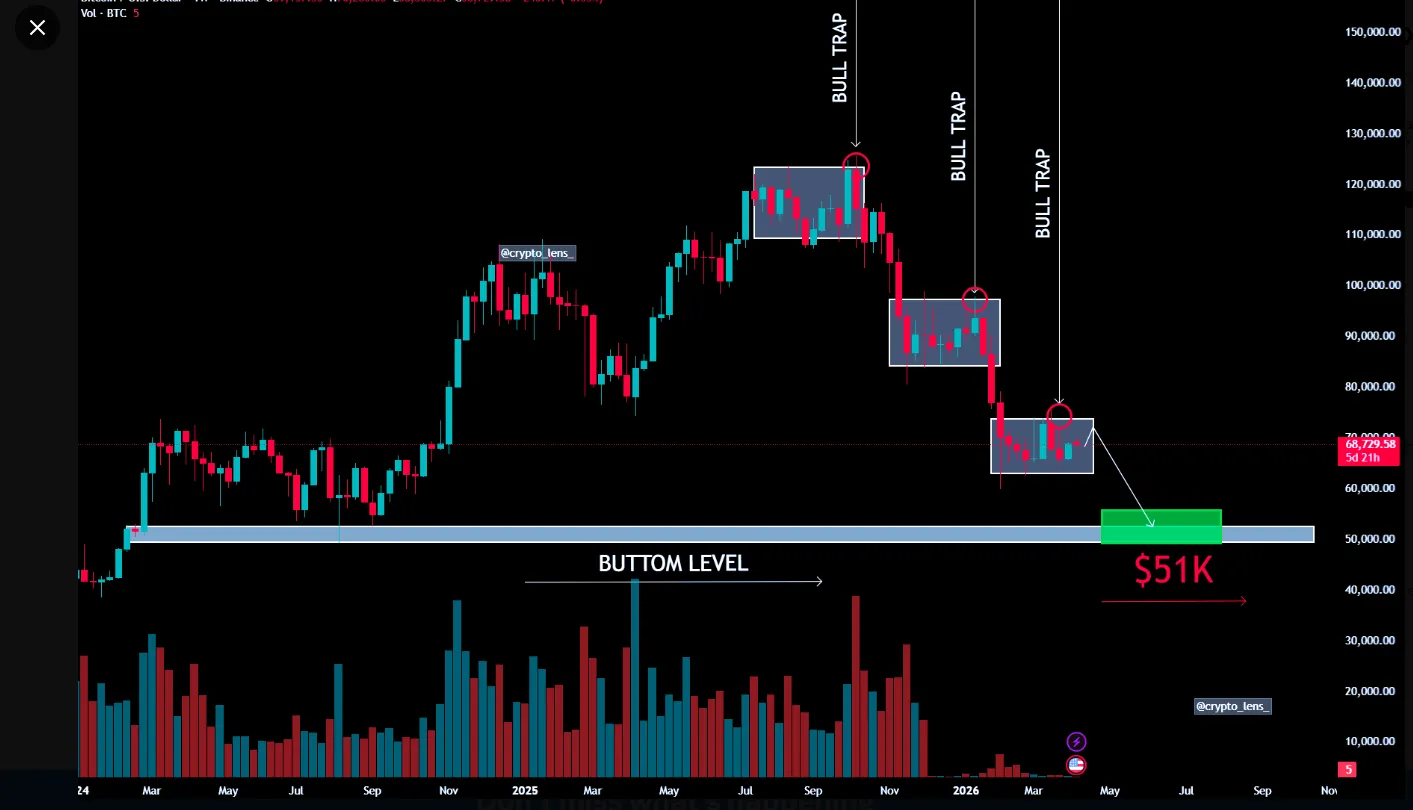
Price action of the day revealed Bitcoin trying to recover early in the day but met great resistance at the upper end of the $70,000 psychological barrier.Such a refusal caused a prolonged negative trend, as Bitcoin was steadily falling during the session and returned to its everyday lower zone.
The inability to sustain the pressure above the levels of $70,000 strengthened the significance of the level as one of the short-term resistance levels.In the meantime, the USD $68,000 has become a very important demarcation zone that traders are keenly looking at to confirm the breakdown.
Further decline below this level might prolong the downside pressure and a rebound above $69,000 to $69,500 might indicate a short-term stabilization.Participants in the market are also very apprehensive because the price structure is still revealing of poor purchasing power and continued selling dominance.
Long term accumulators demonstrate consistent accumulation patterns.
Even though the market is experiencing volatility within the short term, on-chain data could suggest that long-term holders are gradually increasing their Bitcoin holdings rather than quitting the market.According to CryptoQuant data, the 30-day moving average of supply of long-term holders changed by 674,000 BTC to 308,000 BTC.
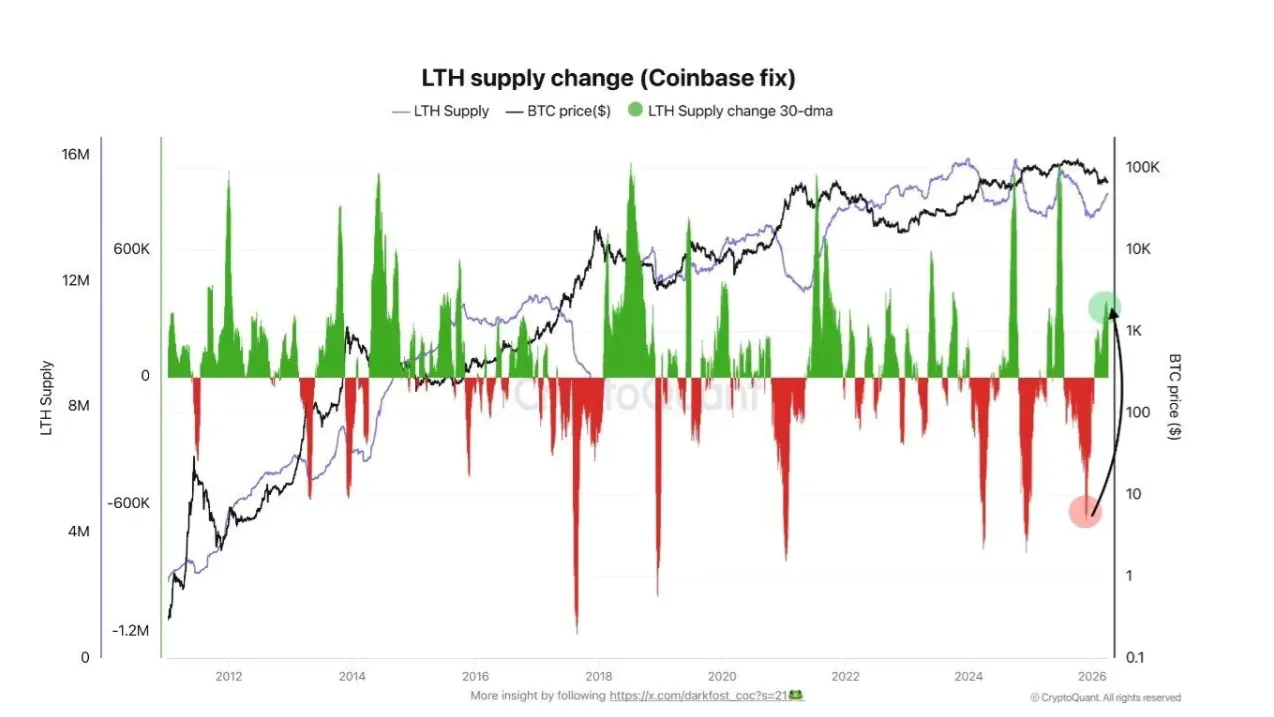
This shift reflects the increase in the proportion of coins in the long-term holding positions instead of sold, a sign of heightened holding behavior by investors.Nevertheless, this measure is pegged on the UTXO information, which implies that it may also indicate the lack of action instead of actual new purchases.
Nevertheless, an increase in long-term supply has traditionally been associated with better market cycles, but analysts warn that the evidence is still premature.At this point, bitcoin is in a range balancing between macroeconomic risks and accumulation trends under the surface that may affect the future.