Highlights:
- Dubai regulates crypto derivatives, and companies are required to comply with stringent risk and client controls provisions.
- Under VARA, separation of assets and clear disclosures are necessary, with the ability to intervene in the market stress.
- Previous OKX pilots established a standard framework that currently governs all licensed derivatives trading.
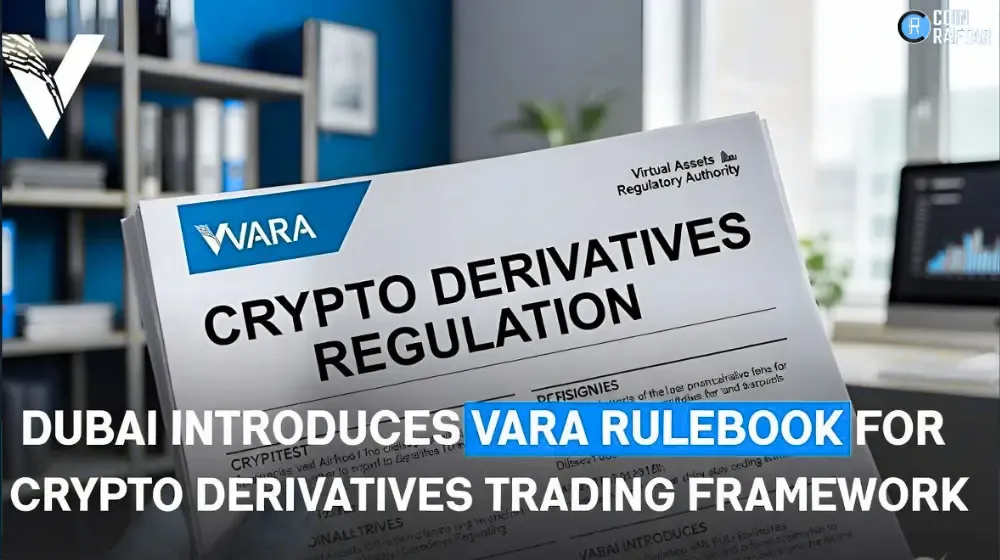
The regulation of crypto derivatives has made a clear step forward in Dubai with the launch of a structured rulebook outlining how such products may be provided in the emirate. The framework, issued by the Dubai Virtual Assets Regulatory Authority (VARA), sets conditions for licensed firms that intend to provide derivatives linked to digital assets. The rules are contained in Version 2.1 of VARA’s Exchange Services Rulebook and apply to virtual asset service providers operating exchange services in Dubai.
Regulatory Crypto Derivatives Establishes Operational Standards.
The crypto derivatives regulation model sets out elaborate provisions that companies must comply with when providing trading services. These include procedures for assessing and classifying clients before granting access to derivatives products.
In addition to classifying clients, the framework determines how leverage and margin may be utilized in trading contexts. The companies must observe systematic boundaries to regulate the risk associated with leveraged positions. The rules also outline how liquidation processes are to be performed, to maintain orderly market conditions when positions are moved against traders.
Such provisions are a subset of a broader mechanism to control exposure in the derivatives market. By introducing uniform standards, VARA establishes a consistent approach for licensed providers.
Asset Segregation and Transparency Requirements.
The regulatory framework for crypto derivatives comprises mechanisms to protect clients’ funds and enhance transparency. Licensed providers are required to maintain a clear separation between client assets and company-held funds.
Moreover, companies must comply with established disclosure requirements when offering derivatives. The rulebook requires providers to present clear information about the characteristics and risks associated with these instruments.
The framework further details the expectations regarding how firms interact with clients during the trading process. Users should be provided with adequate information before engaging in transactions. This strategy establishes a systematic communication flow that fosters openness in the controlled market environment.
Regulatory Control Strengthens Oversight.
The crypto derivatives regulation framework allows VARA to take action in certain circumstances where there is market pressure or mischief. The regulator has the mandate to act where appropriate when market conditions necessitate measures to maintain stability or to counter non-compliant conduct by licensed entities.
These intervention powers are established in the rulebook as part of a broader supervisory framework. They allow VARA to respond directly to developments that may affect market operations. By including these provisions, the framework establishes enforceable mechanisms to support orderly trading conditions.
According to VARA’s general counsel, Ruben Bombardi, derivatives are a step forward in virtual asset markets but require a higher standard of governance. Another aspect mentioned in his statement was the importance of structured rules in facilitating market participants in the regulated environment in Dubai.
Crypto Derivatives Regulation Continues on Preexisting Programs.
The regulation of crypto derivatives in Dubai follows previous measures to regulate this segment of the market. In 2024, the crypto exchange OKX restricted access to derivatives products to qualified and institutional investors. This strategy created pre-emptive limitations on access to participation, yet permitted controlled exposure to such instruments.
Further, in July 2025, OKX launched a pilot program supervised by VARA, making it more accessible to retail users.
These previous efforts are formalized in the new rulebook, which establishes standardized requirements for all licensed providers. It shifts the market, with restricted access and pilot projects, to a single regulatory framework applicable throughout the Dubai jurisdiction.
Broader Developments in the UAE Crypto Market.
The implementation of the crypto derivatives regulation aligns with other recent developments in the United Arab Emirates’ digital assets industry. Regulators have been rolling out initiatives to increase oversight across various market sectors.
These include the approval of USDU, which has been referred to as the first dollar-backed stablecoin in the country. This measure will contribute to another element of the regulated crypto ecosystem in the UAE: the introduction of derivatives rules.
Furthermore, recently, VARA instructed crypto exchange KuCoin to stop providing unlicensed services to individuals in Dubai. This move indicates a continued effort to ensure that all market participants act within the regulatory framework.