Key Insights:
- Stablecoin regulations under the CLARITY Act could reshape Circle’s market strategy and limit future yield offerings.
- Investor sentiment for Circle is highly sensitive to policy changes affecting stablecoin reward structures.
- Regulatory clarity is critical for U.S.-based stablecoin issuers to maintain competitive growth against emerging alternatives.
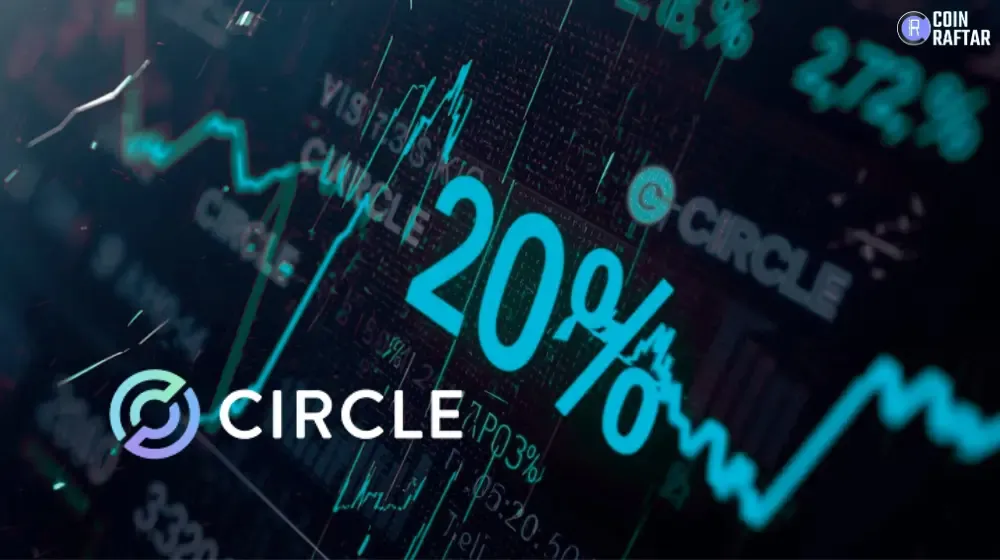
The shares of the stablecoin-linked Circle Internet Group[CRCL] plummeted on 24 March with share prices declining by almost 20% in just one trading session as the markets responded to newly discovered regulatory risks. It was traded at a high of approximately $127-$100, and this represents one of its largest single-day falls in recent weeks. This is a sharp reversal of a robust rise in early March when CRCL jumped below the $60 mark only to soar past the $130 mark indicating excessive volatility due to policy uncertainty.
The studies of stablecoins are also of special concern to investors as they will assist in determining the future of the yield and reward system. The market turnaround highlights the market sensitivity to legislative provisions regarding digital asset in which there was an increase in the volumes of trade that corresponded with the fall. The move underscores investor caution of firms issuing common and popular stablecoins such as USDC as regulation changes.
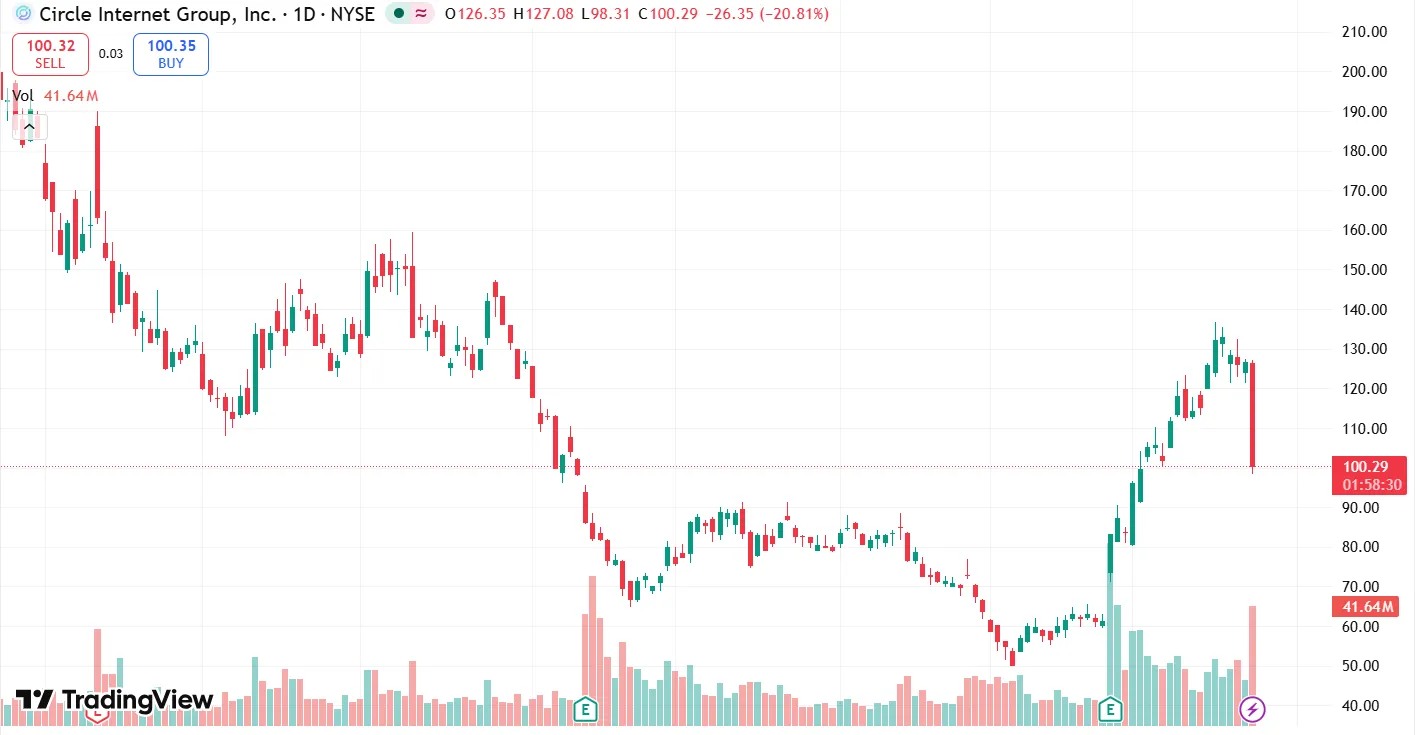
Sharp reversal follows march rally surge
The recent fall of Circle also comes after an impressive run in february, where the company gained its share more than twice before reversal. The level of trading increased in tandem with the fall of prices and this showed that there was a strong market response and not just the normal fluctuations as experienced. The rapid shift in the mood highlights retirement effects of regulatory trends on firms involved in the stablecoin and the crypto ecosystem as a whole.
Market analysts highlight that these sudden turnarounds are likely to have an impact on investor confidence and short-term positioning. In the case of companies such as Circle, in which the business model is non-volatile utilization of stablecoins, the sudden change in stock performance reminds the organization of the fine line between innovation and regulation in the United States financial regulatory environment.
Draft legislation targets Stablecoin yield programs
A proposed bill in Congress can greatly restrict the way stablecoin issuers offer yield and rewards to users. Reportedly, the CLARITY Act would prohibit platforms to provide interest-like or passive rewards either directly or indirectly on holdings of stablecoins. They would also ban mechanisms whose effects are economically or functionally similar to interest, and activity-based incentives, like loyalty programs, would not be banned by the legislation.
The draft is being vetted with comments by financial industry representatives, and a reflection of the work of lawmakers to respond to the fears that yield-bearing stablecoins could upset established financial markets. Issuers and exchanges of stablecoins are considering how such limitations might change their current and potential business processes, notably their user acquisition and user retention policies, which have depended on novel reward systems.
Implications for circle and Stablecoin growth
The restrictions suggested might impact on the strategic plans of Circle with regards to USDC especially expansion beyond payments to competitive financial products. Two major factors that ensure user attraction and retention in exchange and platform are stablecoin reward programs and yield programs, where regulatory boundaries may be an obstacle to expansion. These proposals could be considered by investors as a long-term risk on the adoption of the market and revenue possibilities.
Also, uncertainty with respect to the definition of the economic equivalence creates a level of uncertainty to issuers trying to formulate flexible incentive programs. In the absence of transparency, such companies as Circle become struggling to develop products that are competitive enough and at the same time do not violate regulatory requirements, which affects investor trust and the overall attitude of the market towards the usefulness of stablecoins.
Circle stock sees significant downward pressure
Shares of the Circle had soared well beyond an early February low in the low-single digits to a recent peak of around $135, even though it happens to have a great deal of momentum before the pullback. The stock dropped to around $100 after CLARITY Act draft language was released, which illustrates the sensitivity of the market related to the possible changes in legislation that may influence stablecoin functionality and future yields.
Seeing as USDC does not provide a yield to holders at the moment, the suggested ban eliminates the opportunities of transforming the product into a more competitive financial instrument. Market participants observe that this limitation may influence the flow of capital to digital assets, and that Circle and other stablecoin issuers will have a limited competitive landscape in comparison with new yield-bearing products.
Stablecoin regulations shape future market trajectory
The CLARITY Act is also part of a bigger legislative initiative to create a comprehensive approach towards digital assets in the United States. The dynamic state of stablecoin regulation can also be considered by the legislation, through alternative proposals and trying to make the language more consistent before entering the next phase of the bill at the Senate Banking Committee, which highlights how dynamic the state of stablecoin regulation is.
Assuming that yield limits are not removed, the bill may have a significant effect on the way stablecoin issuers such as Circle will work and compete with new solutions. The investors and the people in the industry are paying a close attention to the result as they understand that the ultimate framework will play a big role in defining whether the market will adopt the coin, what kind of innovation the coin will have, and the general direction that the coin will take within the U.S. financial system.