Key Insights:
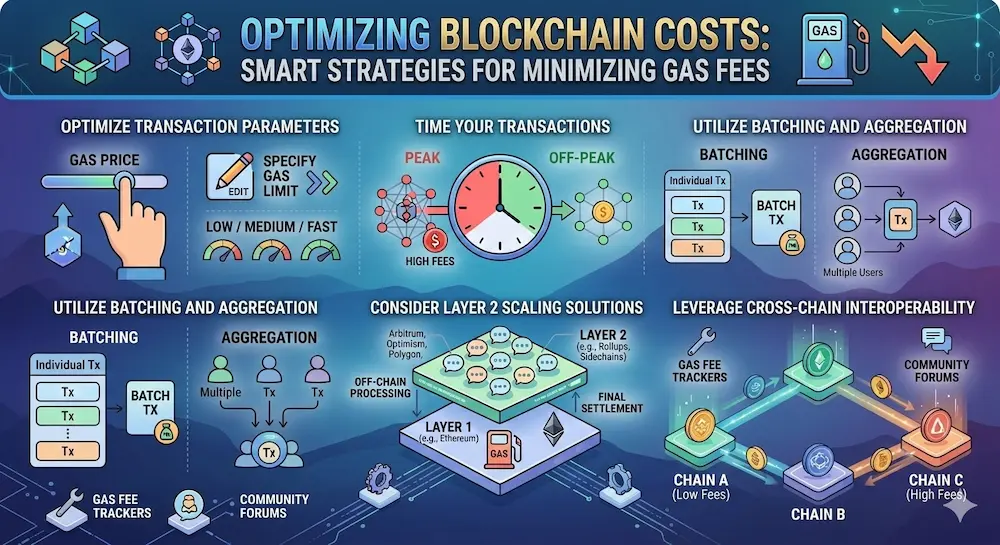
- Users minimize gas costs by conducting transactions during periods of less congestion on the network and outside peak trading hours globally.
- Layer 2 networks such as Arbitrum and Optimism reduce the cost of transactions on the Ethereum network by conducting transactions off-chain.
- Batching transactions and approving tokens reduces repeated interactions on the network, thus minimizing gas costs.
Gas fees are of top concern to Crypto Users because of the volatility in transaction costs from one Blockchain network to another. When there are heavy volumes of transactions on the blockchain network, High fees can cause many simple transfers to be expensive. Timing strategies to avoid high transaction volume, Layer 2 scaling, bundling, and approval management are viable strategies for reducing transaction costs.
Understanding Why Gas Fees Fluctuate
Gas fees are the cost of calculation involved in executing transactions in networks such as Ethereum. These charges are used to compensate validators that are securing the network and implementing smart contracts. Fees go up due to the limitation of block space when there is an increase in demand.
Periods of market volatility usually lead to abrupt increases in the costs of transactions. High trading volume, token launches, and NFT drops can overwhelm the network. Users are likely to suffer delays, especially during such times, unless they pay higher fees.
Fee markets do so via prioritization by auction. Transactions that have higher gas prices on gas are quicker to be confirmed. This has also made it possible to reduce the amount of gas charges one has to pay without affecting transaction success, as long as they know the timing and demand patterns.
Gas trackers and network activity will give an idea of the best time to make transactions. Many wallets and dashboards also show the estimation of fees to assist humans in escaping expensive peak hours.
A Timing of Transactions to Reduce Costs
The time factor is very important in minimizing transaction costs. Gas costs tend to be low at times when the network is not active. In North America, the later the hour or the day of the week, the lower the cost of transactions.
The congestion cycles are affected by the global patterns of usage. The use of blockchains is common when the major financial markets are active. On the other hand, the quiet times are likely to decrease the rivalryforf block space.
Numerous wallets enable a user to adjust the gas fees and speed of transactions. Reduction in confirmation speed can bring down costs and yet guarantee completion. The user is, however, not supposed to charge very low fees that can result in the stalling of transactions.
Gas monitoring instruments are used to get real-time information and trends. Once users see trends over a number of days, they are able to determine predictable low-fee periods. This strategy is a stable method of decreasing gas costs in the long run.
Application of the Layer 2 Networks on the Cost-Effectiveness
The solutions of layer 2 scaling make transactions outside of the primary blockchain and ensure security using settlement layers. These chains decrease the congestion in the primary chain, leading to decreased fees and quicker confirmations.
A popular L2 network like Arbitrum and Optimism offers massive fee cuts against the mainnet of Ethereum. The cost of transactions is usually a fraction of Layer 1 transactions and can be compatible with decentralized applications.
Rollups combine several transactions into one before making them available to the main chain. This process is a spread of costs, and many people get the benefit of efficiency and reduced personal charges.
The sale of assets to Layer 2 involves a fee to bridge. Nonetheless, long-term savings and cost savings are enjoyed by the frequent users who are able to have funds that stay in the Layer 2 network.
The developers keep developing the adoption of Layer 2. With the growth of decentralized finance platforms serving such networks, users are able to access cost-efficient trading, lending, and token swaps.
Efficiency of Smart Contracts and Batching of Transactions
In the process of batching, several transactions are grouped into a single submission, and this lowers the cost per action. Users are able to handle multiple transfers in a single run as opposed to making multiple transfers individually.
Cost optimization is a popular feature in businesses and among power users who often use batching. This technique is particularly beneficial when it comes to paying out payrolls, airdropping tokens, and transferring multiple addresses.
Simple transfers tend to be less expensive than smart contract interactions. Nevertheless, optimized contract designs and batching will decrease the number of redundant operations and possibly minimize total costs.
Batch transactions are automatically done in some wallets and in some decentralized applications. Where possible, it is advisable to activate the functionalities of batching and be able to save gas costs without extra mechanisms.
The user community in the decentralized finance sphere should pay attention to the way the protocols organize transactions. Optimized platforms reduce the number of on-chain operations, decreasing the amount of gas used.
Handling Token Approval to avoid additional charges
Smart contracts can use a user’s funds to trade or stake them via token approvals. Though this is a requirement, it can be expensive because of the recurring approvals that are required.
There are numerous platforms where unlimited approvals are requested to prevent recurring approvals. This will lower the charges to be paid in the future at the expense of security concerns. Before uncapped permissions, users have to consider trust and risk.
Revocation of the unused approvals would assist in ensuring security, but would involve extra transactions. Thus, what is needed should only be approved, which will strike a balance between cost savings and safety.
Approval limits and spending authorizations are now written on some wallets. Tracking these settings will avoid unnecessary approvals as well as minimize gas fees.
In communication with new platforms, it is better not to rush to approve with unnecessary costs. Efficiency and security are enhanced through clear approval management.
Wallet Utilities and Gas Saving Services
Contemporary wallets come with built-in functionalities that aim at maximising transaction costs. They provide estimates of fees, speed, and congestion.
Cryptocurrency wallets like MetaMask have suggested gas fees and can be customized manually. The settings can be adjusted to accommodate cost and speed, depending on urgency, by users.
Gas optimization extensions and dashboards offer more information. They monitor past data and give alerts to users when the fees are below the average.
Some wallets allow simulating a transaction. It is an advantage of this feature as it allows the user to estimate the fees before approving transactions to avoid unwanted surprises.
With the changing technology of the wallet, automation capabilities are on the rise as they enhance the efficiency of fees. Proactive suggestions make them useful and help users make decisions more easily and incur fewer costs.
Final Thoughts
The minimization of transaction costs entails consciousness, time, and effective instruments. Observing the flow of network traffic, Layer 2 networks, transaction batching, and approvals are effective ways of saving on gas costs.
Gas trackers and wallet optimization features are also aids to cost savings. With these approaches, the users have secure blockchain connectivity, and costs are predictable and manageable.