Key Insights:
- AI and blockchain technologies leverage automation with unalterable ledgers to ensure trusted verification.
- Machine learning processes the transactions, while blockchain stores the verified ones.
- Decentralized systems help in improving transparency without the need for central control.
- Tokenized incentives enable secure sharing of data for training AI models.
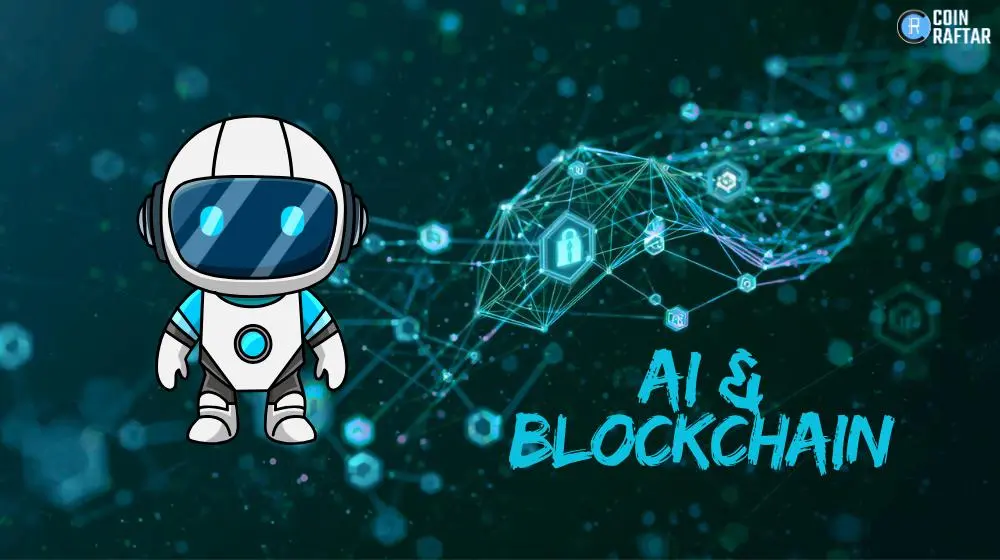
The combination of artificial intelligence (AI) and cryptocurrency networks has begun to transform the approach to validating and ensuring the integrity of digital data. These two technologies are working together to create systems that can be used to automatically verify data and provide transparency in data management. This fusion is slowly changing how the flow of data operates in regard to decentralized networks.
The Emerging Connection between AI and Blockchain
Artificial intelligence is reliant on credible information to operate efficiently. Nonetheless, central databases tend to develop risks in the sphere of manipulation and unauthorized access. Blockchain networks can solve this problem by providing unalterable registers that are used to store transactions openly.
When the AI systems operate based on the data that is verified using blockchain, the quality of the inputs will be high. Consequently, automated decision-making is more credible. The mix minimizes the conflicts on the authenticity of data and enhances verification standards in digital ecosystems.
These discussions are aimed at establishing audit trails in machine processes without the need for centralized authorities.
Meanwhile, blockchain developers are incorporating AI in monitoring the smart contract. The integration enables automated systems to identify abnormal patterns in decentralized networks. Hence, technologies complement one another.
Enhancing Data verification in a mechanized way
One of the biggest problems in digital systems is data checking. Customary checks involve human monitoring and the centralization of checks. Such procedures may be lengthy and misleading.
Those systems powered by AI can make this process faster by analyzing large datasets immediately. Verification records, when coupled with blockchain,n are permanent and unalterable. Financial transactions and management of digital records are less uncertain since they are part of this structure.
As an illustration, AI can be used to scan transactions to detect anomalies. Blockchain records have traceable evidence of activity once they are flagged. The confidence in decentralized finance operations is enhanced with this dual-layer system.
Besides, AI is capable of overseeing the validation process of blockchain networks. It identifies aberrant performance through analysis of performance patterns in an automated manner. Therefore, the networks have better operational standards and have minimal disruptions.
This synergy has been referred to by developers as a new digital trust layer. The system does not eliminate human control, but rather upgrades the monitoring abilities. Decentralized consensus mechanisms are used together with automation.
Improving the Transparency of Decentralized Ecosystems
Cryptocurrency networks are still based on transparency. Existing public blockchains enable any person to access transaction histories. Nonetheless, raw blockchain data may be hard to interpret.
This issue is made easier with AI solutions that can analyse volume blocks of blockchain records. Pattern recognition helps them to simplify datasets of high complexity into formats easy to understand. This is a capability that enables blockchain information to be more accessible to organizations and personal consumers.
Besides this, AI can trace suspicious wallet tracks over the networks. It helps in compliance, but it does not change the principles of decentralization, as it correlates the points of data. This equilibrium maintains the openness of crypto systems.
The thread on social media tends to refer to the fact that AI analytics dashboards are helping traders and developers. These dashboards summarize blockchain performance into organized reports. Consequently, the participants of the network can obtain a better understanding of ecosystem trends.
Fraud detection is also helped by cooperation. Artificially intelligent systems can identify irregular trading patterns even before massive disturbances take place. The individual flagged events are then logged by the blockchain and can be reviewed.
Decentralized Artificial Intelligence Models and Data Ownership
In addition to verification, there is AI and crypto integration of data ownership models. The user-generated data is usually held back by centralized AI platforms. Decentralized marketplaces with data are brought in by blockchain-based systems.
Under these models, the users have control over their data by means of cryptographic keys. AI models are authorized to only access datasets. This setup allows checking of the usage of the data.
In addition, the use of tokenized incentives attracts contributors to exchange verified datasets. Contributors will be compensated when their data trains AI systems. Blockchain tracks every contribution, and it establishes definite ownership tracks.
This arrangement minimizes controversy over intellectual property rights. It is also open to contributing to AI development. Before machine learning models are deployed, developers are able to confirm the origins of datasets.
Decentralized AI protocols are the future step of crypto development that is mentioned in online discussions quite often. These are protocols based on consensus systems and distributed storage networks. Thus, they correlate with the major principles of blockchain transparency.
Adoption and Technological Development of the Market
The combination of AI and cryptocurrency networks is ever-growing in the industries. The AI tools in the financial platform are used to observe the decentralized exchanges. There are healthcare initiatives that consider blockchain-supported AI systems to achieve secure verification of records.
In the meantime, enterprise blockchain systems switch to AI-based auditing systems. Ledger data is analyzed through these systems to ensure accuracy in operations. Automation does decrease administrative overhead across digital infrastructures.
Even Crypto startups are also establishing AI-based validation services. These portals are a token project and a decentralized application analytics. They can prove the activity of smart contracts and enhance user trust.
Inferences in tweets by industry founders are frequently related to pilot projects that involve machine learning and decentralized ledgers. Such posts talk of enhanced data integrity and automated compliance product reports. With the increase in adoption, additional networks add AI modules to core protocols.
The institutional players are still trying these frameworks. They are concerned with the minimization of operational risk and the standards of transparency. The methodology incorporates new technology and tested principles.
Final Thoughts
The integration of AI and cryptocurrencies is transforming data validation systems throughout the digital networks. With an integration of automation and decentralized records, the trust structure is changing gradually. With increased adoption, AI tools supported by blockchains are turning into a part of safe digital infrastructure. The synergy has further re-modelled the manner in which data is verified, documented, and shared in industries.