Key Insights
- Blockchain records transactions in connected blocks, which are replicated across numerous computers.
- Mining incorporates new blocks through complex calculations and a network verification process.
- Industries in payment services, energy trade, and supply chain management are using blockchain.
- The same is true of scale, ability, energy use, and regulation; all are also important.
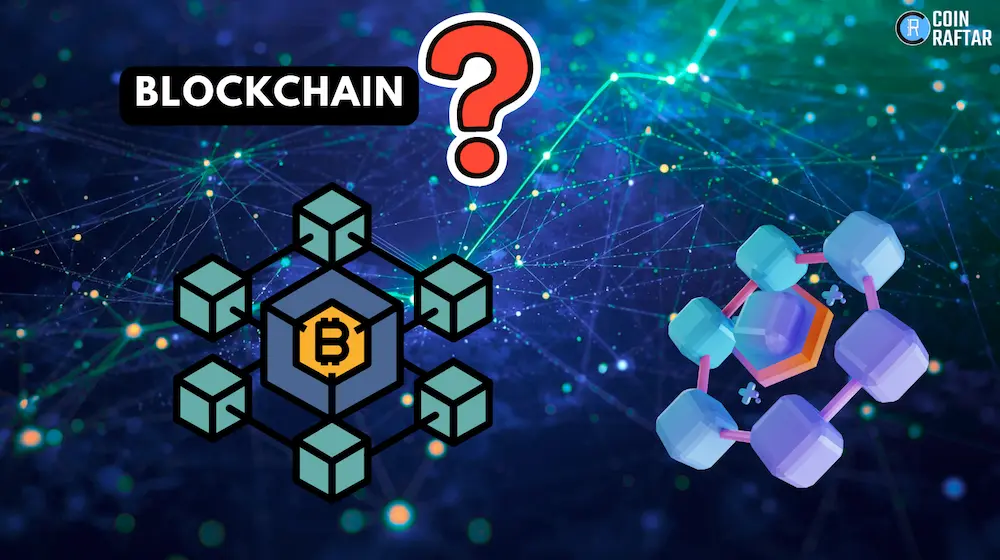
What Is Blockchain Technology and Why Does It Matter
Blockchain technology is a computer-based, distributed, and decentralized digital ledger of transactions that is intended to securely and transparently store transaction data in a network of computers.
The principles on which the system is founded are cryptographic hashing and decentralization, ensuring that information stored cannot be modified without being detected by anyone.
This design would create a perpetual, verifiable, and shared history of digital activity for everyone in the network.
The Blockchain technology was first developed as the foundation of Bitcoin. Its application, however, has tremendously expanded beyond cryptocurrencies.
The fundamental design of blockchain, as an immutable, decentralized registry not operated by a central authority, has seen its application and experimentation in various fields, including finance, energy, media, retail, and digital rights management.
The common principle underlying all these applications is to store records in a manner that reduces the need for intermediaries and enhances transparency and data integrity.
Blockchain technically organizes the information into a chain of blocks, which are cryptographically linked. Each block contains the details of the transaction and the address of the previous block, forming an endless blockchain.
This system makes the ledger tamper-resistant, allowing participants to verify transactions independently.
How Blockchain Records Data
The basic idea of blockchain is to store transactions in blocks, which are linked in time. A list of transactions verified by the network is included in every block. Once this has been done, the block will be added to the chain and distributed among all the involved computers, also known as nodes.
A shared digital document is one of the most notable analogies of the blockchain concept. If a document is created and shared among different users, they all access the same version of the document.
The document is not handed over to the users, but it is present simultaneously to all users. Updates are stored in real-time, and each participant can view the changes as they are made.
Blockchain works similarly, except that it records transaction changes rather than document changes. Although the technology behind it is more complicated, the analogy brings to focus three main parts of blockchain: blocks, miners, and nodes.
Blocks and Cryptographic Hashing
Each blockchain is composed of several blocks, and each block has three fundamental components. The first one is the information stored in the block that generally contains records of transactions.
The second component is a 32-bit whole number, commonly referred to as a nonce. When creating a block, the nonce is generated and plays a crucial role in the validation process.
The third component is the hash of the block. The hash is a 256-bit value obtained by combining the block’s data with the nonce using a cryptographic algorithm.
The network does not accept a block unless its hash satisfies certain conditions, e.g., its first few bits must be a large number of leading zeroes. Such an attribute renders it hard to create valid hashes.
The nonce generates the cryptographic hash that connects the data to the block forever when the first block of a blockchain is formed.
To alter the data, one would need to produce another nonce and a hash that meet the network’s requirements. Since the hash of the last block is also contained in each block, it would have been difficult to modify a single block and rework all other blocks.
Mining and Block Creation
Mining refers to the process of adding new blocks to a blockchain. To find a hash that can be accepted into a new block, miners must use specialized software to solve a complex mathematical problem.
Block m numbers have a nonce and a hash, and the numbers also refer to the hash of the last block.
Since the hash has a length of 256 bits and the nonce has a length of 32 bits, the number of possible nonce-hash combinations of each block is about four billion.
These combinations need to be tested by miners until a valid hash is found. Once a miner has found the correct combination, also known as the golden nonce, the block is appended to the blockchain.
Once a block is mined, it is broadcast to the network for verification and validation. Other nodes affirm the validity of the block before it is included in the permanent ledger.
The miner who creates the block is rewarded with money as a token of appreciation for their contribution to the network.
If any block in the chain was changed, all subsequent blocks had to be re-mined. This need is further complicated by the expansion of blockchain networks, which makes manipulation even more inconvenient.
The system is secured through a computing challenge as opposed to centralized control.
Nodes and Decentralization
Nodes refer to devices that can be incorporated into the blockchain network to ensure that they hold a copy of the ledger and to facilitate the validation of transactions.
Any electronic device connected to the network can be referred to as a node, such as a computer or a router. Individuals or organizations use computers for various purposes.
A single node does not own the blockchain. Instead, every node contains a copy of the ledger. As a new block is appended to the network, all copies must be updated by having everyone agree on it. This decentralized system eliminates the middleman who handles or checks transactions.
The other major characteristic of blockchain networks is transparency. Participants can view and verify transactions recorded on the ledger. Every user is assigned a unique alphanumeric address, allowing for the monitoring of all transactions and reducing exposure to personal information. Such a combination of cryptographic security and public visibility is useful in keeping trust in the system.
Blockchain vs. Traditional Databases
Traditional database systems are dependent on centralized control, which can introduce inefficiencies and vulnerabilities. In financial matters, such as the sale of property, buyers and sellers often keep their own records, which could prove to be a matter of dispute since no record can be relied upon independently.
To address this, the transaction must be mediated by a third party, such as a bank or a legal authority.
Such a centralized system creates a single point of failure. The entire participant base could be compromised in case the central database is compromised. Blockchain can solve this problem by spreading the ledger among several participants.
The records in a transaction that is based on blockchain are synchronized, and both parties have access to them.
Any change in the transactions of the past would impact the entire ledger, exposing inconsistencies at a glance.
It is a structure where intermediaries are not required, and a verifiable history of transactions is maintained.
These qualities form the basis for utilizing blockchain in digital currency and other applications.
How Blockchain is used in Industries
Blockchain technology has been utilized in other sectors that prioritize the safe and transparent maintenance of records.
Energy
Blockchain is applicable in the power industry to facilitate peer-to-peer transactions of power.
Individual homeowners who have installed solar panels will be able to sell their surplus energy to their neighbors through blockchain-based systems. Smart meters automatically create transactions, which are registered in the blockchain without human intervention.
Crowdfunding of renewable energy is also developed through blockchain. Individuals will be able to fund solar projects in areas with uncertain power supply. In other scenarios, the sponsors get rental revenues after the systems have been put into operation.
Finance
Blockchain helps financial institutions to enhance payment processing and transaction reconciliation.
The Singapore Exchange Limited has adopted blockchain technology to establish a more efficient interbank payment system.
The implementation reduced the reliance on batch processing and manual reconciliation, helping to overcome the problems associated with high transaction volumes.
Media and Entertainment
Blockchain is applied to the management of copyright information and digital rights in the media and entertainment industry.
There are typically several transactions involved in the copyright transfer process, which makes the administrative process more complex.
BM utilizes blockchain to optimize the process of managing digital rights, and Sony Music Entertainment Japan claims to have achieved increased productivity and reduced expenses.
Retail
Retail companies are utilizing blockchain technology to track goods throughout their supply chains. Amazon has patented a distributed ledger system that will authenticate the authenticity of products. Members, including manufacturers, distributors, couriers, and end users, may add verifiable events to the ledger upon registering with a certificate authority.
Types of Blockchain Networks
There are blockchain networks that are classified according to access and governance.
Public blockchains enable every user to join the blockchain and authenticate transactions. Although this openness ensures transparency, open networks may require significant computational power and offer minimal transaction privacy.
Privacy blockchains have a single organization that dictates participation and consensus. These networks may be used within a corporation’s firewall and are often hosted internally.
Permissioned blockchains are used to grant access and specify actions that participants can undertake. Public and private blockchains are also permissioned, whereby one needs to be approved before becoming a member of the network.
Benefits and Challenges of Blockchain
The blockchain offers a variety of benefits, including decentralization, enhanced security, transparency, global accessibility, and the ability to track transactions, but it also has its limitations.
Certain networks become difficult to scale, and Proof-of-Work systems are energy-intensive. The transactions are irreversible, and human error or security vulnerabilities are also possible. Legal challenges can also arise from regulatory uncertainty.
Security Considerations
The cryptographic design and decentralized structure of blockchain are generally regarded as secure, but there are risks.
Proof-of-Work systems are vulnerable to a 51% attack, where a party can control a majority of the mining power in the network, potentially compromising the validation of transactions.
Implementation, governance, and ongoing maintenance are also necessary for effective security.
Cryptocurrencies and Blockchain
The most widely recognized application of blockchain technology is the use of cryptocurrencies. Bitcoin, Ethereum, and Litecoin are examples of digital currencies that are managed by blockchain as a public registry and cryptographic protective mechanism, with no involvement of central banks.
The number of cryptocurrencies in the world totals approximately 6,700, with a total capitalization of around $ 1.6 trillion.
Bitcoin holds the largest part of this value, as a single Bitcoin is worth approximately $93,880. Cryptocurrencies facilitate transfers worldwide, making one less dependent on central financial systems, and utilize blockchain to guarantee the security of transaction records.