Key Insights:
- Bitcoin doesn’t require banks because it uses a public ledger system to conduct transparent transactions worldwide
- BTC has a set limit of 21 million coins in circulation, thereby making it scarce compared to other currencies that suffer from inflation.
- Mining is the security mechanism of the Bitcoin network. It verifies the transactions and releases new Bitcoins over time with a reward system.
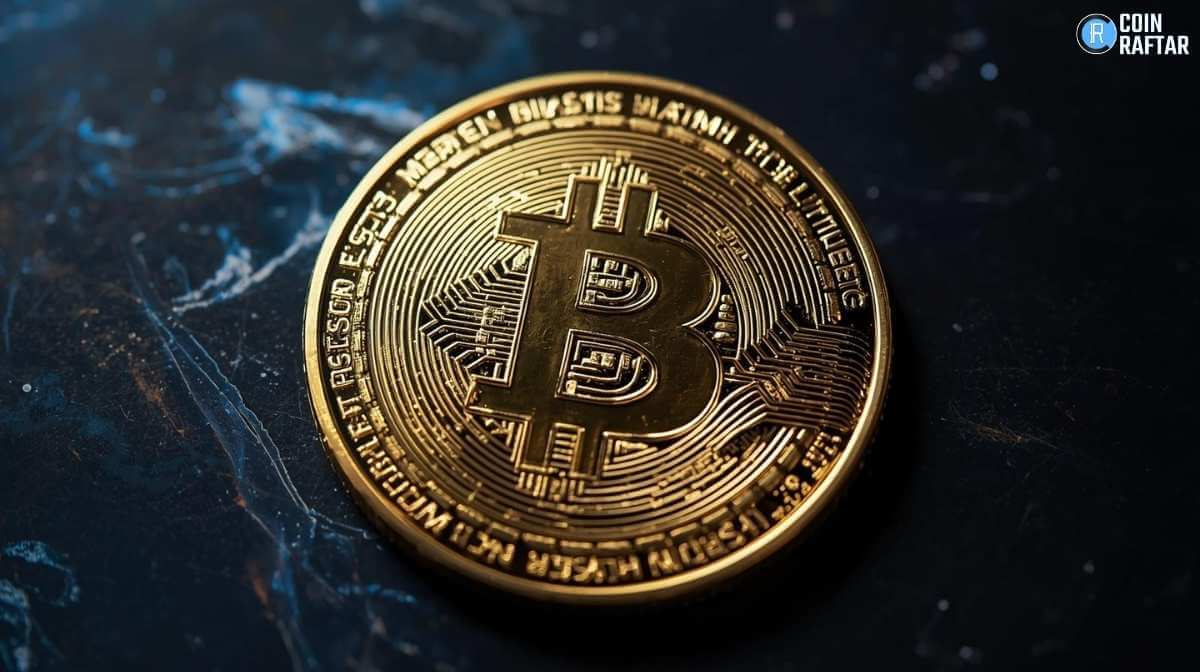
Bitcoin is a digital currency that does not rely on banks or other intermediaries for peer-to-peer transfers. It operates via blockchain technology and utilises cryptographic techniques to secure the transaction and the ownership of Bitcoins.
While many people think of Bitcoin as a form of digital money, it would be more accurate to refer to it as an innovative way to send value over the internet without using banks or government institutions as intermediaries.
Since 2009, when Bitcoin was created, there has been a significant increase in the number of users who are utilizing Bitcoin as a global financial asset.
What Is Bitcoin?
Bitcoin is a digital asset utilized on the internet. It does not have a central authority regulating its value or issuance, as opposed to conventional currencies, nor does it have any other governmental support for its value.
Rather, it operates through a network that does not provide a single source of regulation for all Bitcoin activity (decentralized network).
Bitcoin was created by an antinomy – an anonymous person or group identified as Satoshi Nakamoto.
They intended for Bitcoin to become the first financial system based purely upon computer programming and cryptography, instead of depending upon trust in financial institutions.
One unique feature of Bitcoin is its limited amount of coins that may be mined or otherwise made available for trade (21 million coins).
Therefore, Bitcoin’s aim to exist in scarcity results from the design of its intended distribution as well as being naturally superior to gold in many ways (i.e., store of value).
Bitcoin seeks to represent three major things at their essence:
- To be able to transact money without intermediaries.
- To create a system that is available to anyone and open to the public.
- To establish a currency that is not subject to periodical issuance by government authority.
How Does Bitcoin Work?
To fully appreciate how Bitcoin works, you should first understand the underlying technology that makes it possible.
This technology is called Blockchain, and it is a type of digital ledger that keeps track of all transactions and is stored on thousands of computers due to its decentralised nature.
When a person sends you Bitcoin, you are not sending it via an intermediary (such as a bank). Instead, the transaction is transmitted across the Internet (Bitcoin Network), and all are checked at the Node level to ensure compliance with the system rules.
There are three primary stages to completing a Bitcoin transaction:
- The sender creates the transaction and sends it to the network
- The network will verify that the sender has access to the Bitcoin
- The transaction is then confirmed and will be recorded indefinitely as such.
Once confirmed, the transaction cannot be reverted or modified in any way, which contributes positively to the reliability of Bitcoin.
The Blockchain Explained Simply
The Blockchain is a digital notebook that Multiple Users can access and check contents. Every collection of pages is called a Block.
Each block contains a summary of recent transactions, as well as pointing back to the prior block, using Cryptography to secure data within the Block.
As all blocks are linked to one another and, therefore, to each other in sequence, it makes it difficult to manipulate any previous information because the entirety of the Blockchain must be written again for that data to be deleted/modified. Thus, Bitcoin is extremely resistant to fraud or manipulation.
Bitcoin Mining and Network Security
In the world of Bitcoin, mining refers to a process that ensures the safety and operation of the entire network. Miners employ very powerful computers to complete very difficult and complex mathematical problems using the method called Proof of Work.
What is Proof of Work? Proof of Work refers to the method in which many different computers compete with each other by solving complex mathematical puzzles.
When one of those computers solves that puzzle, they earn the ability to create a new block in the blockchain. The way that this process validates an actual amount of work that was done on behalf of all computers (in this case, the computer that solved the puzzle), rather than having trusted and or authoritative people generating this work.
Mining serves several crucial roles:
- Verification of all transactions
- Prevention of the double-spending of coins
- Providing a mechanism for securing the blockchain against attacks
When a successful miner generates a new block for the blockchain, they get rewarded with new Bitcoin as well as any applied transaction fees. This incentivization motivates miners to be honest and, therefore, provides support for the overall network.
What Is Bitcoin Halving?
– Bitcoin has a “Halving” event approximately every four years, where miners receive their rewards cut in half, and as a result, it takes longer for new Bitcoins entering circulation.
Why Halving matters:
- Halving confirms the limited Supply of Bitcoin.
- Halving decreases the effect of Inflation over time.
- Halving shows a predictable Monetary Policy with Bitcoin.
As the Number of Mining Rewards decreases, the Scarcity of Bitcoins increases, thereby increasing the Long-Term Value Proposition of Bitcoin.
What Makes Bitcoin Different from Traditional Money?
Several characteristics set Bitcoin apart from fiat monetary systems:
- Decentralization
- No central governing or controlling body oversees Bitcoin or manages its supply.
- Global Reach and Unlimited Reach
- One can send Bitcoin to any location, any time.
- Determining Who Owns What
- While transaction information is publicly available, the individual’s identity remains private.
- You Own It
- Individuals possess total control over their Bitcoin assets via their private keys.
- Unlike traditional banking systems, Bitcoin transactions cannot be ‘frozen’ or controlled without possessing the correct private key(s).
How Do People Use Bitcoin?
Depending on what they are trying to accomplish with Bitcoin, people have many different uses for the digital currency. Some people use it to make online purchases or send money internationally. Others are investing in Bitcoin or using it as a long-term store of value.
Some common uses for Bitcoin include:
- Holding value over the long term (family savings
- Sending money anywhere in the world
- Having access to financial services without having to go through a bank
- Providing an option for savings in countries with unstable currencies.
Is Bitcoin Safe for Beginners?
- Responsibly using Bitcoin provides a safe avenue for use by beginner crypto investors, although the actual network has operated for over a decade successfully without issues.
- Taking precautions to keep their private keys secure and only using a wallet that they know and trust is extremely important for users.
- There are a few things that beginners need to keep in mind: The price of bitcoin can be highly volatile; thus, it is very important to learn about security; and starting with only a small amount of bitcoin, to begin with, lowers the amount of risk involved with investing in cryptocurrency.
Final Thoughts: BTC Explained Clearly
Bitcoin refers to the digital currency created using a distributed database known as Blockchain technology. The decentralization of banks and other traditional financial institutions to allow individual users to transact directly via Blockchain has established Bitcoin as an alternative form of money with a capped amount, unlike traditional currencies (fiat).
Also, new users of cryptocurrency will find that this Bitcoin Beginner Guide provides both a clear, useful definition of the term “BTC,” along with why Bitcoin is still one of the most innovative financial innovations in history for both individual and institutional investors.