Key Insights:
- South Korea Bitcoin Seizure Ruling permits the police to seize Bitcoin on controlled exchanges.
- The court ordered the swap of custodial Bitcoin to be considered a seizable property under criminal law.
- The ruling increases pressure on exchanges to comply and extends the enforcement authority.
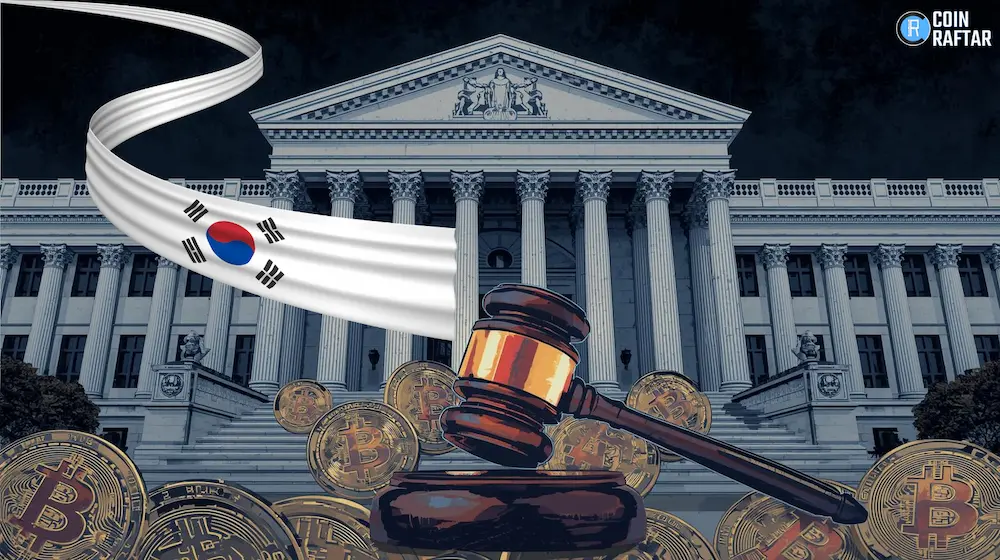
South Korea Bitcoin Seizure Ruling took a decisive step forward after the country’s highest court formally confirmed that Bitcoin stored on centralized exchanges can be seized by investigators during criminal probes.
The decision, disclosed through the court’s official bulletin, clarifies how exchange-custodied digital assets are treated under criminal procedure and sets a clearer enforcement framework for future investigations involving virtual assets held on regulated platforms.
On December 11, 2025, the Supreme Court, in a ruling released in the official bulletin of the court, affirmed the seizure of 55.6 Bitcoin from a domestic exchange account related to a money laundering case.
South Korea’s Bitcoin Seizure Decision Clarifies How Exchange-Custodial Assets Are Legally Treated
This decision relies on prior Supreme Court cases that have already declared Bitcoin to be sizable criminal property and property interest subject to fraud.
However, the new ruling goes further by providing a specific statement about the property stored in custodial wallets operating under centralized exchanges.
In doing so, it removes an ancient gray area that previously existed regarding whether the coins held by third-party platforms could be confiscated at the exchange level during investigations.
Under the clarified interpretation, Bitcoin recorded under an individual’s name and managed by a virtual asset service provider falls within the scope of seizure targets defined by criminal law.
https://twitter.com/WuBlockchain/status/2009477986089881791
Moreover, law enforcement officials can now freeze and seize such assets at the location where they are stored, as long as they are linked to suspected criminal activity.
Assets related to suspected crimes may now be frozen and seized at the very exchanges, which makes compliance systems and reaction times more significant in cases when a warrant is issued.
Regulatory Coordination and Enforcement Pressure
Since the South Korean Bitcoin Seizure Ruling, exchanges will increasingly find themselves under pressure to follow a court order and promptly have a well-developed Know Your Customer and transaction-monitoring framework in place.
This ruling also aligns with the regulatory measures of the Financial Services Commission to introduce a payment lock-out system, which would enable the government to freeze crypto-accounts until suspected funds are identified.
In November, officials stated that the current procedures need court warrants in the prosecution stage, which may slow down the process and give suspects time to transfer money to their wallets or offshore accounts.
The proposed system would mirror stock market controls introduced under the April 2025 amendments to the Capital Markets Act, which allow for rapid intervention when market abuse is detected.
Additionally, in September, regulators applied those stock market controls to freeze 75 accounts linked to a 100 billion won stock manipulation case, blocking withdrawals of 40 billion won in realized and unrealized gains.
FSC members later cited the case as an example of how such mechanisms could be utilized in crypto markets, where it is easier to hide assets after leaving regulated markets.
Persisting Law Loopholes on Digital Assets
The Virtual Asset User Protection Act, effective July 2024, in South Korea, strengthened exchange obligations to monitor suspicious transactions and protect customer assets. However, the law failed to give police agencies advance freeze rights.
The second stage of the regulation of digital assets, which concerns stablecoins, market abuse, and enforcement loopholes, is in stalemate as of 2026 (with the dispute between the Bank of Korea and the FSC regarding whether stablecoin issuers should be designed as bank-led consortia or not).
The Financial Intelligence Unit fined Korbit 27.3 billion won in December after identifying 22,000 instances of anti-money laundering violations.
Earlier sanctions against Upbit totalled 35.2 billion won. Other exchanges, including Coin one and GOPAX, remain under review, with total sector penalties expected to rise substantially.
Furthermore, a lawyer specializing in virtual asset litigation told The Chosun Daily that the ruling clarifies the legal nature of coins stored and traded on exchanges, confirming that they can be lawfully seized during investigations.
According to the lawyer, the decision resolves practical uncertainties that previously complicated seizure searches involving custodial platforms.