Key Insights:
- Polymarket processed over $529 million in strike-related bet volume, underscoring its expanding role in geopolitical risk pricing.
- Six newly created wallets generated roughly $1.2 million from precisely timed February 28 strike positions.
- Rising global regulatory scrutiny could reshape compliance standards and liquidity conditions for prediction markets.
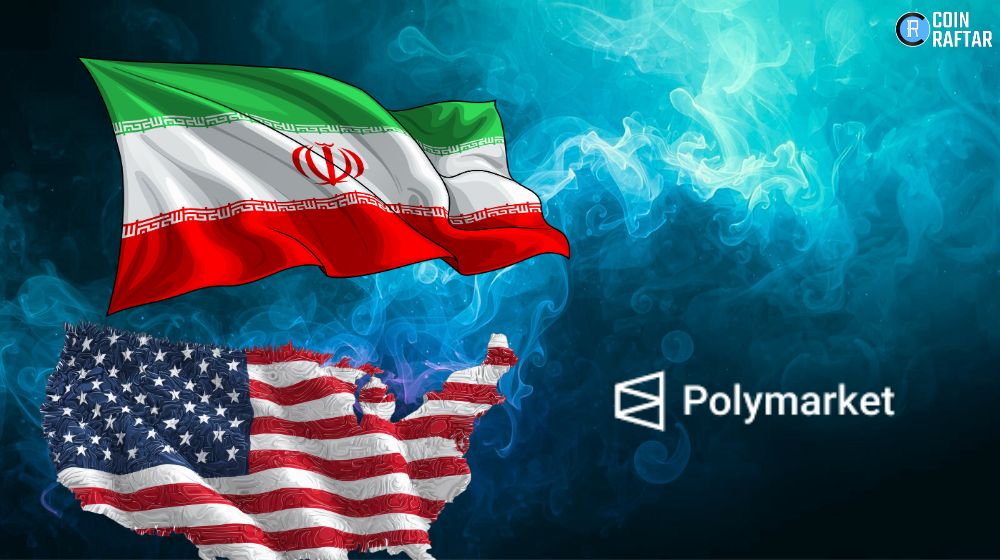
The reaction of Polymarket to coordinated United States-Israeli bombing of Iran saw them within hours transforming a geopolitical point of conflict into a fast-growing digital betting market. Traders quickly began pricing outcomes ranging from ceasefire timelines to leadership succession, demonstrating how blockchain-based prediction markets process political shocks in real time.
The largest completed contract asked whether Iran’s Supreme Leader would be removed by March 31, resolving at 100% after confirmation of his death. That single market generated $45 million in volume, with one leading account reportedly earning more than $750,000 from a successful “yes” position.
Polymarket war bet volume accelerates rapidly
The most active ongoing contract concerns the timing of U.S. military action against Iran, accumulating $529 million in total trading activity since December. The February 28 strike date alone attracted nearly $90 million, as participants placed highly specific wagers on when an attack would occur.
Each daily contract from late February through early March resolved in favor of confirmed military action once strikes began. Resolution criteria required verified drone, missile, or air strikes on Iranian territory conducted directly by U.S. forces, excluding cyber operations and interceptions from qualification.
Due to the stabilization of their markets, focus was shifted to duration of conflict and the possibility of change of regime within the leadership apparatus of Tehran.Ceasefire contracts now place small chances on a truce today, but the chances increase strongly on truce agreements in the near future of March and April.
Insider bet activity raises integrity questions
Blockchain analytics firm Bubblemaps identified six recently created wallets that collectively generated approximately $1.2 million in profits from February 28 strike positions. Several accounts were funded shortly before the attack and purchased concentrated “yes” shares just hours prior to confirmed military engagement.
One wallet is said to have turned about $61,000 into some $493,000 in profits, and another to have cleared a profit of about $120,000 on a position of $30,000. Even though no definite wrongdoing has been proven formally, the moment and accuracy of these trades have raised controversy regarding the informational benefits in Polymarket.
Reactions in the market were not limited to prediction contracts, and the price of cryptocurrency and derivatives was influenced by sharp geopolitical tensions. Bitcoin was hit first by the news of the strikes, but oil-related instruments were up, indicating the repricing of risk on the global financial flows.
Regulatory pressure intensifies across jurisdictions
The national gambling authority of Romania, the National Office of Gambling, has blacklisted Polymarket, which the company has defined as an unlicensed gambling business according to domestic legislation. The governments mentioned poor fiscal reporting and insufficient Anti-Money laundering supervision as the main reasons why the enforcement was taken.
Some analogous limitations in Belgium, France and Singapore are an indication of a broader global push to place prediction markets under conventional regulatory oversight. The Commodity Futures Trading Commission in the United States had already warned that the risks of insider trading in event contracts may come within the present enforcement powers.
Regulatory changes may eventually necessitate structural changes either in contract design, compliance process, or market accessibility in some geographies. These can directly affect liquidity situations where Polymarket has proven to be a good place to price geopolitical risks quickly.
Ceasefire catalysts and market resolution risks
The driving force behind most of the exemplary job placements is still a formalized ceasefire of Washington and Tehran that is mutually agreed upon. Any verified cessation of immediate combat would automatically cancel hundreds of contracts, solidifying a huge amount of capital, which is invested in the results of conflicts at the moment.
Meanwhile, the concentrated trading by new accounts funded attracts attention to the continued credibility threats to decentralized event markets. Reliable interaction is a critical component of continued involvement, and any perceived informational asymmetry may demotivate a wider institutional involvement in the long run.
Despite criticisms, Polymarket has remained a live indicator of geopolitical uncertainty, as it is a running platform at any time with the conventional markets shut down. Its crypto-native settlement model enables members across the world to make a bet on any emerging events, a factor that continues to serve their increasing responsibilities in risk assessment across the world.