Key Insights
- Coinbase and Gemini are blocked in the Philippines, following regulators’ demands for ISPs to block access to the websites.
- BSP and NTC enforced VASP licensing rules affecting major global crypto exchanges
- Controlled cryptocurrency companies are expanding their operations as illegally distributed platforms are shut down.
The Philippines Blocks Coinbase and Gemini as Regulators Implement licensing regulations
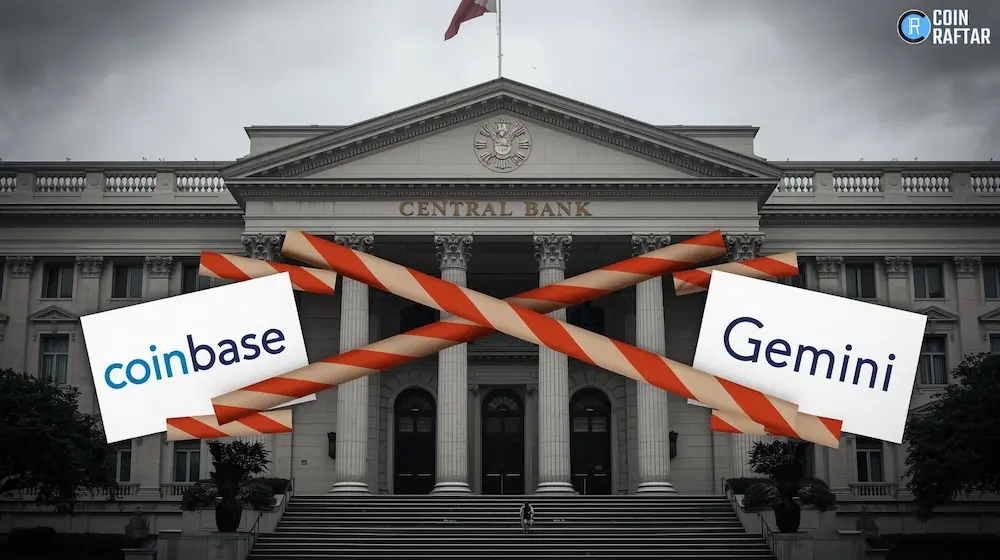
The Philippines blocks Coinbase and Gemini after national regulators moved to restrict access to major global cryptocurrency platforms operating without local authorization, marking a further escalation in the country’s enforcement of virtual asset regulations.
Internet users across the Philippines reported on Tuesday that access to Coinbase and Gemini had become unavailable. The restrictions followed formal directives issued to internet service providers by the National Telecommunications Commission (NTC), acting on findings from the Bangko Sentral ng Pilipinas (BSP), the country’s central bank.
Philippines Blocks Coinbase and Gemini Under BSP Enforcement Framework
According to a report by the Manila Bulletin, the NTC ordered service providers to block access to 50 online trading platforms identified by the BSP as operating without the required Virtual Asset Service Provider (VASP) license.
Moreover, while the BSP did not release a complete list of the platforms affected by the order, Coinbase and Gemini were among the exchanges confirmed by users to be inaccessible within the country.
The enforcement measure indicates a regulatory shift from tolerating offshore platforms to direct intervention, whereby local approval has become the primary requirement for market access. BSP Circular No. 1206 grants the central bank authority to regulate VASPs and coordinate with other agencies to restrict unauthorized operations.
Regulators Target Unlicensed Platforms Through ISP-Level Blocking
Technical experts familiar with the enforcement process said the access restrictions are implemented at the internet service provider level. Under this method, user traffic attempting to reach restricted platforms is intercepted and redirected to blocking servers, producing certificate or connection errors that prevent normal access.
This reflects the mechanism used in the past by banning Binance, which was limited in March 2024 after a 90-day compliance period elapsed without the exchange obtaining a license as a VASP issued by the BSP. Regulators then claimed that the grace period was to enable Filipino users to withdraw their money before the enforcement could be effected.
The Binance ban was followed by the Philippine Securities and Exchange Commission (SEC) clarifying that it could not approve how users could recover their money once access controls were initiated, as a reminder of the impact of noncompliance by both platforms and users.
SEC and App Stores Coordinate on Crypto Enforcement
The SEC has played a parallel role in the country’s regulatory campaign. In addition to enforcement actions against Binance, the agency ordered app store operators, including Apple and Google, to remove Binance’s mobile application from their Philippine storefronts.
More recently, the SEC disclosed that it had identified 10 additional cryptocurrency exchanges operating in the country without proper authorization. Platforms named by the commission included OKX, Bybit, and KuCoin.
The Philippines restricts Coinbase and Gemini as Non-Compliant exchanges.
Although registered and unregistered exchanges are still subject to such enforcement, the Philippines has recognized and regulated infrastructure concerning crypto-related matters, which is established and expanded by established and registered companies.
On November 19, the controlled local exchange PDAX announced it would collaborate with remuneration firm Toku, enabling remote employees to receive compensation in stablecoins. The arrangement enables workers to convert their earnings into Philippine pesos without incurring wire transfer fees or experiencing processing delays.
Additionally, on Dec. 8, digital bank GoTyme launched cryptocurrency services following a partnership with U.S.-based fintech firm Alpaca. Through the bank’s mobile application, users can buy and store 11 supported crypto assets under a regulated framework.
These trends suggest a similar regulatory approach, where regulators limit illicit platforms and permit legitimate services to operate and expand within an existing system of financial regulation.
Broad Regulatory Environment and Market Trends.
According to the latest enforcement act, the NTC confirmed that 50 platforms were targeted, but the list was not published to the public. The authorities have demonstrated that the scale of the move is part of a long-term policy aimed at controlling the crypto markets by licensing rather than banning.
Regulatory pressure continues to redefine the digital asset industry worldwide. Another independent project that did not involve any Philippine enforcement activities was the $250 million new cryptocurrency fund raised by HashKey Capital.
The most recent move suggests that the sustainability of crypto exchanges in the Philippines, for which the BSP has not granted a VASP license, is now in question.