Key Insights:
- Grayscale’s filing to convert its AAVE Trust into a spot ETF highlights rising institutional confidence in DeFi tokens as regulated investment assets.
- Competition from firms like Bitwise suggests growing urgency among asset managers to secure early approval for altcoin-based ETF products.
- Approval of an AAVE ETF could expand traditional market access to DeFi infrastructure tokens, accelerating integration between decentralized finance and legacy finance.
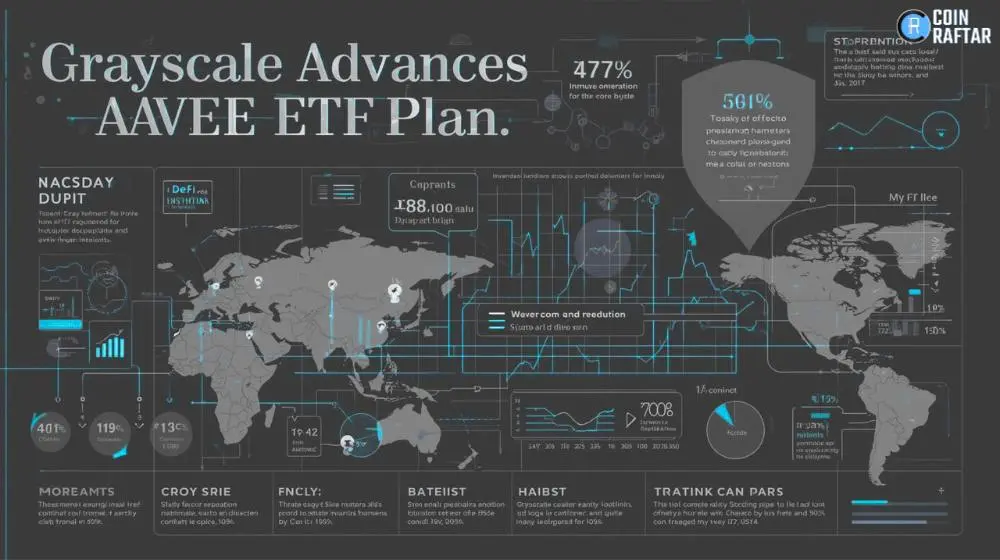
Grayscale Investments has taken another step toward expanding regulated crypto access by filing to convert its AAVE Trust into a spot exchange-traded fund.
The asset manager has filed an S-1 registration statement to the U.S. Securities and Exchange Commission, indicating intentions to list the product on NYSE Arca on approval.
Should it be permitted, the ETF would allow traditional investors a direct price exposure to AAVE, without the need to have the token custody or to manage the key privately. The registration indicates that Grayscale is still working to move the crypto-native investment vehicles to ETFs that would be compatible with current U.S. securities regulations.
Grayscale Advances AAVE ETF Conversion Strategy
In October 2024, Grayscale first introduced its AAVE Trust as a larger move into investing products based on altcoins. The closed-end trust currently holds an asset base of about $896 million and net asset value per share is varying with the volatility of AAVE markets.
Through ETF status, Grayscale seeks to enhance liquidity, reduce discounts to NAV, and increase the participation of investors with the exchange trade.
The suggested ETF will have 2.5% sponsor fee in terms of net asset value, and this will be paid directly via AAVE tokens. A custody, trade execution and prime brokering service is assigned to Coinbase, which further strengthens institutional protection of asset management.
AAVE DeFi Leadership Strengthens ETF Case
AAVE serves as the governance and utility token for the Aave protocol, the largest decentralized lending platform operating on Ethereum.The protocol allows users to supply crypto assets to earn yield or borrow funds using overcollateralized, automated smart contract systems.
Aave is a high-ranked DeFi platform regarding the total value locked, which indicates the importance of the company to the decentralized financial infrastructure. The investment products with AAVE already exist on the European market with 21 Shares and Global X offering regulated exposure. The ETF by Grayscale would be one of the first products in the U.S. to track a non-Bitcoin, non-Ethernet DeFi protocol token.
Grayscale Faces Competition As DeFi ETFs Emerge
Grayscale is not the only company pursuing AAVE exposure as Bitwise registered a filing in December on several crypto strategy ETFs.
Such filings comprised AAVE-specific products, which could make Bitwise a frontrunner in the regulatory process at the SEC. Bloomberg investors indicate that early approvals might hasten institutional investment into altcoin-based infrastructure investments.
AAVE currently trades near $119 , holding a market capitalization close to $1.8 billion after a period of pronounced market volatility. Despite recent price declines, institutional interest in DeFi tokens continues to expand alongside improvements in custody and compliance frameworks.
DeFi Tokens Move Toward Institutional Acceptance
The ETF proposal detects a wider change, with decentralized finance assets moving towards regulated investment vehicles in greater numbers. Grayscale had earlier on transformed its Bitcoin Trust into a spot ETF following a historic court battle with SEC.
Such a precedent transformed the U.S. ETF market and paved the way to new crypto-linked products of other flagship digital assets.
The AAVE ETF would have the potential to improve the liquidity, visibility and price discovery of DeFi tokens in conventional capital markets, should it be approved. The action also spans the borders between decentralized finance and old investment options, which denotes maturities within the digital asset industry.