Key Insights:
- Ethereum is reducing reliance on layer-2 networks as faster base-layer scaling reshapes its long-term architecture.
- Many L2s have struggled to meet early decentralization goals, weakening the case for treating them as Ethereum “branded shards.”
- Vitalik Buterin is encouraging L2 developers to differentiate through specialization rather than uniform scaling roles.
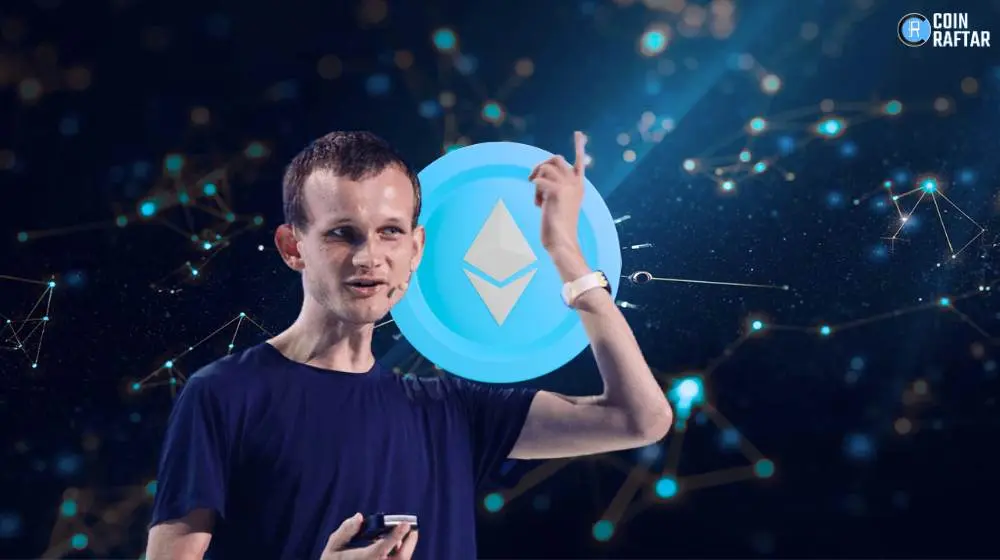
Ethereum is approaching a new stage of scaling debate, following co-founder Vitalik Buterin rekindling debate over the changing role of layer-2 networks.In an elaborate post published in X, Buterin touched upon the long-standing assumptions regarding the nature of relations between secondary networks and the primary Ethereum blockchain.He argued that recent technical developments have weakened the original case for treating L2s as near-identical extensions of Ethereum itself.
Buterin says that two facts shape the direction the ecosystem is taking, which have prompted the renewed debate.To begin with, advancing to high levels of decentralization has not been easy as most L2s have lagged behind this, thus making the progress slower and more complicated than originally envisaged. Second, the base layer of Ethereum is currently scaling itself, and the number of fees and large increases in the gas limit should start in 2026.
Combined, these trends indicate that the historical model of Ethereum scaling is not the reality anymore. Buterin said the community should reconsider how L2s fit into the network’s broader architecture, rather than relying on outdated assumptions.
Ethereum Scaling Progress Reshapes Layer-2 Debate
Ethereum was originally expected to rely heavily on L2s to expand transaction capacity while preserving decentralization and security. These networks were often described as “branded shards,” implying close alignment with Ethereum’s social and technical guarantees. However, Buterin noted that this model has not materialized as planned across much of the ecosystem.
Several L2 developers have openly acknowledged that full decentralization may remain out of reach for technical or regulatory reasons. While such trade-offs may benefit certain applications, Buterin said they fall short of the original goal of scaling Ethereum itself. As a result, treating all L2s as equivalent extensions of the base layer has become increasingly difficult to justify.
At the same time, Ethereum’s own scaling trajectory has accelerated beyond earlier expectations. Reduced transaction and an increased throughput on the primary network have diminished the urgency regarding the growth of outsourcing to L2s only. This shift, Buterin argued, removes pressure for L2s to mimic Ethereum’s core properties in order to remain relevant.
Vitalik Urges New Direction For L2 Networks
Instead of presenting L2s as standardized elements of Ethereum, Buterin suggested regarding them as a well-rounded and wide range.In this method, the various networks can provide dissimilar levels of safety, decentralization, and connectivity with Ethereum. Instead of assuming that all L2s have the same guarantees, users, he proposed, must make their own decisions on what trade-offs are most appropriate to what they require.
For L2s that continue focusing on transaction scaling, Buterin said differentiation will be essential. Such networks may need to push performance to levels that even an expanded Ethereum mainnet would not prioritize. Others, he added, could specialize in areas like privacy, identity, gaming, or non-financial applications.
Buterin also stressed minimum expectations for networks handling ETH or other Ethereum-issued assets. In those cases, achieving at least partial security alignment with Ethereum remains important to protect users and maintain trust. Beyond that baseline, flexibility rather than uniformity should guide L2 development strategies.
Ethereum Vision Shifts Toward Layer-1 Strength
The Ethereum roadmap is now more focused on firming the base layer and not on external scaling systems. Buterin pointed to a rising level of trust in suggestions like native rollup verification applications directly integrated into Ethereum. These capabilities might ease the interoperability and the reliance on external security committees within the ecosystem.
If implemented, such changes would allow Ethereum to take greater responsibility for fixing flaws through protocol upgrades. This, Buterin said, would reinforce trust while still allowing L2s to innovate independently.He acknowledged that a permission less environment will inevitably produce varying security standards among secondary networks.
Ultimately, Buterin framed this diversity as a natural outcome rather than a failure of design. The priority, he wrote, should be building the strongest possible Ethereum while allowing experimentation at the edges. The L2 teams, he decided, must be interested in value addition rather than in extending the base layer.