
Uncertainty travels fast in financial markets during times of war or other geopolitical conflict. Consequently, investors tend to shift capital to assets considered stable and reliable. These are hard, gold-backed fiat currencies that have always proved resilient in times of economic downturns and crises.
However, the issue of cryptocurrency has taken on greater significance in this debate. Bitcoin and Ethereum are digital currencies that are becoming alternative financial instruments, providing users with greater control over traditional banking solutions and the opportunity to access global markets.
Understanding Crypto and Safe Haven Assets
The common understanding of a haven asset is an investment that remains stable or gains value when the economy is strained, markets are volatile, or geopolitical tensions are high. In the past, gold has served this purpose because of its scarcity, its physical nature, and the long-standing reputation of investors that it is a store of value.
In contrast, cryptocurrencies are decentralized networks that enable people to save and move value without involving banks or any central authority. This structure is especially applicable at the time of opposition, when traditional financial systems are likely to be damaged, limited, or less available.
Under such circumstances, digital assets could be used to make cross-border payments and to keep money accessible indefinitely. Users are able to send and receive money without any intermediaries, and this has aided in financial activity in areas where instability is seen.
The largest cryptocurrency in market capitalization, Bitcoin, has a hard cap of 21 million coins. This scarcity issue has led to the view that it might serve as a hedge against inflation or currency devaluation, especially in financially strained economies.
Why Crypto Captures the Headlines in War?
During times of conflict, financial systems are often disrupted. Banks can set withdrawal limits, limit transfers, or halt operations. Payments across the border are subject to delays, increased costs, or even becoming unavailable.

Under these circumstances, cryptocurrency offers several benefits that become increasingly relevant during periods of discontinuity. Geographic location is not a consideration as transactions can be processed within minutes, and users can move their funds when time is of the essence.
Meanwhile, its borderless nature enables value transfer worldwide without intermediaries such as banks or payment providers. Besides, users have the right to their own private keys, so their assets will always remain under their ownership and under no government control.
On the same note, in the Russia-Ukraine war, there were drastic price changes in crypto markets. Although adoption rates rose with transactional intent, asset prices have failed to reach a steady state, highlighting the difference between utility and value preservation.
In one of the cases reported by Fortune, a software developer who has moved out of Russia exchanged savings into crypto and plans to receive payment in USD Coin, a stablecoin tied to the U.S. dollar. This was a way to sustain financial continuity in the face of the continuing war.
Does Bitcoin Hold Value During Conflict
The recent geopolitical tensions offer further insight into cryptocurrency’s behavior under pressure.
With the conflict escalating in the Middle East, Bitcoin initially crashed to approximately $63,000 when the war started. However, the asset recovered to over $71,000 or about 9% above its pre-increase positions.
However, there are important points raised in this motion:
- Does Bitcoin exist outside the regular financial market?
- Or is it a reaction to a wider investor mood and the risk environment?
The data observed imply mixed results. Although bitcoin demonstrated resilience, it responded sensitively to uncertainty during the initial phases, a trait of risk-sensitive assets.
Reality vs Myth
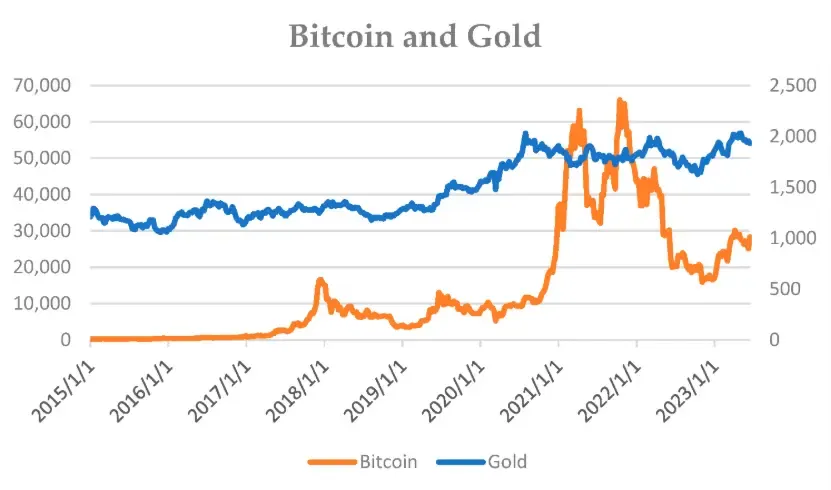
Gold has traditionally been a haven, as it tends to retain its worth in times of economic recession and geopolitical strains. Cryptocurrencies, in contrast, are relatively recent, which limits access to information in the event of a long-standing conflict.
The idea of cryptocurrency as a haven is a popular topic of discussion, but it is poorly understood. It is generally assumed that cryptocurrencies will always keep wealth safe during wartime and that bitcoin can completely substitute conventional safe-haven assets such as gold. But market behavior tells a different story.

Participants in the market are still questioning the ability of Bitcoin and Ethereum to maintain steady performance amid geopolitical stress. Their behavior constitutes a mixed profile, with attributes of both risk-sensitive assets and alternative financial infrastructure.
The status of cryptocurrency as a haven is hence unresolved. Some investors view bitcoin as an uncorrelated asset. Still, others argue it correlates with the broader market environment, especially during periods of significant uncertainty.