Key Insights
- Cardano and XRP established bank-compliant blockchain settlement systems before those led by banks.
- According to Hoskinson, permissioned finance chains are smaller and more immature compared to public networks.
- Cardano Midnight is expected to facilitate the private tokenization of compliant real-world assets.
Cardano Founder Slams Banks as Public Blockchains Drive RWA Push.
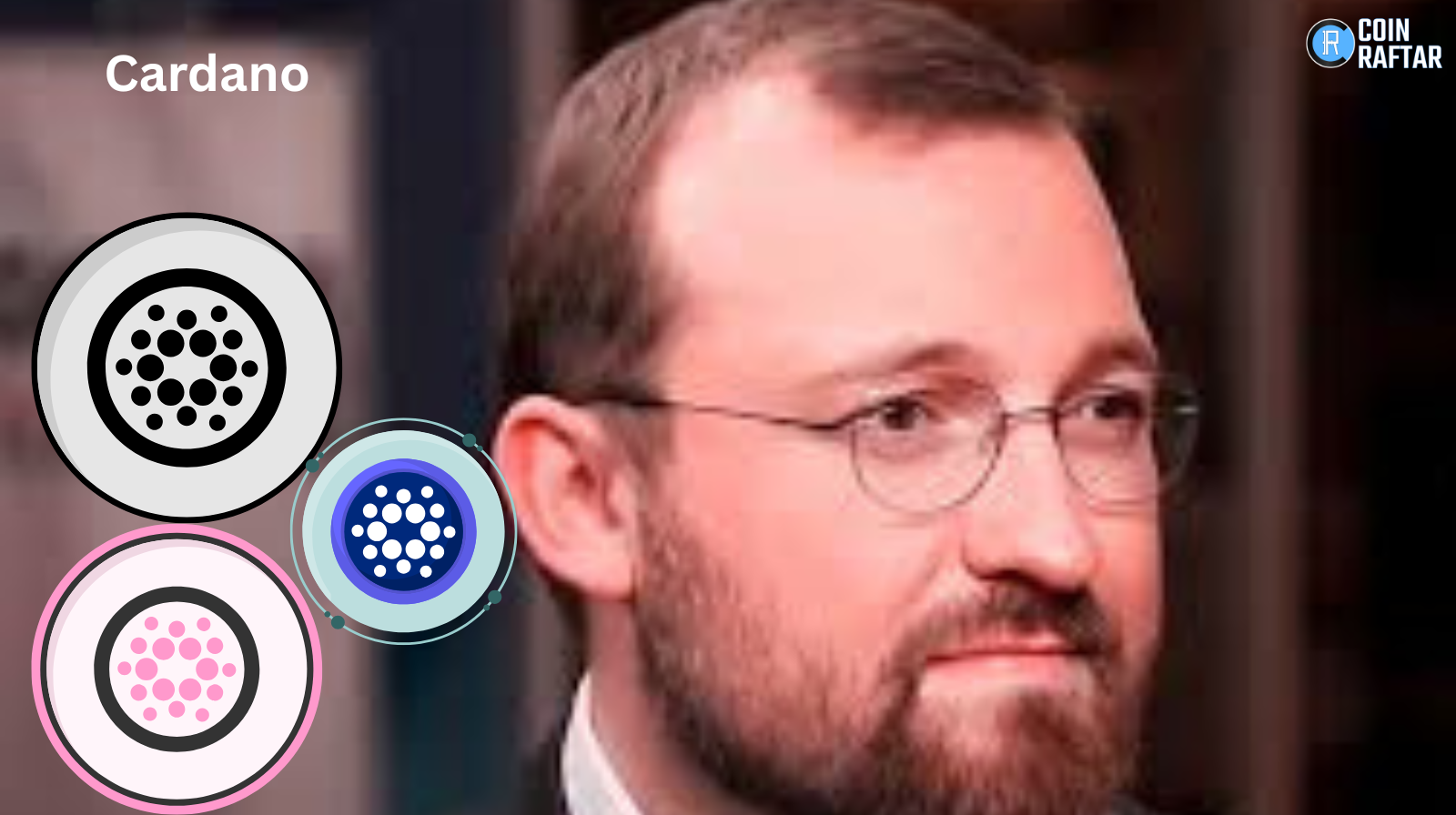
Cardano founder Charles Hoskinson has renewed debate over the role of traditional financial institutions in blockchain development, arguing that major banks are attempting to recreate technologies already deployed by public blockchain networks.
In a series of remarks posted on X, Hoskinson stated that systems such as the XRP Ledger and Cardano’s forthcoming Midnight sidechain have already implemented decentralized settlement, identity frameworks, and compliance-aware design at a scale that legacy financial infrastructure is only beginning to recognize.
His comments arrive as global banks accelerate efforts to tokenize real-world assets, particularly U.S. Treasury securities.
Hoskinson’s criticism focused on what he described as a growing trend among financial institutions to promote blockchain adoption while relying on permissioned systems that mirror public networks without adopting their underlying principles.
According to his statements, Cardano and XRP were designed years ago to address institutional settlement needs while preserving decentralization, placing them well ahead of newer, bank-led initiatives.
Cardano and XRP Built Institutional Features Earlier
Hoskinson stated that the XRP Ledger was originally engineered for high-throughput, low-cost settlement aimed at institutional use. He noted that XRP operationalized decentralized settlement infrastructure and identity considerations early in its development.
Cardano, by contrast, pursued a regulated-friendly architecture that does not abandon decentralization, relying on a layered design that separates settlement and computation.
Within that framework, Hoskinson pointed to Cardano’s extended UTXO accounting model, formal verification tools, and on-chain governance mechanisms as features that continue to distinguish the network from enterprise blockchains.
These elements, he said, enable Cardano to operate without relying on off-chain guarantees or trusted validators, a reliance he attributes to many permissioned systems used in traditional finance.
Scale and Development Depth Cited as Key Differentiators
Cardano was repeatedly referenced in Hoskinson’s comments as an example of a network that operates at a scale beyond most enterprise blockchain platforms.
He stated that public blockchains such as Cardano and the XRP Ledger function at levels he described as “100x beyond” permissioned alternatives. This comparison, he clarified, referred to the depth of development and the maturity of infrastructure, rather than asset pricing.
According to Hoskinson, many enterprise-focused chains still rely on trusted validators and off-chain assurances, which introduce additional constraints on settlement neutrality and composability.
He added that traditional finance-led initiatives are now addressing similar technical challenges, but with stricter governance requirements, limited per missioning, and longer development cycles.
Canton Network and Authorized tokenization.
The above statements by Hoskinson came in response to efforts like the Canton Network, a licensed blockchain that aims to tokenize U.S. Treasury securities and other financial products.
He stated that these networks often involve longer development cycles and limited participation, which constrains their ability to scale globally.
He described this dynamic as ironic, given that financial institutions frequently promote blockchain as an innovation, while its core attributes, neutrality, decentralization, and permissionless access are often minimized.
Cardano Midnight Positioned to Support Privacy-Focused RWA Tokenization
In the future, Hoskinson has stated that the Midnight sidechain of Cardano will accelerate these initiatives. Midnight is a privacy-protecting protocol intended to be asset-tokenized, allowing sensitive information to be stored and verified on-chain.
Moreover, the approach supports Cardano’s long-term plan, which involves integrating regulation and a decentralized power structure, according to Hoskinson.
XRP Ledger Project and Social Connections.
To further support the report, industry data points mentioned in the discussion included a report by Messari, which showed that the total market capitalization of tokenized RWAs on the XRP Ledger was approximately $131 million as of August. Although Ethereum remains the leader of most RWA projects, the XRP Ledger and Cardano have also experienced significant gains.
Moreover, Hoskinson also cited better relations with the XRP community, as XRP holders were also part of the upcoming Midnight airdrop. One of the eight networks that were chosen to participate in the NIGHT token distribution was the XRP Ledger, and over one billion tokens were distributed.