

- Cryptocurrency fraud is on the increase, and it is losing $14 billion every year.
- The majority of fraud begins on social media and uses counterfeit applications.
- Red flags remove anonymous teams and free liquidity.
Cryptocurrency has provided new opportunities to investors. Simultaneously, it has made it easy to scam and fake projects for both beginner and experienced traders.
Industry statistics indicate that crypto-related fraud currently represents an estimated annual loss of approximately $14 billion, which is an impressive rise in the advanced fraud schemes against investors.
Moreover, it has been reported that fraudsters are abandoning technical escapades and are increasingly exploiting user behaviour. Meanwhile, rug pulls, projects that developers abandon and loot, are among the most damaging forms of fraud. This implied that, despite the decline in events, in 2025 alone, there were more than $6 billion in losses because of large rug pulls.
Market participants and analysts said the trend highlights the need for stronger due diligence. “Fraud tactics are evolving faster than user awareness,” one blockchain analyst said, pointing to the growing use of social engineering and AI-generated content.
What are the most common starting places of crypto scams?
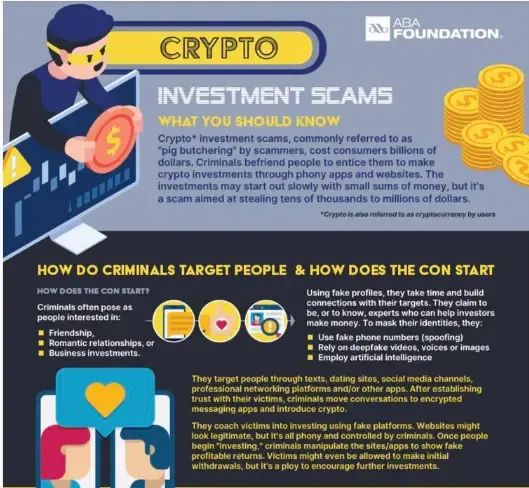
Most crypto frauds start on social media platforms, whereby unscrupulous advertisements can be sent viral within days. Others are initiated through SMS, email, or phone, and they are usually disguised as genuine investment opportunities.
Source: cuToday
These schemes tend to report unrealistically high returns as low risk or guaranteed. However, this statement does not reflect the volatile nature of digital assets, as returns will never be fixed.
Fraudsters often operate fraudulent websites or applications that resemble websites of reputable firms. There are instances where totally fake companies are established to develop a reputation and amass money or sensitive information.
How do scammers build trust before stealing funds?
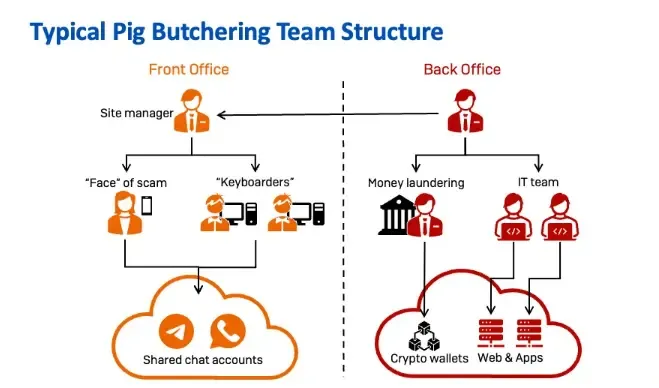
Most frauds use a systematic approach designed to win the user’s trust, ultimately leading to the theft of more expensive funds. This is done gradually rather than in big requests.
Source: Sophos
A well-known trick is used in so-called coaching, where people impersonating company representatives lead victims through the investment process. These instructions could include methods for avoiding bank security checks or verification software.
The patterns of manipulation commonly used are:
- Starting with small deposits, not to create suspicion.
- Major withdrawals to legitimise through the minor withdrawals.
- Discouraging a higher investment in the short term.
Moreover, fraudsters are increasingly relying on fake celebrity endorsements. They are frequently created or modified with artificial intelligence to appear natural, even though they are not related to the depicted people in any way.
What do you consider to be the largest red flags in crypto investments?
Unrealistic profit guarantees are among the most obvious red flags. No legal crypto-related enterprise will ever guarantee daily or weekly returns, yet such claims persist in scam schemes.
Nevertheless, the other significant issue is the project team’s lack of transparency. The lack of a name or uncheckable identity increases the risk of fraud, especially when technical information is poorly disclosed.
Other red flags are:
- No clear use case or utility
- Lack of a working product, demo, or development activity.
- False endorsement/association.
- Momentary social media hype with robotic interaction.
- Poor liquidity or hidden lock of tokens.
- Lack of clarity in tokenomics or distribution of supply.
- Rug pull patterns are manifested by developers with the majority of tokens.
Red flags eliminate anonymous teams and free liquidity as major risks, further justifying the need to have investors audit all facets of a project before investing funds into it.
However, weak whitepapers are also indicators of perils. Such documents describing the purpose and technology of a project might be based on imprecise language, duplicate work, or overuse of jargon without substantive explanation.
The importance of tokenomics and liquidity
Tokenomics are the mechanisms and allocation of a cryptocurrency’s supply. It is a key influencer of whether a project is sustainable or can be manipulated.
The more the developers control a significant amount of tokens freely, the more severe the projects are. Sudden sell-offs are possible in this structure, and this may have a significant impact on price and liquidity.
Liquidity, the supply of funds in a trade pool, is also relevant. In case there is no locking of liquidity, the developers are able to pull out assets immediately, leaving investors with tokens that are of little or no value.
Nevertheless, Liquidity verification is a very important step before investing, and this mechanism is usually applied in a rug pull scheme.
What blockchain data reveals about suspicious behaviour?
Monitoring the activity of smart contracts and transactions through blockchain explorers also offers useful insights into the behaviour of a project. Such tools assist in uncovering abnormal trends that can result in fraud.
Monitoring the activity of smart contracts and transactions through blockchain explorers also offers useful insights into the behaviour of a project. Such tools assist in uncovering abnormal trends that can result in fraud.
Unrealistic manipulation may be identified by abrupt shifts in the trading volume without user intervention. Similarly, coordination can be signaled by high wallet activity that is not organic.
Smart contracts that have not been verified are dangerous too. Such contracts may contain hidden features, such as unlimited issuance of tokens or excessive power of the developers, which may be used to the disadvantage of investors.
Is it possible to rely on audits and verification every time?
Independent smart contract audits are a common practice among legitimate crypto projects to assess security and transparency. The emergence of fraudulent audit claims, however, has complicated this process.
In some projects, audits are falsely advertised to establish credibility. Consequently, investors are encouraged to confirm audit reports with the auditing firms rather than issuing project statements.
“Verification should not stop at surface-level claims,” the analyst said. “Independent confirmation is essential in today’s environment.”
What role do market behaviour and community play?
Market behaviour would provide some prior indicators of possible scams. Hyped-up projects with influencer promotions and overt marketing campaigns are not substantively developed.
Credibility is also portrayed through community involvement. Legitimate projects tend to keep communication channels open and up to date. On the contrary, fraudulent projects might limit discussion or disregard important questions.
In addition, the magnitude of the problem has also come to light through online forums and independent audits. According to some community findings, a large share of crypto promotions is associated with risky or scam projects.
What can investors do to eliminate risk?
Due diligence is one of the methods of defence as crypto scams evolve. Analysts note that several factors should be considered before committing funds.
Investors should evaluate the transparency of the team, examine the distribution of tokens, ensure the presence of liquidity locks, and require the presence of an audit.
Further, investors should not make decisions based on hype alone to decrease exposure to fraud. Small investments serve as a starting point and enable limited risk with an evaluation of the credibility of the projects.
Overall exposure can be mitigated through diversification of investment. Advantages of making trusted exchanges and using secure wallets also reduce the chances of making transactions with fraudulent sites.







You got a very wonderful website, Glad I discovered it through yahoo.