

Key Insights:
- The stock price of Circle plummeted following draft regulations
- Analysts have indicated that the outlook for stablecoin growth has not been favorable amid regulatory uncertainty.
- Circle shares have slightly recovered, and companies are examining the influence of legislation on stablecoin adoption dynamics.
Circle shares fell sharply this week after reports that draft provisions in the proposed Clarity Act could limit rewards tied to holding or using USDC, adding pressure to the stablecoin issuer’s stock just as competition and regulatory positioning drew renewed market attention.
The decline came as investors weighed whether restrictions on incentives could affect demand for USDC in a market where issuers and platforms have at times used rewards to attract activity.
Circle Shares Fall as Draft Bill Targets Stablecoin Rewards
Circle shares dropped about 20% after reports said draft language in the Clarity Act could restrict rewards related to holding or using stablecoins such as USDC.
The proposed language added a new source of uncertainty for Circle because incentives tied to stablecoin use have, at times, been passed through to users, particularly via platforms such as Coinbase.
Although USDC itself does not directly pay yield to holders, rewards linked to its use have remained part of the broader competitive environment in stablecoins. Any move to limit those incentives could affect how issuers and platforms support adoption, particularly as more firms enter the market.
A source familiar with the proposed legislation told The Block that the bipartisan proposal from Sens. Angela Alsobrooks, D-Md., and Thom Tillis, R-N.C., could also limit access to transaction size data. That could make it more difficult to calculate rewards where those programs depend on transaction information.
Banking lobbyists have pushed for limits on stablecoin rewards, arguing that such incentives may pull deposits away from traditional banks.
Those institutions rely on deposits as a source of funding for lending, making the issue part of a wider policy debate around how stablecoins interact with the banking system.
Analysts Say Stablecoin Growth Case Remains in Place
Despite the drop in Circle shares, some analysts said the market reaction was not aligned with the larger outlook for stablecoins. Bitwise Chief Investment Officer Matt Hougan said the reaction was “overblown” and pointed to Citigroup’s base case forecast that the total stablecoin market could reach $1.9 trillion by 2030.
Hougan said the Clarity Act developments did not change that base case. He also said interest income has not been a primary driver of stablecoin growth so far, noting that most stablecoins are held in structures that do not pay interest.
He also addressed the view that Circle’s market share could decline over time if larger firms such as Bank of America, Stripe, and Wells Fargo expand deeper into stablecoins.
Hougan said that view remains common, but he added that early innovators have historically been able to protect market lead positions in emerging sectors.
William Blair analysts also said the proposed legislative language was unlikely to materially damage Circle’s long-term prospects.
They stated that the stock may already be set up for a pullback after recent gains, but did not link the draft language to a lasting change in the company’s growth path.
Circle Shares Rebound as Firms Reassess Legislative Impact
After the Tuesday sell-off, Circle shares rebounded about 3% on Wednesday to $104.44, according to The Block’s CRCL price page. The move indicated a partial recovery, as analysts continued to review the legislative details and their possible impact on Circle’s business model.
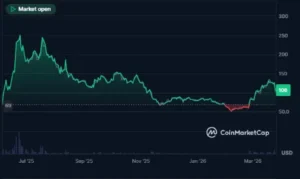
Source: CoinMarketCap
William Blair said the legislative language remained ambiguous, but analysts wrote that such a structure could address banks’ concerns about deposit flight. They also said the role of USDC in cross-border business-to-business commerce remained significant despite interim uncertainty tied to legislation.
Bernstein analysts said Wednesday that restrictions on payouts to users could also affect competition across the stablecoin market. According to their view, limiting those incentives could reduce rivals’ ability to attract liquidity through aggressive yield offers.
That would shift part of the market focus away from reward programs and back toward other factors, such as infrastructure, distribution, and compliance.
Tether Audit Move Adds to Competitive Pressure
The market reaction around Circle also unfolded as Tether, the issuer of USDT, said it had engaged a Big Four auditor. That step could support Tether’s effort to strengthen its compliance standing as it looks to expand its presence in the United States.
At the same time, William Blair said Tether could still face barriers in pursuing potential compliance under the GENIUS framework. The analysts said illicit use of USDT would likely remain a source of regulatory scrutiny in the United States, even with progress on audit engagement.
That contrast put Circle and Tether in the spotlight simultaneously, with one facing investor concern over possible restrictions on incentives and the other seeking to improve its regulatory posture through external audit work.