Key Insights:
- Crypto markets remain highly reactive to geopolitical developments, with Trump’s confirmation of continued Iran airstrikes triggering renewed downside pressure across digital assets.
- Bitcoin is trading below its 50-day and 100-day moving averages, reinforcing a bearish technical structure and limiting short-term recovery prospects.
- Total Crypto market capitalization is consolidating near the $2.1–$2.2 trillion support zone, with a breakdown potentially opening the path toward $2.0 trillion.
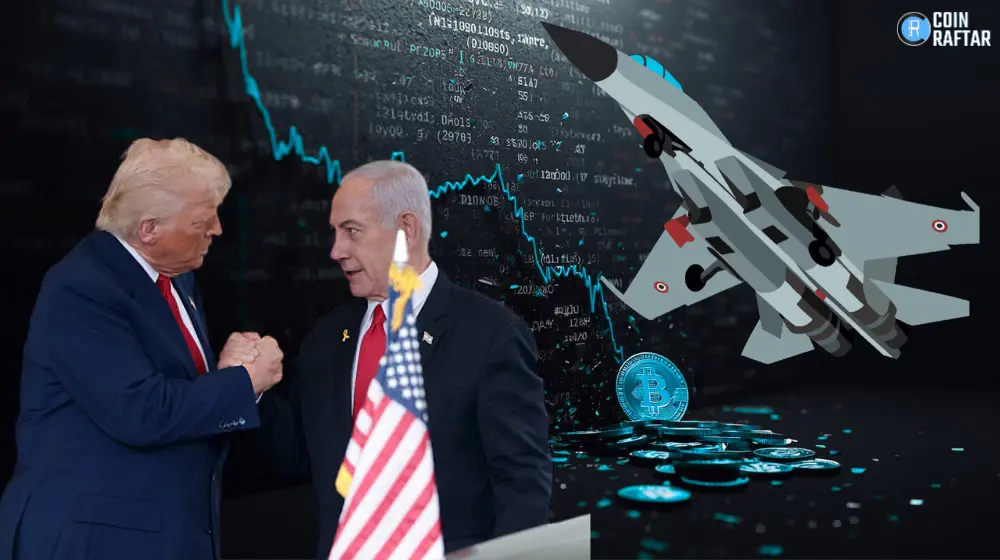
President Donald Trump assured that air activities against Iran would not stop, and this saw crypto markets returning to their downward trend. His comments dampened investor optimism that had automatically underpinned a weak recovery in digital assets throughout the weekend.
The market members responded promptly when political and geopolitical tensions increased after the new conversations between Washington and Tehran. The recent surge has once again put Crypto in a risky asset category prone to global uncertainty.
Crypto market crash deepens further
Selling pressures were growing rapidly throughout the key exchanges across the globe, and Bitcoin dropped to below the $67,000 mark. Ethereum declined nearly 3%, while Solana and XRP posted comparable losses during the same trading session. The Crypto downturn gathered pace after Trump stated that bombing operations would persist despite Iran’s retaliatory response. That retaliation followed reports confirming the death of Iran’s Supreme Leader Ayatollah Ali Khamenei during earlier coordinated strikes.
Trump openly encouraged the Iranian security forces to surrender with sure immunity or otherwise he would take drastic measures. Later, Israel repeated the attacks and attacked other Tehran sites, which increased the instability in the region. Most observers noted that revived military action reversed the slight recovery that had been registered over the weekend trading sessions. In case of escalation of hostilities, Crypto valuations may revisit the recent lows that have been previously set in the past two months.
UK support expands war pressure
The United Kingdom confirmed it would permit the United States to use British military bases for limited defensive operations. Prime Minister Keir Starmer stated the decision aimed to prevent missile threats endangering regional civilians and allied nations. Officials cited Iran’s recent actions against Bahrain and the United Arab Emirates as justification for approving the request. The announcement added another geopolitical variable that weighed further on Crypto sentiment across global markets.
Even though Britain has been spared the direct assault, the authorities termed the posture of Iran as growing reckless and destabilizing. Trump repeated, that war operations would continue until the American strategic objectives were achieved without foregoing. The cautious reactions of the investors were due to the lack of expectation of potential early diplomatic resolution in the light of the fact that the potential confrontation could last long. The dynamic conflict still remains a cloud to Crypto and other risk-sensitive financial instruments.
Bitcoin struggles as market cap slides
Total cryptocurrency market capitalization has dropped from January highs near $3.3 trillion to approximately $2.26 trillion. The decline represents a drawdown exceeding $1trillion at the height of February’s capitulation phase. Price action now shows consolidation near the $2.1 to $2.2 trillion support zone without convincing reversal signals. A decisive break beneath that level could expose the psychologically significant $2.0 trillion threshold.
Bitcoin reflects the overall feebleness as it dropped in January out of the high of about $96,000 to about $66,200. The asset has a bearish technical orientation with current moving averages of 50 and 100 days showing that the asset is trading below the moving averages. Short-run assistance is in the range of $64, 000 to $65, 000 and the opposition is strong around $70, 000 and above. Crypto markets may not be able to regain an upward momentum until geopolitical clarity is achieved even though it is showing indications of temporary stabilization.