
Key Insights:
- CTFC establishes crypto and TradFi leader Innovation Advisory Committee.
- The Panel supersedes the Technology Advisory Committee and revises its rules.
- CLARITY Act debate shapes crypto oversight and stablecoin policy
Crypto regulation in the United States entered a new phase after the Commodity Futures Trading Commission unveiled the full membership of its Innovation Advisory Committee. This newly formed body brings together senior executives from leading crypto firms and major traditional financial institutions.
Crypto Regulation: Industry Leaders Join CFTC Advisory Panel
The committee, which replaces the agency’s former Technology Advisory Committee, is designed to advise the CFTC as it updates its rule framework in response to blockchain, artificial intelligence, and evolving digital-asset market structures.
The announcement comes as Congress continues to debate the CLARITY Act, legislation that would define the jurisdictional boundaries between the CFTC and the Securities and Exchange Commission over digital assets.
CFTC Chairman Mike Selig stated that the committee would support the agency’s effort to “future-proof its markets” and modernize regulatory approaches.
The Innovation Advisory Committee, launched in January, reflects a broader shift in how the agency engages with the crypto sector and adjacent financial technologies.
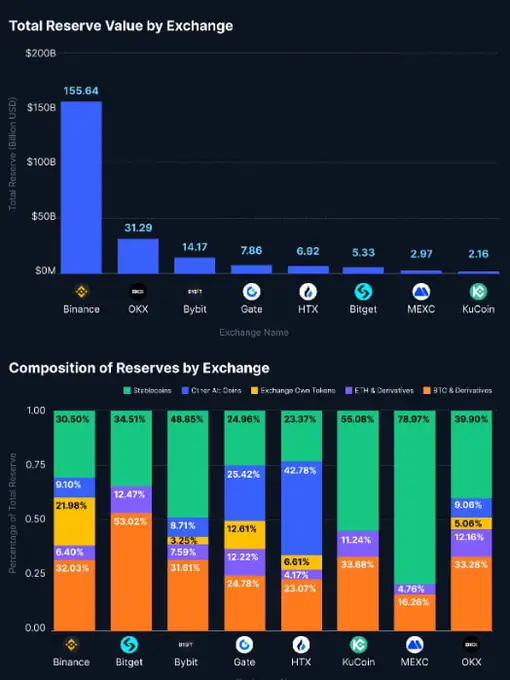
The Innovation Advisory Committee includes executives from several major digital-asset platforms. Among them are Brad Garlinghouse, chief executive of Ripple, and Brian Armstrong, chief executive of Coinbase.
Source: CTFC
Garlinghouse described the lineup as the “Olympics crypto roster,” referring to the panel’s concentration of senior leaders.
The committee also includes representatives from Uniswap Labs, Kraken, and Robinhood, as well as executives from established market infrastructure firms.
Additionally, traditional finance representation features Terry Duffy of CME Group, Adena Friedman of Nasdaq, Jeff Sprecher of Intercontinental Exchange, and Frank LaSalla of DTCC.
Their inclusion places crypto-native firms alongside long-established derivatives, clearing, and exchange operators in a single advisory structure.
In addition, the panel incorporates leaders from prediction markets and betting platforms, including Shayne Coplan of Polymarket, Jason Robins of DraftKings, and Christian Genetski of FanDuel. The inclusion of these firms expands the committee’s scope beyond traditional derivatives markets to adjacent digital trading ecosystems.
Committee Replaces Technology Advisory Body
The Innovation Advisory Committee succeeds the CFTC’s former Technology Advisory Committee. The previous body focused on analyzing how emerging technologies affected derivatives markets.
By contrast, the new committee consolidates crypto industry leadership and traditional financial market operators under a broader mandate tied directly to regulatory modernization.
Selig stated that by assembling participants “from every corner of the marketplace,” the agency would gain a resource to update its rules and regulations in line with current innovation.
He has also indicated that the CFTC intends to coordinate closely with the Securities and Exchange Commission on digital asset oversight.
The agencies recently signed a memorandum of understanding outlining their working relationship. In addition, they initiated “Project Crypto,” a joint effort intended to improve the regulatory structure for digital assets. These steps follow the CFTC’s decision last year to withdraw prior digital-asset guidance, citing changes in how crypto markets operate.
Jurisdiction Controversy in the CLARITY Act.
The creation of the Innovation Advisory Committee follows ongoing debate in Congress over the CLARITY Act, which seeks to establish whether digital assets are subject to securities or commodities law. The bill seeks to establish the boundary between the CFTC’s jurisdiction and the SEC’s jurisdiction over securities-like tokens.
Moreover, debate continues over whether crypto companies should be permitted to offer yield on dollar-pegged tokens. Banking industry groups have raised objections to provisions allowing stablecoin rewards, making the issue one of the bill’s most contested elements.
Armstrong previously withdrew support for the CLARITY Act, citing concerns about limits on stablecoin rewards and other provisions he argued could restrict tokenized products and decentralized finance activity.
He also warned that certain elements could reduce the CFTC’s authority by shifting power toward the SEC. Despite those disagreements, Armstrong has joined the Innovation Advisory Committee. His participation places a vocal critic of portions of the draft legislation inside a body advising the CFTC on broader crypto regulation.
Industry Response and Interagency Coordination
Industry figures have publicly commented on the CFTC’s direction under Selig. Mike Novogratz, chief executive of Galaxy, described Selig as a “strong leader” and noted that cooperation between the SEC and CFTC had improved.
The memorandum of understanding signed between the two agencies outlines coordination mechanisms. Officials have indicated that such cooperation is intended to support consistent oversight as digital-asset markets expand.
The agencies’ joint initiatives reflect a regulatory environment in which crypto derivatives, spot markets, stablecoins, and prediction markets are increasingly interconnected.