
key insights:
- Bitcoin trades like a growth asset, not a safe-haven store of value.
- Institutional adoption and ETFs increase Bitcoin’s correlation with equities.
- Long-term adoption could eventually shift Bitcoin toward gold-like behavior.
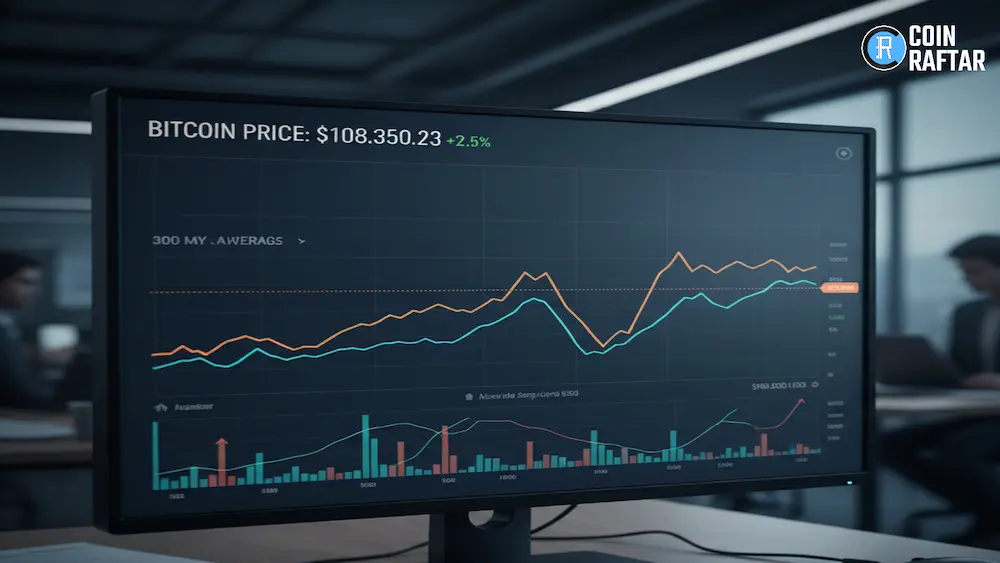
Bitcoin is increasingly trading in line with growth-oriented technology stocks rather than behaving as a traditional safe-haven asset, according to new research published by Grayscale on Tuesday.
The report questions the long-held digital gold narrative by demonstrating that the recent market pattern positions Bitcoin on closer to the risk assets than the ones that are more defensively positioned commodities.According to the results of Grayscale, macro risk sentiment is becoming the driving force behind short-term price changes instead of the dynamics of a store-of-value, which is usually linked with precious metals.
Bitcoin increasingly mirrors growth asset behavior
The head of research at Grayscale Zach Pandl stated that the recent price patterns indicate that Bitcoin is moving in line with high growth software equities rather than gold.However, the analysis sheds light on a very strong correlation that was realized in early 2024 when both Bitcoin and technology stocks fell in tandem with the rest of the market being stressed.Pandl observed that the fear of disruption in the software industry by artificial intelligence was a factor that led to the coordinated sell-offs of growth-sensitive assets.
Although Bitcoin has long-term attributes related to scarcity and monetary independence, the cryptocurrency has not experienced such aspects in the last volatility cycles.
Pandl also added that the role of money as gold extends thousands of years and so Bitcoin has a limited current monetary perception due to its relative youth.This historical gap, according to Grayscale, explains why market participants currently treat Bitcoin as a speculative growth instrument rather than a defensive hedge.
Market stress exposes digital gold narrative limits
Bitcoin has declined roughly 50% from its October peak above $126,000, following multiple waves of sustained selling pressure across global markets.The decline would start with a big liquidation in October 2025, and further selling in late November and January 2026.Research conducted by Grayscale found focused selling by US investors, using the recurrence of spot price discounts on Coinbase trading pairs.
Meanwhile, physical gold and silver were consolidating to all-time highs, which points to the obvious disconnect between traditional safe havens and crypto assets.This deviation is an indication that scarcity has not been adequate to cause Bitcoin to act as a store of value, in times of increased risk aversion.Instead, Bitcoin’s integration into institutional portfolios has increased its sensitivity to macroeconomic sentiment shifts affecting growth-oriented investments.
Adoption outlook shapes Bitcoin future price behavior
Grayscale credited a tendency of Bitcoin to be equity-like to growing institutional ease of entry via exchange-traded funds and conventional financial infrastructure involvement.Consequently, fluctuations in risk appetite currently affect the pricing of Bitcoin in the same way as the technology stocks and speculative growth assets.Pandl made Bitcoin investment today a future hypothesis of adoption but not a depiction of monetary standing.
The short term recovery possibilities lie in the re-entry of capital inflows in the form of more ETFs demand or more retail inflows of investors.According to Wintermute, a market maker, the equity of artificial intelligence has recently been of interest among the retail people, which has capped the demand on crypto markets in the short term.Grayscale implied that the next stage of blockchain adoption can be facilitated by regulatory advancement in stablecoins and tokenized assets.
In the future, the company believes that infrastructure systems like Ethereum and Solana, as well as middleware systems, will gain positively out of long-term trends in digitization.Grayscale argued that Bitcoin can continue to become a worldwide money currency as the global financial structures shift their settlement systems to the digital platform.Should such transition become a reality, the price action of Bitcoin may come to resemble that of gold, where it is less volatile and it is less associated with equities.